




 Policy
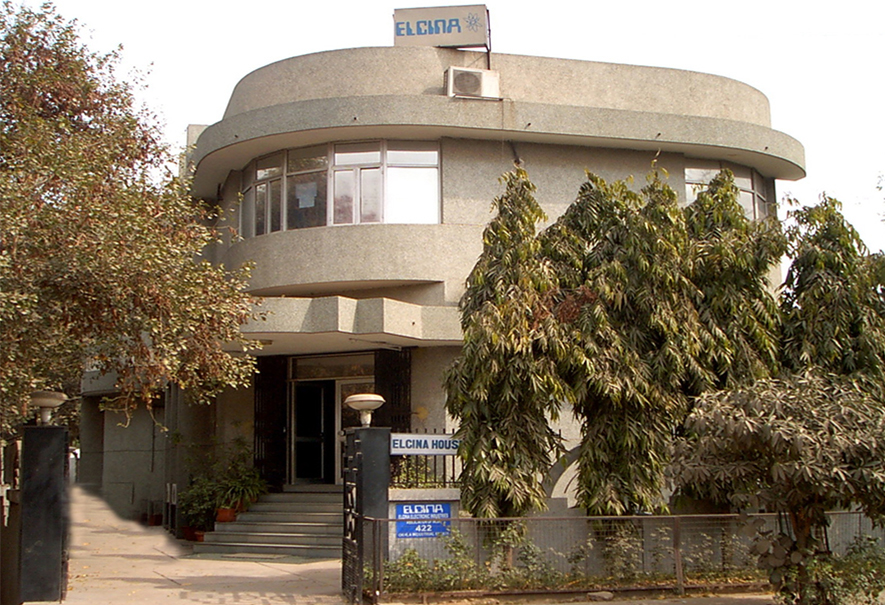
ELCINA Electronic Industries Association of India (Formerly Electronic Component Industries Association) was established in 1967 when India's Electronic industry was still in its infancy. ELCINA has always remained committed to the promotion of electronics manufacturing culture in the country focusing on components-the building blocks of electronics industry. |
- Sharma to take up tax holiday for IT with finmin : Even though there was no mention of the fate of the tax holiday for STPI scheme in Budget 2010-11, which had left the country's $50-billion software services export sector disappointed, Industry & Commerce Minister Anand Sharma on 3rd March said his ministry will talk to the Finance Ministry for extending the tax holiday scheme for STPI by another year beyond March 2011. He also said that a National Manufacturing Policy to attract investments in manufacturing sector will be finalized by August this year. The government wants to make India one of the factories of manufacturing industry in the world, as manufacturing sector holds the promises and new opportunities. The Minister also pointed that a single document Foreign Direct Policy (FDI) is going to be finalized soon which will make the FDI much simpler into the manufacturing sector. It is proposed to do away with the 177 press notes and a drafting a single policy document to make the policy and procedures much simpler for investors.
- FM presents a moderate Budget balancing growth & inflation : The Union Budget for 2010-11presented by the Finance Minister on 26th Feb/10 has tried to address the issue of high inflation facing the country while also trying not to constrain growth. Major proposals include rolling back of the incentive package by increasing Excise duty from 8% to 10%, reduction in excise duty to 4% on LED Lighting, inclusion of some additional raw materials/CGs in concessional customs duty notifications (25/99 & 21/2002), revision in Personal Income Tax slabs etc.
- Lower peak rates, excise duty to boost trade; India to grow fastest at 8.5% for 2010-11 : Economic Survey : The Economic Survey 2009-10 calls fundamental policy changes in trade even as it highlights the fact that the outlook for India’s trade sector in the current year has brightened on signs of recovery in world output and trade volumes. According to the survey document, reforms, including lowering of peak duties, removing some of the unnecessary customs duty exemption and further reduction in excise duties could provide fillip to trade recovery. A positive outlook has overtaken the pessimism of last year, with the government now expecting a double-digit growth in Gross Domestic Product (GDP) within the next four years. The Economic Survey 2009-10 sees India growing the fastest by 2013-14, provided it is able to overcome infrastructure and bureaucratic constraints. It has predicted 8.5% growth for 2010-11 and 9% for 2011-12.
- 3G auction to start on April 09: 3 Pvt Players in most circles : The government on 25th Feb/10 kick-started the auction process of 3G spectrum, which is slated for April 09, with the release of the Notice Inviting Applications (NIA), the key legal document that formally invites bids from the mobile operators. According to NIA, three private operators would be allotted 5 mhz band in 17 circles, while four private operators would be allotted the same, each in the remaining five circles. State-run BSNL/MTNL, which have already been allocated spectrum, would be an additional operator in all the circles. While successful bidders would be liable to the entire auction amount within 10 days of the auction, the spectrum would be allotted to all private operators by August, 2010, and they would be in a position to offer the services by September only.
- DoT mulls incentives to push rural broadband : Aiming to push the growth of broadband services in rural areas, the Department of Telecommunications (DoT) is working on a new proposal to give incentives from the Universal Service Obligation (USO) fund to support wireline services in rural area. The new move would nullify the earlier directive of DoT, which had exempted the licence fee on wireline services provided by all the operators in rural areas. The exemption was announced in August 2008 through an amendment to the licence conditions. State-run telecom major BSNL was the main beneficiary from this as it enjoys the largest presence in such areas.
- Electronics Hardware makers seek mother units : Small and medium electronics hardware manufacturers in Andhra Pradesh are urging the government to attract more mother industries to the State, besides accelerating the process of developing infrastructure, to enable them to compete globally. According to ELIAP (Electronic Industries Association of Andhra Pradesh), despite achieving a production of Rs.6,500 crore and exports of Rs.650 crore from A.P. in 2008-09, there are still a lot of lacunae that need to be addressed for the industry to grow rapidly. Mother industries, including Motorola, which proposed its manufacturing base in the state, have gone to Chennai. The government should invite computer peripheral companies like Intel to the state. ELIAP expects 15% growth in production and exports this year. The main contributors to the 2008-09 growth were telecommunications, defence and strategic electronics, railway signaling equipment and medical electronics. ELIAP is demanding SEZ status to the existing Electronics Hardware Park and expediting the process of setting up cargo facilities at the international airport for faster growth of the industry. The Fab City had been started for fab manufacturing, but this was later changed to semiconductor manufacturing and finally to the production of solar cells.
- Notifications:
- Important 2010-11 Union Budget Notifications:-
- Customs
- Notification no. 16/2010-Cus dtd. 27 Feb 2010
- Notification no. 18/2010-Cus dtd. 27 Feb 2010
- Notification no. 21/2010-Cus dtd. 27 Feb 2010
- Notification no. 22/2010-Cus dtd. 27 Feb 2010
- Notification no. 23/2010-Cus dtd. 27 Feb 2010
- Notification no. 27/2010-Cus dtd. 27 Feb 2010
- Notification no. 28/2010-Cus dtd. 27 Feb 2010
- Notification no. 29/2010-Cus dtd. 27 Feb 2010
- Notification no. 30/2010-Cus dtd. 27 Feb 2010
- Notification no. 31/2010-Cus dtd. 27 Feb 2010
- Central Excise
- Notification no. 12/2010-CE dtd. 27 Feb 2010
- Notification no. 17/2010-CE dtd. 27 Feb 2010
- Central Excise Notification No.4/2010-NT dt. 19th Feb, 2010 : Amending Central Excise Rules, 2002, to be called the Central Excise (Amendment) Rules, 2010 and to come into force from 1st April, 2010, with the following amendments:
- In the Central Excise Rules, 2002 (hereinafter referred to as the said rules), in rule 8, in sub-rule (1) in third proviso, for the words “duty of fifty lakhs rupees or more, other than the amount of duty paid by utilization of CENVAT credit, in the preceding financial year”, the worlds “total duty of rupees ten lakh or more including the amount of duty paid by utilization of CENVAT credit in the preceding financial year” shall be substituted.
- In the said rules,in rule 12, in sub-rule (1), after the second proviso and before third proviso, the following proviso shall be inserted, namely:-
“Provided also that where an assessee has paid total duty of rupees ten lakh or more including the amount of duty paid by utilization of CENVAT credit in the preceding financial year, he shall file the monthly or quarterly return, as the case may be, electronically”.
- Offset policy to help domestic players enter defence industry : India's defence offset policy would be the key driver for growth and modernization of the defence industry base, says the government. Speaking at a recent seminar organized by CII, Minister of State for Defence MM Pallam Raju said, the industry therefore will evolve in sync with the overall development, leading to progressive policy initiatives coming up in future. Public sector alone will not be able to absorb the offset that are to be generated in future. Off, therefore, give domestic players an opportunity to enter the sensitive defence industry. The government is also planning to extend tax sops enjoyed by export firms to domestic players. Combining public and private sector skills that will help achieve higher degree of defence indigenization is also being mulled.
- New Defence Procurement Policy likely in two months : On the eve of the 6th edition of DefExpo 2010, the Defence Production Secretary RK Singh announced that a new Defence Procurement Policy (DPP) will be released in the next couple of months. It is hoped that under the DPP, domestic industries would certain get orders for products developed by them after indigenous research. Unfortunately, due to the high R&D costs and uncertainty over the orders from the country’s armed forces, Indian companies have been reluctant to be a part of the defence sector.
- Stimulus rollback; 2 percentage point Excise hike in Budget : A first step towards withdrawn the post-crisis fiscal stimulus may be taken in the Union Budget for 2010-11, with an increase in the Cenvat rate for excise duty by 2 percetnage points. Encouraged by signs of growth revival and desperate to reduce the fiscal deficit, Union FM Pranab Mukherjee is expected to take this step when he presents his Budget to Parliament on 26th Feb, 2010.
- Manufacturing push may topple inverted duty set up : The government is looking to remove anomaly in import duty structure that is affecting the competitiveness of domestic firms by reducing levies on a number of intermediate products to bring them at par with duties on finished goods. Plans are afoot to cut customs duty on waste paper, parts of electronic products such as DVD writers, compressors of ACs and refrigerators etc.
- TRAI seeks industry view on 4G rollout : In a development that may pour cold water on 3G mobile telephony, telecom regular TRAI on 10th Feb, 2010 sought views from the industry and other stakeholders on the next generation technology that offers broadband services at much faster speed than the existing technologies or 3G. TRAI’s pre-consultation paper comes at a time when the government is yet to fix a deadline for auctioning spectrum for the third generation (3G) mobile services. The fourth generation or 4G technology, known as the ultra-broadband, offers download of faster speed and high video on demand, among other services.
- RBI simplifies ECB procedure : In a move that will simplify and speed up external commercial borrowing (ECB) transactions, the Reserve Bank of India through a notification issued on 9th Feb/2010, allowed banks to tweak certain terms without its prior approval. Accordingly, loan arrangers will be able to make changes in the drawdown or repayment schedules as long as the average maturity of the loan remains the same. The change is applicable for transactions through both approval and automatic routes.
- Notifications:
- Policy Circular No.22/2009-2014 dt. 3rd Feb, 2010 : Prescribing procedure to re-credit 4% Special Additional Duty (AAD) of Customs in DEPB, VKGUY, FPS, FMS, MLFPS scrips in view of the refund facility allowed under Customs Notification No.102/2007-Customs dt. 14th September, 2007 (as amended) to be read with the Customs instructions communicated vide F.No.354/129/2007-TRU dt. 14.9.2007, Customs circular No.6/2008-Customs dt. 28th April, 2008 and 6/2009-Customs dt. 9th February, 2009.
- Public Notice No.38/2009-14 dt. 3rd Feb, 2010 : Amendment of paragraph 2.13.1, 3.11.7 and 4.50 of HBP Vol.1 for revalidation of freely transferable Authorisation/Duty credip scrips and re-credit of 4% SAD thereof.
- Karnataka unveils semicon policy at ISA Vision Summit : The government of Karnataka, in association with IT department and the India Semiconductor Association (ISA), rolled out the state semiconductor policy at the 5th ISA Vision Summit 2010. The policy was released by Karnataka chief minister B. S. Yeddyurappa in the presence of the state's IT & BT Minister, Katta Subramsanya Naidu, ISA chairman B.V Naidu, DIT Additional Secretary Rakesh Singh and other dignitaries from the government and the industry. Addressing the summit Katta Subramanya Naidu said, "In the next 10 years ICT would decide the academic power of the country and it is driven by semiconductor industry. Bangalore is the hub and a key driver in the business. In line with this Karnataka is the first state government to announce a semiconductor policy." Katta Subramanya Naidu enumerated a few of the initiatives that the government would be taking as part of the policy including:
- Setting set up a fund of Rs.10 crore ($2.17 million), which would be available to the private companies covering upto 50 per cent of their R&D expenses, and subject to a limit of Rs.10 lakhs ($21,740) per unit. This is intended to encourage and innovate R&D in chip design, product development in the nation.
- Contribute 50 per cent of the total cost of equipment to set up a lab as a one-stop solution for hi-tech facilities including chip-testing to encourage innovation and R&D
- Establish a 40sq.km ITIR (IT investment region) near the Bangalore international airport which would be a trend setter in the country. This is expected to create 40lakh (4million) jobs in the decade.
- Semiconductor-focussed school to be set up under IIIT at Rs.10 crores
- Fiscal benefits in line with the state industrial policy
The chief minister of Karnataka, B.S.Yeddyruppa in his address stated, "A comprehensive policy has been set up to cover VLSI design, EDA, solar, photo, embedded and other components of the sector. This policy will create a new beginning in the decade. The ISA Vision Summit has provided an ideal platform for international thought leadership to focus on India's growth in the semiconductor industry." He noted that the IT and BT state department worked in close partnership with ISA to create the exclusive policy. "I am given to understand the industry will grow to $400 billion [Rs.1,847,080 crore] nationally by 2020 and I can assure that more than 30 per cent of it will be contributed from Karnataka. Karnataka is the undisputed leader in IT contributing to $15.5billion [Rs.71,574.35 crore] of software exports last year of which more than 30 per cent pertained to high-end technology and embedded designs. Multinational companies involved in semiconductor design are located in Bangalore making it the largest hub. Over 80 per cent of design work is done in Bangalore and we propose to create fund for semiconductor excellence in R&D and chip design for Rs.10 crores." Lauding the policy, ISA chairman, B.V. Naidu said, "ISA welcomes the Karnataka Semicon Policy and we are happy that most of our recommendations to the government have been considered and this policy will play a significant role for achieving $120 billion [Rs.554,124 crore] electronic system design and manufacturing (ESDM) industry to grow in Karnataka. Announcement of the semiconductor policy is the first of its kind in India and reflects the spirit of government to continue its growth in the country."
- Panel for tough action to hike MSME credit : To bolster the micro, small and medium enterprises (MSMEs) which account for 45% of the country’s factory output, the Prime Minister-appointed Task Force on MSMEs has asked the Centre to extend the stimulus package for MSMEs for a year beyond March 31, 2010. The panel has also asked the government to earmark $1 billion in public spending over the next 3-5 years to target specific problems in the institutional set up and infrastructure available to MSMEs. Calling for immediate action to ensure that commercial banks meet credit targets for micro and small enterprises, the Task Force has suggested that any shortfall from these targets be diverted from banks to create a special fund for micro enterprises with the Small Industries Development Bank of India (SIDBI).
- Time to draw up 4G blueprint for seamless mobility : Despite India emerging one of the world’s largest telecom markets with 110 million connections, 3G is no silver bullet to satisfy the needs of higher-performance applications like multi-media, full motion video, wireless teleconferencing, says a report titled Telecom Trends in India by MITSOT-CII teletech 2010. Underscoring the drawbacks of 3G, the report argues that existence of multiple standards of 3G makes it difficult to roam and interoperate across networks. Inspite of the overwhelming growth of subscriber base of 12% in the world market in comparison to other big markets like China at 19% and 7% in the US, the report rues at the bungling of 2G and 3G services mainly due to three major factors, including not moving towards market decision making, lack of harmony with International Telecom Union allocated bands and indecision on policies and plans for the allocation and usage of spectrum. In order to fully utilize the convergence of voice, video and data, the report suggests that government should draw up a blue-print for 4G rollout that promises clear advantages in terms of seamless mobility, global roaming among various access technologies like cellular networks, WeFi, Wimax, satellite, digital video broadcasting. The report further added that spectrum regulatory bodies must involve researchers to identify frequency band useful for 4G compliance and standardization of wireless networks in terms of modulation techniques switching schemes and roaming.
- 3G auction likely to be delayed again : The auction of spectrum for 3G telephonly is likely to get delayed again as the law ministry has suggested the auction be done only after availability of spectrum, which would otherwise create legal complications. The auction process was earlier scheduled to begin on January 14, but got delayed due to uncertainty over the number of slots and unavailability of spectrum.
- RBI signals inflation worries : The Reserve Bank of India, in its quarterly review of the monetary policy announced on 29th January, 2010, launched an assault on inflation by increasing the cash reserve ration (CRR) 75 basis points to 5.75%. While sounding upbeat on economic growth, the Central Bank has kept the door open for an increase in interest rates even before the annual policy statement in April.
- New Date for GST rollout to be known in April : The much anticipated Goods and Services Tax (GST), which will replace most of the indirect taxes levied by the Centre and States, will not be introduced from the targeted date of April 01, 2010. The Bills pertaining to the introduction of a new law and amendment to the Constitution will not be tabled in the coming Budget session of Parliament. Finance Minister Pranab Mukherjee and State Finance Ministers will meet in April to decide a new date for the GST rollout.
- SEZ Act needs overhaul; CBEC : The Central Board of Excise & Customs (CBEC) has recommended an overhaul of the Special Economic Zone (SEZ) Act 2005 saying it has detected gross violations of duty and tax concessions causing it to suffer a revenue loss of Rs.1,75,000 crore to date. Broadly, the CBEC report has sought the removal of numerous exemptions, drawbacks and concessions that have turned SEZs into tax-avoidance conduits for importers and exporters without any genuine business to back them. Official sources said this report forms part of the board’s recommendation to the Ministry of Finance for amendments in Budget 2010-11.
- Finance Ministry pushes for single-rate GST : The Finance Ministry has rejected the two rates of GST proposed by the states, adding further doubts to the April 2010 deadline for the roll-out of a unified indirect tax system for Indian states. In its first formal response to the discussion paper on GST by the empowered group of State Finance Ministers, the Department of Revenue has instead recommended that there should be a single rate of GST for both goods and services because a dual rate may lead to inversions in the duty structure. The empowered group, headed by West Bengal Finance Minister, Asim Dasgupta, had suggested a lower rate for necessary items and goods of basic importance and a standard rate for goods in general. It had also recommended a special rate for precious metals and a list of exempted items.
- Anti Dumping on Export of Colour Picture Tubes from Malaysia, Thailand, China PR and Korea RP : Customs Notification No. 14/8/2007-DGAD dated 17th February, 2009 endorsed the recommendation of the Director General Anti-Dumping (DGAD) to impose anti dumping duty on Cathode Ray Colour TV Picture Tubes exported from Malaysia, Thailand, China PR and Korea RP.
A manufacturer from korea RP, Meridian Solar and Display Company Ltd has sought review of the Anti Dumping duty. DGAD has issued a new shipper review Notification No. 15/10/2009-DGAD dated 13th November 2009. Customs Notification No. 144/2009 dated 23rd December 2009 concurs with DGAD that exports from Meridian Solar Display Company Ltd, Korea RP will be subject to "provisional assessment" till the completion of the review.
Interested Members may kindly see the Notification No. 144/2009 dated 23rd December, 2009.
- Government to start 3G auction on February 25 : The government has decided to go ahead with the auction of three slots of third generation (3G) spectrum for all 22 telecom circles on February 25. It will be completed by March 3-5.
The announcement comes within a few days of Finance Minister Mr. Pranab Mukherjee directing Communications Minister Mr. Andimuthu Raja to complete the by February-end for the revenue collected from it to get reflected in the Budget for 2009-10. The government had fixed a target of Rs. 30,000 crore from the auction and had budgeted for the current financial year to bridge the fiscal deficit.
- Commerce Ministry has final say on SEZ tax search nod : The Commerce department has clarified through a notification that it was the ultimate authority in respect of all enforcement issues relating to special economic zones (SEZs), as it seeks to put an end to the confusion over whether tax authorities were free to carry out searches and seizures for unearthing illegal transactions in these zones.
While the move will ensure that the single-window concept for addressing all issues pertaining to SEZs does not get diluted, it is likely to go down well with the finance ministry, which has been asking for a free hand in carrying out investigations within SEZs on suspected revenue offences.
"The SEZ Act clearly states that the development commissioners of the zones are the enforcement agencies. Since the sections of the Act specifying this had not been notified before, there was this mix-up
- Government to relax FDI Norms: The Government of India proposes to ease the norms for foreign direct investment (FDI) approval.
At present, projects worth more than Rs. 600 crore require the final approval of the Cabinet Committee on Economic Affairs (CCEA). The Department of Industrial Policy and Promotion (DIPP) has proposed that this ceiling be raised to anywhere between Rs. 1,000 crore and Rs. 1,500 crore.
The new norms are likely to be notified after the introduction of a consolidated FDI policy framework on April 1 this year.
- 2G Spectrum charges may be raised : The Telecom Commission has proposed a raise in charges of 2G spectrum for both GSM and CDMA operations. The charges would be raised from 2 per cent of the annual gross revenue (AGR) to 3 per cent of AGR for up to 4.4 MHz of GSM spectrum and up to 5 MHz of CDMA spectrum.
- 3G Auction Money to up Budget 2009-10 : Finance Minister Mr. Pranab Mukherjee has asked Communications Minister Mr. Andimuthu Raja to complete the auction of the third generation (3G) spectrum within the agreed deadline (February 15), so that the revenue from it can be reflected in the Union Budget for 2009-10. Mr. Mukherjee had earmarked Rs. 30,000 crore as revenue from 3g auction, which has already been delayed by a year, in the budget.
The Finance Minister, who is the chairperson of the Empowered Group of Ministers (EGoM) on 3G has also said that the Department of Telecommunications (DoT) can auction slots simultaneously, ranging from three to four (includes the slots allotted to BSNL/MTNL), depending on their availability in various circles. It is expected to be over by February 12.
Confirming the development, a senior government official said, "Raja has been informed by the finance minister not to delay further the auction to ensure that the government can include the revenue earned in this financial year."
- Common dispute resolution scheme for GST : The centre has suggested setting up a common dispute resolution scheme for settlement of cases in the proposed goods and services tax (GST). It is also suggesting sharing of service centres between the centre and states , besides common registration facilities for traders.
"It is proposed to prescribe a common registration form, common registration number, common return format, common service centres for acceptance of registration applications and return for Central GST and State GST", Mr. Sushil Solanki, commissioner, central excise said at a seminar on GST regulations at the American Chamber of Commerce recently.
A common dispute resolution mechanism is being examined by the government for GST, he said, and asked for the industry's views on some vexed areas in GST implementation.
- Pitroda favours all forms of technology for education : Sam Pitroda, advisor to the Prime Minister on public information, infrastructure and innovations, has strongly advocated use of all forms technology to impart education in a vast country like India.
"This is the age of information. This is the age of online libraries. So there has to be mobility" Pitroda said while delivering the third Ravenshaw University Development Trust lecture in Cuttack recently. Pitroda, who is also the chairman of National Knowledge Commission, said all layers of technology should be used for dissemination of information and education. "as information and communication technology changes, the available tools and applications also change. So we need to harness these tools and look for new models of learning as well."
- The 3G Conundrum : An auction of 3G licences in India has led to considerable debate in local and international media and is expected to close this fiscal year. This would certainly be a welcome development, given that 3G has the potential to not only make a significant impact on the way we live our lives, but also create sizeable employment opportunities.
While 3G auctions were first proposed for January 2009, the controversy over 2G spectrum pricing (where many believed that the spectrum was under-priced) and the reluctance of defence forces to relinquish their usage of 3G airwaves (without a committed time frame for alternate infrastructure) had led to a significant delay in the 3G auction process.
- Budget to be tabled on February 26 : The Union Government will present the annual budget on Fridday, 26th February, 2010, two days ahead of the conventional date. This was announced by the Finance Minister Pranab Mukherjee on 9th January, 2010. The date is being advanced as February 27 is a holiday on account of Prophet Mohammad’s birthday and Feb. 28 is a Sunday. The Minister also said that it would take another 7-8 months to bring in legislation for the introduction of GST, which was earlier scheduled for April 01, 2010.
- Centre to announce national manufacturing policy by June : At the Economic Times Award function held in Mumbai on 10th January, 2010, the Commerce & Industry Minister Anand Sharma said that the government will come out with a national manufacturing policy by the end of June this year to attract overseas investment and promote industrial activity in the country. The Minister added that encouraging the manufacturing sector was necessary to increase its share in the gross domestic product and attract investment from overseas and within the country. The Centre, along with States, would also take other initiatives to promote the manufacturing sector to ensure the development of underdeveloped regions of the country and further the objective of inclusive growth. Recently, NMCC Chairman V. Krishnamurthy had called for early formulation of a manufacturing policy to encourage industry and value addition.
- DTA units could use SEZ facilities : To help Special Economic Zones (SEZ) absorb global economic shocks, the government plans to allow them to make available their excess installed capacities for the use of industrial consumers in the domestic tariff area (DTA). The idea is to ensure that industrial capacities built up in SEZs don’t remain idle in case another global slowdown occurs and dry up export demand. Of course, such contract manufacturing by SEZs would be bereft of any tax relief. The move follows the reports that several SEZ developers are planning to exit due to weak demand in overseas markets consequent to the economic crisis. Government permission will be required for taking up DTA orders.
- Exports get Rs. 500cr sops : The government has offered a Rs. 500-crore stimulus to select exports to give much-needed boost to the dwindling sector and sustain positive growth. Incentives have been announced to promote exports to china and Japan, too.
The stimulus was offered to sectors such as engineering products, electronic goods, rubber, chemicals, plastics, machine tools, electrical and power equipment, steel tubes, auto components and cotton-woven fabrics.
Among the significant measures announced today by Commerce and Industry Minister M. Anand Sharma, there is expansion of Focused Product Scheme (FPS) and special FPS by including 225 new products, under which exporters would be given an incentive of 2-3 per cent. China and Japan have been added in Market-linked Focused Programme, under which exporters are provided additional benefits.
- Government asks SEZs to reserve space for small units : The commerce ministry has directed the seven government-run special economic zones (SEZs), including Kandla, Mumbai and Noida, to reserve 10 per cent space for small units. The preference to small scale industrial units should also be given in sector-specific SEZs in IT/ITes.
- Goods and Services Tax : The 13th Finance Commission task force has suggested that the Centre must be more pro-active in ensuring that the proposed goods and services tax (GST) maximally captures the supply chains and is levied only on pure value added. A structurally sound GST would be the biggest stimulus to the economy.
Finance minister Mr. Pranab Mukherjee must use the sharp tool of the task force report to cut through the clutter. For India’s federal GST to be a high-utility tax reform, it should have a very broad base, subsume most central and state taxes and levies and be extremely circumspect about exemptions.
Exports should be zero-rated and inter-state transactions too must effectively have this benefit. In short, the system should militate against cascading of taxes in B2B transactions.
- Tax Code likely in Budget 2010-11 : The government looks all set to introduce the new Direct Taxes Code in the forthcoming budget session. Finance Minister Pranab Mukherjee met PM Manmohan Singh on 5th Jan/2010 to discuss the contous of the new code, billed as the major reform of the direct tax structure being undertaken by the UPA government in its second tenture. A detailed presentation on the tax code was also made by the Finance Minister to the PM. The Finance Ministry has already held extensive consultations with all the stakeholders on the draft code and has also initiated an exercise to make appropriate changes and prepare the relevant legislation.
- Finance Panel favours more state share in tax revenue : The 13th Finance Commission, which submitted its report to President Pratibha Devisingh Patil on 30th Dec/09 has recommended increasing the share of states in the Centre's tax revenues and returning to the Fiscal Responsibility and Budget Management FRBM) Act targets by 2015. According to Mr. Vijay Kelkar, Chairman of the 13th Finance Commission, the Panel had been asked to suggest new path for fiscal consolidation and it has recommended fiscal path for the next five years (2010-15). The report has dealt with sharing of tax revenue between centre and states, distribution of funds among states and support to local bodies. Finance Minister Pranab Mukherjee stated that these recommendations would be getting reflected in the 2010-11 Budget.
- 3G spectrum auctions delayed by a month; to begin on Feb 13 : The 3G spectrum auctions would now begin on February 13, a month later from the earlier deadline of January 14. This was decided by the Empowered Group of Ministers (eGoM) on 30th Dec/09. The one-month delay is owing to the delay on the part of defence forces that did not vacate the spectrum by Dec.07. Hence DoT could not invite applications (NIA) on Dec.08 for the same. However, with the intervention of the eGoM on Dec.31, the defence forces have been made to agree to vacagte spectrum. As per the new timeline, the DoT would come out with the NIA on January 10. The last date for accepting applications would be January 25. Mock auctions would take place on Feb.11 and 12 with the auctions commencing from Feb.13
- State ministers set to finalise GST rates in January 7 meet : The State finance ministers are likely to finalise the rates for GST at the meeting of the empowered committee scheduled for January 07. The Committee is working on a revenue neutral rate. The GST Committee set up by the 13th Finance Commission has suggested a rate of 12% to be split between the states and Centre at 7% and 5%.
- GST rollout to reduce tax burden by 25-30%: Fin Min : While the Finance Ministry on 23rd Dec admitted to a Rs.20,000-22,000 crore shortfall in the indirect tax collections during the current year, it went on to assure the industry that the tax burden on people would come down by 25-30% with the introduction of the proposed goods and services tax (GST). The new tax is expected to subsume various indirect taxes, including excise and VAT. The reduction in tax burden through GST, however, might not mean a cut in government revenue since the rates being discussed for GST are designed to be revenue neutral even as the new tax regime is expected to widen the tax base.
- Centre aims to cut imports, make 70% defence equipment at home : With India currently procuring approximately 70% of its defence equipment from abroad, the Centre aims to reverse this balance and manufacture 70% or more of its defence equipment needs in India. The defence industry in the country is poised at an inflection point in its expansion cycle, driven by modernization plans, an increased focus on homeland security, and India's growing attractiveness as 'home market' defence sourcing hub. The government has put in place building blocks to incentivise the growth of a domestic defence industry. In a study done by KPMG and CII, which will be released next month, several factors that are likely to influence the future growth trajectory, including further development of defence procurement process, forming and auctioning of defence industrialisation strategy to coordinate the use of offsets, transfer of technology and FDI, have been identified. Other key areas of focus are the public and private sector defence industries in India and further changes in the taxation regime and incentives.
- 3G auctions on schedule, forces to vacate spectrum : Intervention by the empowered group of ministers (3GoM) has ensured that the 3G spectrum auctions would be held on time, from January 14, 2010. This was stated by the Communications & IT Minister A Raja after the conclusion of the eGoM meeting which was held under the finance minister Pranab Mukherjee on 21st Dec/09. About vacating the required spectrum by the defence ministry, A Raja said that there was a consensus in the eGoM on this matter and the spectrum would be allotted simultaneously to all the four winners by August 2010.
- GST regime to boost foreign trade, NCAER study : Recognising that the current indirect tax regime is adversely impacting export competitiveness of the country, a study by National Centre for Applied Economic Research (NCAER) has said that the proposed Goods & Services Tax (GST) regime will be beneficial for India's foreign trade engagement with the rest of the world. According to the NCAER study, distortion free indirect tax regime like GST could boost exports in the range of 3.2-6.3% . At the same time, imports are expected to gain in the range between 2.4-4.7%. NCAER stated that for the GST rate to be revenue neutral, it has to be in the range of 6.2-9.4%, depending on exemptions given to various sectors. According to NCAER, since all state and central level taxes will be subsumed within the GST, exporters would be able to fully offset indirect taxes on inputs.
- FC proposes a 12% GST rate : The 13th Finance Commission (FC) has come out with a 'flawless' goods & services tax (GST) model, which proposes a single rate of 12% and exempts only three sectors - unprocessed food, school & college education and non-government health services. All businesses with an annual turnover of Rs.10 lakh and above would be brought under the tax net. Tax benefits for special economic zones would go, as these would become redundant in the new regime where exports would be zero-rated. According to the Report of the Commission's tax force released on 15th Dec/09, GST is proposed to cover real estate and subsume stamp duties, dual levy on "SIN goods' - petroleum, tobacco, alchohol, financial services to be taxed comprehensively. The new tax, the authors of the report say, would have an economic value of 50% of GDP. It would reduce prices of manufactured goods, make house construction less expensive, but farmers would earn more for their produce. The GST would have two components - Central GST and State GST - levied on a common and identical base of transactions, with no differentiation between goods and services. The combined rate of 12% comprises 5% for central GST and 7% for state GST.
- Notifications:
- Central Excise Circular No.907/27/2009-CX dt. 7th Dec/09 : Clarification on issues related to reversal of Cenvat credit on WIP/finished goods written off in the books of accounts.
- Public Notice No.23/2009-2014 dt. 4th Dec/09 : Through this notification, the following clause has been added at the end of paragraph 4.23 of Handbook of Procedures, Vol.1, 2009-2014 : "In case of revalidation of advance authorization issued prior to 27.8.2009, it should be ensured that value addition is maintained at 15% (and as per details mentioned in para 4.1.6 of FTP) or as stipulated in the advance authorization, whichever is higher".
- GST to have four slabs and Rates in 15 days : According to Mr. Asim, Dasgupta, Chairman of the Empowered Committee of State Finance Ministers, the Goods and Services Tax (GST) would have four slabs and these were likely to be unveiled within 15 days. Among the GST tax slabs, it would be zero for exemted items, one standard rate for majority of the goods and services and another having a moderate rate. Precious metals were likely to continue to attract a tax of 1%. State levies like VAT, sales tax, entry tax etc. would also be subsumed, while Central and State cesses and surcharges would be out once GST comes into effect. The implementation of GST is scheduled for April 01, 2010. However, there are doubts among various quarter on whether the new tax regime would come into effect within the deadline, owing to difference of opinion over rates and the items to be included under GST.
- IT Task Force calls for a national electronics mission: An information technology (IT) task force, chaired by HCL Infosystems Chairman and CEO, Ajai Chowdhry, on 12th Dec/09 called for setting up a 'national electronics mission', which will help in synchronized functioning of the IT industry by acting as a noday agency for the electronics industry within the Department of Information Technology, with direct interface to the PMO. The government-appointed task force, set up in August, not only submitted its report in a record time of three months, but also gave short-term, medium-term (2014) and long-term (2020) roadmap for the IT industry. There are no government officials on the task force, which comprises members from industry bodies like Nasscom, ISA and MAIT, among others. The Task force report also called for extension of the existing tax holidays to promote the industry besides stimulating growth of the IT, IT-enabled service (ITeS) and electronics hardware manufacturing sectors. According to the Telecom & IT Minister, A. Raja, the government has identified IT and electronics hardware manufacturing as a key thrust area. Developing IT and electronics products and solutions for inclusive growth is the need of the hour. The Ministry will examine the report's recommendations and initiate a dialogue with various other government ministries for appropriate implementation of the recommendations on a fast-track basis. The task force has estimated the current demand in the domestic electronics industry at $45 billion, which is projected to touch $125 billion by 2014 and to $400 billion by 2020. IT exports are expected to rise from the current $4 billion to $15 billion by 2014 and to $80 billion by 2020. Other suggestions of the task force includes establishing India as a global hub for manufacturing and professional services, advocating free trade in services besides accelerating the process for bringing about a level-playing field between private and public players.
- Zero-import duty only for some sectors: India : India is open to committing zero import duty on sectors like gems and jewellery at the Doha Round of globale trade talks, but has ruled out doing the same for sectors like chemicals, industrial machinery, electrical and electronic goods as well as health care equipment. The country is also opposed to the proposal on libeeralising trading of second-hand goods, but is willing to explore the issue once the Doha Round is concluded. According to a proposal in the Doha Round talks, countries will have to undertake heavy duty cuts in about 14 industrail sectors under the provisions of the 'sectoral' talks. These cuts will be over and above the ones committed in the global trade deal. India has opposed the mandatory nature of sectorals and has been maintaining that countries should volunteer for it.
- DoT chalks out priority list for 2G spectrum : Ahead of the upcoming 3G spectrum auctions, the Department of Telecommunications (DoT) is working on a policy on drawing up a priority list to allocate 2G spectrum. The matter has assumed significance because the DoT needs to clarify who would first get 2G spectrum - the successful 3G bidders or the companies whose applications for licences to operate 2G services are still pending before it. Around 346 applications by 16 companies are still pending before the DoT. An internal DoT note has highlighted the urgency of resolving the issue since companies are insisting on clarity on the matter. The matter has assumed complexity since the government has invited even those foreign telecom operators to bid for the 3G spectrum who are not present in India so far.
- 3G winners may have to pay 25% up front : Successful bidders of third-generation (3G) spectrum in the upcoming auctions, scheduled to begin on January 14, may have to pay only 25% of the bid amount initially and can pay the remaining in the next financial year when they receive the airwaves. Besides, the uncertainty over the availability of 3G spectrum may also result in just one telecom company being awarded 3G frequencies immediately after the auctions, while other telcos may be forced to wait up to September 2010. The spectrum uncertainty may also result in the January auctions being limited to three players, according to an internal note of DoT. The government had earlier announced that it would auction four slots of 3G spectrum to private operators in all circles, while adding that the full payments would have to be made within 15 days (January-end).
- GST regime to tax telcos circle-wise : In a complete break from the existing tax administration for telecom services, the Finance Ministry has proposed that service providers should be taxed based on the telecom circle once the goods and services tax (GST) regime kicks in. The proposal is aimed at clearing the confusion over how the service, which has an inter-state character, would be taxed under GST. Telecom services would be under the inter-state GST regime. Under the plan, the tax once collected from a telecom circle by the Centre would then be divided between the States. At present, the country is divided into 22 telecom circles, which are then classified as metros A, B and C, depending on their revenue potential. Most circles are contiguous with state boundaries, but some states like Maharashtra and Goa are clubbed into one circle. Mumbai classified as a metro circle is separate from Maharashtra and Goa circle.
- Second discussion paper on GST likely next month : The second discussion paper of the empowered group of state finance ministers on GST is likely to be released next month. This will be more detailed than the first paper, released earlier this month. According to sources, the second discussion paper would incorporate some of the suggestions made by the industry and other stakeholders after going through the first discussion paper. However, it is also likely to stray silent on the rate for goods and services and the exemption list. Another technical paper on GST by Finance Commission Chairman Vijay Kelkar will also be released in December/09. This is expected to be a more comprehensive paper and may provide suggestions to the government on some grey areas in GST, like exemptions, inter-state GST and the governing body.
- Pitroda resolves spectrum row; 3G auctions on track : Auctions for 3G spectrum will be held for all four vacant slots across the country when the government kick-starts the process from January 14, 2010. This comes following the resolution of a squabble between the telecom and defence ministries over 25 MHz spectrum that was mediated by the Prime Minister’s Advisor on Infrastructure, Sam Pitroda. The defence forces will vacate the spectrum on December 07. Pitroda convinced the defence forces to release the spectrum by committing that its alternate optic-fibre network would be fast-tracked. Telecom Commission approved the Rs.8,000 crore optic-fibre project for defence forces.
- Govt to overhaul foreign investment regime : The government has embarked on a major overhaul of its foreign investment policy matrix to remove inconsistencies that lead to regulatory arbitrage. The Prime Minister’s Office has directed the Finance Ministry, RBI and markets regulator SEBI to iron out their differences to integrate the legal and regulatory regimes for foreign capital inflows. All legal, regulatory and taxation regimes with respect to foreign investments are under review. One objectives of the exercise is to disallow foreign investors from evading rules by pitting one regulator against one another. For its part, the Finance Ministry has just set up a 16-member working group to review the existing policy of foreign capital flows other than foreign direct investment.
- Notifications:
- Policy Circular No.17/2009 dt. 18th Nov/09 : Regarding issuance of EPCG authorization to Branch Offices etc. Through this circular issued by DGFT, it has been clarified that an application for grant of an EPCG authorization may be made by Regional Office or Head Office or a Branch Office or Manufacturing Unit of eligible exporter to the Regional Authorities concerned. Para 4.2 & 4.3 HBP Vol.-1 apply mutatis mutandis to EPCG scheme also.
- TRAI caps fee on mobile porting at a low Rs.19 : Mobile users will pay at most Rs.19 to retain their old number each time they switch service provider. That is the porting charge ceiling set by TRAI on 20th Nov/09 in the run-up to the launch of mobile number portability (MNP) in category A circles (metros) from January 2010 and the rest of the country by March 2010. However, under TRAI regulations issued in July, 2009, mobile users will have to wait 90 days before they can switch networks.
- 3G auctions to be on schedule, says EGoM : Uncertainty over auctions of 3G telecom services ended on 19th Nov/09, with the empowered group of ministers (EGoM) deciding to stick to the January 14 date with a slight modification. Instead of the original plan of auctioning four 3G licences per circle, bunded with 5MHZs of spectrum per licence, the schedule will depend on spectrum availability in each circle. This agreement was reached after the Ministry of Defence finally agreed to stick to a signed commitment to DoT to release 20MHz of 3G spectrum on time. The defence ministry’s request to DoT to postpone its deadline from December this year to June 2010 had caused consternation in the government, which is banking on Rs.35,000 crore this financial year from 3G auctions to bridge a yawning fiscal deficit.
- Dual tax structure proposed for goods & services : Laying the roadmap for the introduction of a goods & service tax (GST), State governments on 10th Nov/09 proposed a dual GST structure, with two rates for goods and a single rate for services. The tax would be levied both by the Centre and the States, though there is still no clarity when the new tax regime will be implemented. Union Finance Minister had during the last budget set April 01, 2010 as the date for the new tax regime that seeks to re-distribute the burden of taxation equitably between manufacturing and services. According to Asim Dasgipta, Chairman of the empowered committee of state finance ministers, the proposals unveiled through a discussion paper on 10th Nov/09 will be followed by a draft of a constitutional amendment that is expected to be ready by Nov.15. The amendment is required to allow the Union Government to tax beyond the manufacturing stage and allow States to tax services. There will also be separate legislations on Central GST and model state GST that would spell out the rates at which the tax would be levied. Among the rates being discussed are between 8 and 10% for the lower slab and 16 & 18% for the upper slab.
- UP waives stamp duty on land for IT projects : The Uttar Pradesh government has decided to waive off stamp duty on land for Information Technology units and call centres being set up in the State. According to Mr. Chandra Prakash, Principal Secretary, IT, UP Government, in the wake of the global meltdown, the State government has also decided to extend the time limit of completion of IT projects by two years. Allottees will be required to get their development plan approved from the competent authority within 42 months of getting possession of land and the units will have to obtain completion certificate of land allotment within five years and execute the projects within seven years.
- GST only when states are on board; FM : At an economic editors’ conference on 3rd Nov/09, the Finance Ministe, Pranab Mukherjee, stated that the new Goods & Services Tax (GST) would be rolled out only once all States on board, and there will be no half-backed GST, but a foolproof GST . Industry and tax practioners have expressed concerns about the shape GST may take if the Centre is keen on meeting the April 01 deadline. According to the FM, GST is on track and will significantly increase indirect tax revenues. The empowered committee of state finance ministers is expediting discussions on some contentious issues. But the rollout will only happen when convergence is achieved between the Centre and all states.
- Telecom Panel meeting on Nov. 11 to review auctions : The inter-ministerial committee on 3G spectrum and broad-band wireless auction is slated to meet on November 11 to take stock of the situation for auctions slated to begin from January 14, 2010. Member Finance in the telecom commission, the apex policy making body of DoT constituted to conduct the auction, would head the Committee. As per the timeline, the auction process would start from the 2nd week of November with the pre-bid conference slated to be held on November 16. The Committee is likely to look into the issue of spectrum vacation by the defence which threatended to once again derail the 3G spectrum auction. According to an MoU between the defence ministry and the DoT, the former is supposed to vacate 20 Mhz of 3G spectrum that will be auctioned by the DoT.
- New Defence Production Policy to allow Pvt firms to compete with DRDO: India's new Defence Production Policy (DPP), to be rolled out on November 01, 2009, will allow domestic private companies to bid for armed foreces' equipment tenders and let them join hands with foreign manufacturers later for co-production through joint ventures. The DPP-2009 will replace the existing DPP-2008 that came into effect in September last year. With change in the policy, the Defence Ministry is effectively allowing Indian private companies to compete with the Defence Research and Development Organisation (DRDO) and public sector defence firms, which were hitherto the only domestic agencies bidding for the tenders jointly with foreign firms, which provided technology and help in indigenous production to the government entities. According to the Defence Minister, A.K. Antony, the government have reviewed the DPP and are ready to promulgate DPP-2009 with effect from Nov.01, 2009.
- Highlights of RBI's Q2 Monetary Policy : In its 2nd Quarter review of Monetary Policy announced by RBI on 27th Oct/09, Governor D. Subbarao ended his soft monetary policy - aimed at easing the credit crisis last year - by withdrawing liquidity-boosting measures, becoming the third central bank in the world to do so after Israel and Australia. An increase in lending rates is now imminent next quarter if consumer and asset prices remain high. Highlights are : Keeps benchmark interest rates unchanged, Hikes SLR by 100 bps to 25%, Retain GDP forecast for FY10 at 6%, Says industrial output may revive in the next term, cuts money supply growth target - a hint that CRR may rise..
- Amended IT Act comes into effect : Aimed at tightening procedures and safeguards to monitor and intercept data to prevent cybercrimes, the Information Technology (Amendment) Act, 2008 became effective from 27th Oct/09. The Act was passed by both the Houses of Parliament in December 2008 and was notified in February 2009. Besides monitoring and interception, the amended Act also deals with the appointment of Indian Computer Emergency Response Team, which deals with computer security and situations arising from cyber attacks.
- 3G spectrum auction deferred to Jan 14, 2010 : The Department of Telecommunications (DoT) has announced revised guidelines for auctioning 3rd generation (3G) spectrum with a new deadline of January 14, 2010. The earlier deadline for auctioning the spectrum was December 7, 2009. The reserve price for a pan-India 3G spectrum has been set at Rs.3,500 crore, revised upwards from Rs.2,020 crore, while the minimum bid amount for WiMAX is fixed at Rs.1,750 crore. DoT has also permitted foreign operators to participate in the bidding process on their own, but they would be required to acquire a telecom licence before rolling out services. New entrants who will be Standalone 3G providers, will have to pay 3% of revenues as spectrum usuage fee, after 1 year of operation, while existing operators to pay additional 1% of revenue.
- CBDT to re-look at MAT, tax on savings : The Central Board of Direct Taxes (CBDT) has suggested that the new direct taxes code abolish Minimum Alternate Tax (MAT) and continue to offer individuals tax exemptions on savings under the existing EEE (exempt-exempt-exempt) method. The board will send its recommendations on the code, a draft of which was put up for public discussions in August/09, to the government in about a month after internal discussion that will also take industry suggestions into account. CBDT will also suggest changes in the direct taxes code proposal on the double taxation avoidance agreements (DTAA). Recently, Finance Minister Pranab Mukherjee had assured industry that the government was open to re-examining proposals in seven key areas - including MAT, capital gains tax, DTAA, general anti-avoidance rule, taxation of charitable organizations and foreign companies in India and EET.
- TRAI review of telecom policy to hit 3G auction : Telecom regular, TRAI, on 16th Oct/09 kicked off the most comprehensive review to date of the National Telecom Policy 1999, aimed at cutting through the complexities that have entangled the sector in the wake of growing competition and rising number of operators. However, the immediate fallout of the far-reaching exercise is certain to be a further delay in the already belated 3G spectrum auction. Since TRAI plans to furnish its recommendations by December 15, it is evident that 3G auctions will not be held before early next year since operators, especially new ones, would first want to study the 2G spectrum policy before they firm up their bids. The government has already missed the first step in the run-up to the scheduled December 3G auction.
However, Finance Minister Pranab Mukherjee, in a strongly worded letter, has categorically told Communications Minister A. Raja that with an estimated Rs.30,000 crore of revenue at stake to bridge a yawning fiscal deficit, auctions for licences for 3G telecom services cannot spill over to the next calendar year under any circumstances, and asked to stick to December deadline. Any delay in conducting the 3G auction, particularly after the ground rules have been decided, would prejudice national interest and send mixed signals to potential investors.
- GST not to affect trade, investment: Finmin :The Finance Ministry has assured other government departments that the proposed goods and services tax (GST) would not have an adverse impact on trade and investments in the country. The issue was taken up at an internal meeting held by Cabinet Secretary KM Chandrasekhar on 13th Oct/09 with top officials from all central ministries on GST and the Direct Taxes Code (DTC). Concerns were also raised over provisions in the draft Code including the proposed shift in minimum alternate tax (MAT) from gross profits to gross assets and the move from profit-linked incentives to investment-linked incentives, as many ministries are of the view that these would hurt the profitability and the performance of companies. Finance Minister Pranab Mukherjee has already promised to review the proposal of MAT in the draft Code. GST and Direct Taxes Code will completely overhaul the country's tax regime over the next two years. GST would subsume excise, service tax, value-added tax and other state-level duties, and is slated to be introduced from April 01, 2010. The finance ministry is planning to implement the Direct Taxes Code, wich aims to replace the current Income Tax Act, 1961, from 2011-12. However, a recent survey conducted by the consultancy firm Deloitte notes that the appropriate date for GST introduction is April 2011.
- Punjab IT policy sets eyes on $4.6 billion exports by 2018 : The Information Technology and Knowledge Industry Policy 2009, part of Punjab's new Industrial Policy has set an ambitious target. It has devised a strategy which intends to create an IT and knowledge industry with exports worth $4.6 billion, in addition to 0.6 million direct and indirect jobs by 2018. Considering that Punjab has consistently ranked low in terms of ratings on infrastructure, policy, human resources and investor relations, the new road map for developing the IT and knowledge industry addresses major issues plaguing industrial development in the State. According to the State Industry and Commerce Minister Manoranjan Kalia, the strategy aims to create an ecosystem for the IT and knowledge industry by providing solutions for areas where the State has ranked low.
- 3G auction may be postponed : India is unlikely to keep its December 7 dateline for the auctions of 3G airwaves, which are vital for high-end services such as video conferencing and ultra-fast Internet on mobiles. The Department of Telecommunications (DoT) has been unable to complete even the first step to kick off the auctions as per plan. DoT was slated to release the Information Memorandum (IM), a key document containing all details of the auctions, including availability of radio frequencies across circles, policy changes, the rules among several other issues - to all potential bidders by September 29, but has failed to do so. This has resulted in the October 8 deadline for submission of questions for pre-paid conference also being postponed. All other timelines, such as those for submission of bids and mock auctions are also likely to be changed, which may push the December bid plan to early next year. The Defence Ministry has also told the DoT that it would be in a position to release the 20 MHz of spectrum it had committed, only in June 2010 instead of December 2009. As a result, DoT is thinking of reworking the terms of the bid document for such high-speed telecom services so that some of the lowest successful biddgers out of the four planned per circle will have to queue to receive spectrum.
- India crosses $100-bn FDI mark amid crisis : According to data compiled by the Department of Industrial Policy & Promotion (DIPP), India has crossed the $100-billion milestone in foreign direct investment (FDI) through equity since 2000 up to July 2009, testifying the country's increasing profile as a safe and sound investment destination in the midst of the global financial crisis. Around 44% of the money came through the Mauritius route, appararently because the investors wanted to take advantage of India's double taxation avoidance treaty with the island nation. Country's services sector topped the table, receiving 23% of the cumulative equity FDI inflows followed by computer software, hardware, telecommunication and real estate. The cumulative FDI inflows since 2000 and up to July 2009 amounted to $100.33 billion. Besides Mauritius, other big investors included Singapore, UK, UK and the Netherlands. While the inflows of developed countries plunged in 2008 by 29%, the developing and transition economies saw inflows rise by 37% in 2008.
- Notifications:
- Customs Circular No.26/2009 dt. 30th Sept/09 : Giving salient features of Foreign Trade Policy (FTP), 2009-14, notified by DGFT on 27th August, 2009. The Department of Revenue has since issued notification Nos.91/09-Cus to 103/09-Cus all dated 11.9.2009, 104/09-Cus & 105/09-Cus, both dated 14.9.09, 109/99-Cus dt. 24.9.09, 23/09-CE(NT) dt. 25.9.09 and 112/09-Cus dt. 29.9.09, to implement the Policy and the Handbook. New Schemes introduced include Status Holder Incentive Scheme (SHIS), Zero Duty Export Promotion Capital Goods (EPCG) Scheme. The circular also indicates the changes made in some of the existing Export Promotion Schemes.
- Press Note No.7(2009) dt. 26th Sept/09 : Guidelines for Foreign Investment in Commodity Exchanges.
- DoT allows foreign telcos remote access to Indian ops : The Department of Telecom (DoT) has agreed to a demand by foreign carriers in India - AT&T, British Telecom, France Telecom, Verizen & Cable & Wireless - that their Indian operations be allowed remote access, a provision that will enable them to monitor the services they provide to their corporate clients in India from locations abroad. These global carriers will also be allowed to transfer user information of their clients to locations outside India.
- States agree on dual GST rates : States have finally reached a consensus on having two basic rates under the Goods and Services Tax (GST), slated to be rolled out on April 01, 2010. There will be one standard rate of taxation for essential commodities. According to Mr. Asim Dasgupta, Chairman of the Empowered Committee of State Finance Ministers, some items will also be exempted from the tax and there will be another rate of tax for precious metals like gold and silver. He also added that some small and medium enterprises would stay outside the ambit of GST. The exact rates have not been decided yet.
- National Solar Policy on November 14 : The new and renewable energy ministry would unveil the National Solar Policy on November 14, 2009, coinciding with Pandit Jawaharlal Nehru's birth Anniversary. According to the new and renewable energy minister, Farooq Abdullah, the policy would be a real boost to the solar energy sector.
- 236% anti-dumping duty on Chinese, Israeli equipment : The government is all set to levy an over 236% anti-dumping duty on Chinese and Israeli telecom equipment used for data and voice transmission. The move would remove the cost advantage for Chinese telecom vendors as well as the majority of the domestic mobile operators. The Directorate General of Anti-Dumping (DGAD) in the Commerce Ministry has recommended the duty, and the Finance Ministry is expected to shortly issue the orders in this regard. The move would severely impact two major Chinese vendors, Huawei Technologies and ZTE Corporation who control as much as 25% of the Indian equipment market between them.
- Govt may extend STPI sops for 3 years from 2011: Raja : The Union IT & Communications Minister A. Raja today indicated that the government might extend tax benefits for Software Technology Parks of India (STPI) for three more years from 2011. Speaking on the sidelines of a CII-organised event, Raja said his Ministry was awaiting the Cabinet nod for STPI incentives.
- Govt-FICCI agency to attract FDI : A day after an International Finance Corporation report showed that India had slipped in its ease of doing business rankings, the government on Thursday approved the setting up of a not-for-profit, single-window facilitator for prospective overseas investors. The moves comes as India saw foreign direct investment (FDI) worth $3.5 billion in July - an annual increase of 50% - indicating that the slump in inflows had been arrested. The new company, christened Invest India, will be set up as a joint venture between department of industrial policy & promotion (DIPP) and FICCI. State governments will be offered a 0.5% stake in the company, totaling 14%, while the Centre would have 35%, FICCI will hold the remaining 51%. According to the Commerce Minister, Anand Sharma, Invest India will make the country more attractive as an FDI destination. This company will act as a first reference point for prospective foreign investors.
- Press Note 6 liberalises FDI rules for MSMEs : The government has paved the way for micro, small & medium enterprises (MSMEs) to attract foreign investment within the current sector limits. The Centre issued a fresh Press Note.6 on 4th Sept/09 to the effect, much in step with Prime Minister Manmohan singh's promise to double credit flow to such enterprises over the next five years. A press note 18 issued in 1997 had capped all foreign investment in small scale industries at 24%. In its first innings, the ruling UPA had cleared the MSME Act of 2006, which expanded the definition of small enterprises by identifying them on the basis of their capital expenditure (upto Rs.5 crore). But the limit was silent on the FDI, so the 24% limit remained by implication. The latest press note 6 has clarified that the present policy on FDI in MSEs permits FDI subject only to the sectoral equity caps, entry routes and other relevant regulations. The MSEs will be able to attract more investments from large corporates and foreign investors as the clubbing of FDI rules and the definition is made redundant by the latest clarification. Press Note 6 has also clarified that foreign investment of more than 24% in such non-MSE units would require prior approval of FIPB. According to the MSME Act, in the manufacturing sector, micro units are those where investment in plant & machinery does not exceed Rs.25 lakh, while small enterprises are defined as those investing between Rs.25 lakh and Rs.5 crore. In the services sector, investment in equipment up to Rs.10 lakh will qualify for a micro enterprise and Rs.10 lakh-Rs.2 crore for small unit.
- 3G spectrum bids to start at Rs.3500 crore,WiMAX Rs.1750 crore : A Ministerial panel has fixed Rs.3,500 crore as the minimum bid price for the auction of third-generation (3G) wireless spectrum, evoking dismay from telecom companies that see it as exorbitant. But telecom minister A. Raja's announcement that the government hopes to complete the auction of 3G radio frequencies within 90 days came as a relief for mobile firms, which have already begun preparations to launch the new service. The empowered group of ministers (EGoM) headed by finance minister Pranab Mukheree also fixed the base price for WiMAX spectrum for wireless broadband services at Rs.1,750 crore. The EGoM also decided that a total of five players would be allowed to offer 3G services in every circle, of which one slot would be reserved for state-owned telcos BSNL & MTNL. The government hopes to complete the auctions within 90 days from August 27 and expects to get a minimum of Rs.25,000 crore from these auctions.
- FTP sets $200-b export target : The Foreign Trade Policy 2009-2014, announced by the Commerce & Industry Minister Anand Sharma, on 27th August, 2009, extended the focus market scheme to 26 countries and introduced a new market-linked focus product scheme for another 13 markets to encourage exporters to explore new areas to make up for a fall in demand from traditional markets such as the US and Europe, which contribute about 40% of the country's export receipts. The policy, which set an export target of $200 billion for 2010-11, extended import duty refundunder the popular DEPB scheme till December 31, 2010 and enhanced the ECGC till the end of fiscal 2009-10. It also promised dollar credit to exporters and allowed duty-free imports of Capital Goods for select industries which includes electronic products.
- India to host meet for WTO consensus : New Delhi will host an informal meeting of 35 countries, representing various interest groups, early next month to look forways to revive the Doha round of World Trade Organisation (WTO) negotiations for further opening up of markets for goods and services. According to Commerce Secretary, Mr. Rahul Khullar, the primary purpose for the talks is to build a consensus among a large number of countries on moving forward with the Doha round. The Dohar negotiations collapsed in July last year when trade ministers from major countries failed to reach a consensus on issues such as according protection to poor farmers and holding compulsory talks on eliminating duties on select industrial sectors in Geneva.
- TRAI to get teeth in effort to improve cell services : Fed up with frequent complaints from consumer organizations about cellular services quality, the government will empower regulator TRAI to temporarily suspend an operator's licence or levy on it a hefty penality for not meeting minimum standards. Once this crucial change is made in the powers of the regulator, it would be able to effectively rein in errant operators. At present, TRAI only has powers to warn errant operators or to chargesheet them in a civil court of law. DoT can suspend an operator's licence for not meeting norms, but this is cumbersome. Noting the rise in call drops, TRAI had rapped operators and asked them to take steps. Operators say quality issues stem primarily from lack of spectrum, interconnection points.
- FTP on August 27, to focus on job creation : The five-year Foreign Trade Policy (FTP), to be unveiled on August 27, is expected to give incentives to Indian exporters to widen their global markets beyond the US, EU and Japan in the face of the economic crisis in these key destinations.
- India, Asean ink FTA covering 4k products : On 13th August/09, India signed a landmark free trade agreement (FTA) with 10-member regional grouping Asean that will eliminate tariffs on around 4000 products such as consumer electronics, pharmaceuticals, machinery, metals and ready-made garments. According to the Commerce & Industry Minister Anand Sharma, the agreement with Asean is well-balanced and is in harmony with India's'Look East' policy. The two sides expect trade between them to increase from the current $40 billion to $50 billion in 2010. The FTA, which will be implemented from January 01, 2010, will result in elimination of duties on about 3,200 products by Dec.2013, while duties on the remaining 800 products will be brought down to zero or near zero levels by Dec. 2016.
- New Tax Code calls for radical changes : Finance Minister Pranab Mukherjee stuck to his Budget promise on Wednesday, releasing the draft Direct Taxes Code aimed at rationalizing and simplifying India’s obtuse tax regime, while expanding base and moderating rates. The exercise has taken over a year. The new code proposes a slew of radical reform measures – lower income and corporate tax rates, abolition of securities transaction tax and an increase in the annual deduction on savings to Rs.3 lakhs, and bring all pension schemes under a common tax system. The code seeks to rework the slabs by keeping the threshold at Rs.1.6 lakh for individual assesses. It proposes, among others, to hike the deduction on saving to Rs.3 lakh annually, levying taxes on all types of retirement benefits for individual tax payers, tax breaks for sectors such as IT to be withdrawn, a uniform 25% tax rate for both domestic and foreign companies etc. While FM was hopeful of tabling the proposals in Parliament in the winter session, but the same would come into forece only from April 2011.
- Exports remain in doldrums; trade policy is last hope : India’s external trade continued to shrink in July, as overseas and domestic demand remained weak. July exports dipped 26.6% year-on-year to $12.53 billion, marginally better than the 27.7% negative growth posted in June. Preliminary estimates by Directorate-General of Commercial Intelligence & Statistics showed that imports for the month contracted 37%, stepper than the 29.3% dip in June. While economists expect some revival of overseas demand in key export destinations like the US by the end of 2009, any immediate respect to India’s dwindling exports seems unlikely. According to the Commerce Secretary Rahul Khullar, the Foreign Trade Policy is the last opportunity to give exporters some help to tide over the crisis. The Commerce Ministry is in the midst of formulating the policy for 2009-10 to 2013-14. It has been urging the Finance Ministry to factor in some short-term sops for embattled exporters, at least for 2009-10.
- Trai asks DoT to delay grant of new licences : Telecom regulator Trai was asked the government not to issue new licences for now and has asked the Centre to wait until it takes a call on this issue. This comes as the Department of Telecom (DoT), which is confronted with the pending applications of 24 companies for telecom licences, last month asked regulator Trai to cap the number of telecom players who are allowed to offer mobile services in the country. The DoT in its communication to Trai had asked the regulator to reconsider its earlier recommendations where it had said that there should not be a cap on the number of telcos that are allowed to offer telecom services in a circle.
- New Companies Bill tabled in Lok Sabha : The government has again tabled the new Companies Bill in Parliament to replace the 53-year old Companies Act of 1956. The bill had been introduced in the last Lok Sabha. The Bill, which is based on the concept of self regulation, recognizes the chief executive officer, the chief financial officer and the company secretary as ’key managerial personnel’ and provides for a single forum for mergers and acquisitions.
- Expert panel to draw road map for IFRS : The ministry of corporate affairs has formed an expert group comprising members from the Reserve Bank of India, capital markets regulator SEBI and Insurance Regulatory Development Authority (IRDA) to draw a road map for India’s convergence with international financial reporting standards (IFRS). The group, which also has representations from corporate bodies, will help in charting out an action plan for making regulatory changes that are required to harmonise Indian accounting norms with the IFRS.
- RBI to maintain policy stance : The Reserve Bank of India (RBI) will continue with favorable monetary policy stance till demand picks up in the economy, says Mr. K C Chakrabarty, deputy governor, RBI. Quoting the RBI Governor Mr. D Subbarao, Mr. Chakrabarty said, “The RBI will maintain an accommodative stance until demand conditions improve and credit flow grow, but reversing the expansionary policies is definitely on the agenda on the way forward.”
- New chief of CBEC : Mr. V Sridhar, member of Central Board of Excise and Customs (CBEC) has been appointed as chairman of the board. He will replace Mr. P C Jha, who has retired from his present charge of chairman, CBEC. Sridhar is 1973 batch officer of Indian Revenue Services (IRS).
- DoT wants 3G service firms limited to four : There is a likelihood of only four nationwide private service providers for third-generation (3G) mobile telephony services due for implementation, with the Department of Telecommunication (DoT) recommending to a group of ministers that only four blocks of 3G spectrum should be put up for auction. The presentation, which was made to the empowered group of ministers (EGoM), said that if more than four blocks are auctioned, there will not be enough spectrums available for the 3G operators. 3G services enable high-speed applications including broadband Internet services on mobile handsets, video on demand and mobile TV. The current 2G services mainly support voice applications. Currently, there are up to nine mobile service providers in a 2G service area.
- Cabinet clears trade pact with ASEAN bloc : Despite serious concerns voiced by his own ministerial colleagues, Prime Minister Mr. Manmohan Singh has cleared a significant milestone in his 'Look East' policy by approving the free trade agreement (FTA) with the ten-member ASEAN grouping. The Prime Minister steamrolled apprehensions and reservations expressed by Defence Minister Mr. A K Antony and Minister of State for Environment & Forests Mr. Jairam Ramesh at the cabinet meeting.
- Reserve Bank leaves all key rates unchanged : Further softening of interest rates in near future is unlikely. No rate cuts have been announced on Reserve Bank of India credit review policies.
- Exporters may get tax refunds in Trade Policy : This year's Trade Policy may introduce a scheme that will offset taxes imposed on exports by States. According to FIEO, taxes imposed at the State level - like Octroi, mandi taxl, sales tax on petroleum goods, electricity tax and municipal cess - add up to 4-5% of the production cost of exports. With the global downturn knocking the wind out of Indian exports' sales, the government is under pressure from the industry to devise a mechanism for reimbursing such taxes. The government is explorting the option of factoring the taxes into the existing input duty neurtralisation schemes such as Duty Drawback and DEPB by increasing the reimbursement rates.
- More sops for exports in trade policy likely : The new Foreign Trade Policy (FTP) is likely to lay more emphasis on incentivising export diversification to non-traditional areas, while the government is considering a fresh stimulus for the exporters, according to the Commerce and Industry Minister Mr. Anand Sharma. "We will look at diversification. That is what we have been discussing with the industry so that other continents which have not been traditional destinations of Indian exports are covered. We will be in fact, putting more emphasis on that", the Commerce and Industry Minister said after meeting a delegation of Confederation of Indian Industry ahead of the trade policy.
- DEPB may be extended till March : The Government plans to extend its import duty reimbursement scheme - the DEPB scheme - till end of financial year as it looks to bail out the export industry, which employs roughly 150 million people. Indian exporters have been hit hard by the global recession that has been demand drying up in the US and Europe - their largest markets. Extension will bring some relief to crisis-hit Export Sector till GST is implemented. Although exporters have sought a 5-year extension of the scheme, it looks improbable. Once GST is in place next year and centre puts in place a mechanism for its reimbursement to exporters, a lot of schemes will be scrapped.
- Pranab to head EGoM on 3G : The government on Monday announced the formation of a 9-member Empowered Group of Ministers (EGoM) headed by Finance Minster Pranab Mukherjee to settle all outstanding issues associated with the auction of third generation (3G) airwaves, vital for high-end services such as high-speed internet and video conferencing on the mobiles. The EGoM will take a final call on both the reserve price for both 3G and WiMax spectrums as well as decide on the number of players to be followed to offer these high-end services in every circle. Other members of 9-member EgoM include home minister P. Chidambaram, defence minister A.K. Antony, communications minister A. Raja, agriculture minister Sharad Pawar, law minister Veerappa Moily, I&B minister Ambika Sony, planning commission deputy chairman Montek Singh Ahluwalia and MOS in the PM's Office Prithviraj Chavan.
- GST rollout by April even if some States stay out : Addressing industry leaders in New Delhi on 7th July/09, Finance Minister Pranab Mukherjee said the government would roll out the Goods and Services Tax (GST) by Aoril 2010 even if some States failed to come on board by then, reiterating his commitment to the ruling coalition’s reform agenda. “Just as VAT was introduced in States gradually, probably even GST will have to be enforced in a similar fashion,” the Minister said, adding that he would persuade all States to adopt GST from April next year.
- Tax break for IT SEZs only with prospective effect : While FM Pranab Mukherjee kept his interim-budget promise of removing the tax anomalies, which prevented IT companies from enjoying 100% tax exemption on their SEZ unit profits, the move came with a catch. The amended rules will be applicable not from February 10, 2006, when the SEZ rules got notified, but with prospective effect from April 01, 2010. This means that SEZ units set up by IT companies, including Infosys and Wipro - which had set up their units in SEZs under the parent company and not as a separate entities - stand to lose up to four years of full tax exemption. SEZ units are entitled to five years of 100% tax exemption. Most IT units have been affected by the anomaly in the tax proposal as companies in other sectors investing in SEZs have opened units as a separate entity.
- Finance Minister presents a balanced Budget for 2009-10 : The Finance Minister, Pranab Mukherjee presented a Balanced Budget on 6th July, 2009, focusing heavily on social and rural development, and Electronics Manufacturing taking a back seat. The budget has some positives such as abolition of the FBT and retaining the Excise Duty at 8% which has encouraged industry and reduced the grey market. These two measures are welcomed by ELCINA. The extension of 150% deduction for in-house R&D is also a welcome step. It is also a positive development that 5% Customs Duty has been imposed on Set To Boxes and Duty reduced on LCD Panels from 10 to 5%, an essential input for assembly of LCD TVs. These two are sunrise products with rapidly expanding markets and there local manufacture is bound to bring some opportunities for local electronic component manufacturers. The announcement for a national roll out of GST is a positive statement but there are doubts about its feasibility as details are yet unknown to the industry.
- Highlights of Economic Survey 2008-09 : The Economic Survey tabled in Parliament on 2nd July/09, predicts GDP growth as high as 7.75% in 2009-10 if the global economy turns up by autumn, and a reasonable 6.25% if the global recession drags. Exuding confidence on the external front, the survey predicts a current account surplus of up to 2.8% of GDP, and estimates that the inflow of FDI into India in 2008 was $46.5 billion. Stressing on the need to “restructure the tax and expenditure policy in order to strengthen the automatic stabilizers” in the economy, the Economic Survey has called for long-pending tax reforms, including the timely implementation of GST as well as removal of transaction taxes, cesses, surcharges and customs duty exemptions. The Survey also suggests, among others, auctioning 3G spectrum, raising FDI limit in insurance, defence, allow it multi-format retailing, allowing private entry into the provision of passenger train/railway services, ease contract labour laws and amend Factories Act to increase workweek to 60 hours from 48 hours etc.
- TRAI draft on MNP seeks 90-day lock-in for users : The Telecom Regulatory Authority of India (TRAI) on 30th June/09 issued draft norms for implementation of mobile number portability (MNP) in the country. It has proposed that new users be permitted to change operators only after 90 days. MNP allows subscribers to change their service provider while retaining their mobile number, which at present the users have to change in case they would like to shift to another mobile network.
- Finmin defers UTN for filing tax : In a significant relief to taxpayers, the Central Board of Direct Taxes on 30th June/09 decided to defer the usage of the Unique Transaction Number (UTN) while filing returns for tax deducted at source in the current assessment year. They can continue using the earlier forms 16, 16A and 16AAA and challan 281 for filing returns for tax deduction and tax collection at source. The CBDT in April had announced an overhaul of the TDS forms and replaced the earlier forms with Form 17, and making it mandatory for assesses to deposit taxes online, quoting the UTN.
- Notifications:
Relevant Post Budget 2009-10 Notifications:
- Customs Notifications: No. 77/2009 Dt 7th July 2009 – Set Top Boxes and LCD,
- No. 79/2009 Dt 7th July 2009 – Parts components & accessories of Mobile Phones, and No. 80/2009 Dt 7th July 2009 – Packaged Software
- Central Excise Notifications: No. 16/2009-CE dt 7th July 2009 – MP3/MP4 or MPEG4 players, Smart Cards, and No. 22/2009-CE Dt 7th July 2009 – Packaged Software
- Service Tax Notifications: No. 17 & 18/2009 Dt 7th July 2009 – Exemption for Taxable Service received by an exported of goods
- GST may not keep date with April next year : The Centre may delay the rollout of the unified goods and services tax (GST) by at least a year, with many State governments raising reservations about the feasibility of the April 01, 2010 deadline. It is contemplating a new road map for rolling out GST, which is aimed at unifying the fragmented Indian market by getting rid of multiple state-specific levies and differences in tax rates. The Centre will take a final decision on having new timelines in consultation with the empowered committee of State Finance Ministers.
- Notifications:
- No.71 & 72/2009-Customs, both dt. 19th June/09 : Regarding Safeguard Duty on Aluminium Flat Rolled Products and Aluminium Foil. Notification No.72 rescinds the earlier notification No.26/2009-Customs dt. 23.3.2009.
- No.112(RE-2008)/2004-2009 dt.16th June/09 (by DGFT) : Prohibiting import of Mobile Handsets (classified under EXIM Code ‘8517’) without International Mobile Equipment Identify (IMEI) No. or with all Zeroes IMEI with immediate effect.
- Import of mobiles without IMEI banned : In a significant development, through a notification issued by DGFT, India has banned the import of mobile handsets without IMEI (International Mobile Equipment Identity), a unique identification number. Mobile phones without IMEI are considered a security threat as it is difficult to track handsets without this number. This concern was raised after terrorist attacks like the one in Mumbai in November last year. The Department of Telecommunications had earlier asked telecom operators to disconnect services to such handset but they were reluctant to do so. IMEI is a 15-digit code which appears on the operator's network whenever a call is made. There are about 25 million Chinese handsets that are being used in the country.
- General Budget on July 06, 2009 : The Budget Session of Parliament will start on July 02 with the tabling of Economic Survey. The Railway Budget will be presented on July 03 and the General Budget for 2009-10 will be presented to the Lok Sabha on July 06, 2009. The schedule for the Budget session was decided at a meeting of the Union Cabinet on Monday.
- Finance Ministry mulls re-entry of investment allowance : An intense debate is taking place within the Finance Ministry over a proposal to reintroduce investment allowance for companies implementing new projects or creating productive assets to expand their businesses. Within the ministry, there are strong views against and in favour of the proposal. But the fact that the ministry has informally sought clarifications from industry on the matter is a sign that the proposal is under consideration. Investment allowance for expenditure incurred by industry on plant and machinery stood withdrawn with effect from April 1990. Till then Indian companies could claim a deducation of an amount equal to 20% of the cost of plant and machinery installed or put to use while computing their profits from business,
- Notifications:
- Customs Notification No.58/2009 dt. 5th June, 2009 : Imposing definitive anti-dumping duties on imports of Compact Discs-Recordable (CD-Rs), originating in or exported from Iran, Malaysia, Korea ROK, Thailand, UAMes and Vietnam
- Govt plans to formulate new rules for de-notification of SEZs : The government is looking into formulating new rules for de-notification of special economic zones (SEZs) in the wake of several developers, including realty major DLF, approaching the Commerce Ministry for surrendering their tax-free enclaves. According to the Department of Revenue, there is no such provision in SEZ scheme for de-notification of SEZ even if the developer has undertaken to pay back of duty benefit taken and that BoA (Board of Approval, which took up the request of DLF for re-notification) may like to decide the issue accordingly. However, the Ministry of Law opined that though there is no specific provision in the SEZ Act and Rules, the power to notify includes power to de-notify also.
- Notifications:
- Notification dated 29th May 2009 : Through this notification, the DG Safeguards has excluded Aluminium Foils of stringent specifications like "thickness less than 7 microns" and "foils of 10.5 microns with rough surface" from the Safeguard Duty, giving relief to manufacturers of Capacitors using formed & etched aluminium foils. Corresponding notification is yet to be issued by the Finance Ministry.
- Taxes worth Rs.910 crore in Maharashtra Budget : In the Maharashtra Budget for 2009-10 presented by the State Finance Minister Dilip Warse Patil on 4th June, 2009, Value-added tax (VAT) on mobile phones, cordless phones, video phones, video and digital cameras has been increased from 4% to 12.5%. VAT on selected items used in space and satellite industry was reduced from 12.5% to 4%, while Solar energy equipment exempted from VAT and CFLs to attract VAT at 4%.
- Anti-dumping duty on CFL : Through Notification No.55/2009-customs dated 26th May, 2009, the government has imposed on anti-dumping duty of $0.36-1.90 per piece on the import of Compact Fluorescent Lamps (CFL), with or without ballast or control gear or choke, whether or not assembled, either in completely knocked down or semi-knocked down condition (hereinafter referred to as the subject goods), falling under heading 8539 of the First Schedule to the Customs Tariff Act, 1975 (51 of 19785), originating in, or exported from China PR, Sri Lanka and Vietnam.
- MVNO entry cleared by telecom panel : The Telecom Commission, the policy making arm of the Department of Telecommunications (DoT), has cleared the entry of Mobile Virtual Network Operators (MVNO) in the country. The move will be a big boost for consumers, who should get more choice of services and could see a further fall in rates in market which already has eight to 10 operators. MVNOs do not own spectrum. They operate through commercial arrangements with licensed mobile network operators, by purchasing bulk minutes of traffic and reselling these to their own subscribers under their own brand name. Globally, there are many known brands like Virgin Mobile, ESPN, STAR TV, MTV and Disney kin the MVNO space. They offer niche services to customers based on their expertise. Telecom operators say they expect at least four to five MVNOs to enter the country.
- Govt relaxes rules on used capital goods in SEZs : The Commerce and Industry Ministry has relaxed rules governing used capital goods in special economic zones (SEZs) with certain riders. The move will help the infotech sector, as many software companies are planning to generate more business from SEZs, as tax benefits under other areas - STPI and EoUs - are coming to an end in March 2010. Under new rules issued last week, both the developer and units operating within the SEZ can bring capital goods worth more than 20% of total capital investment. But, while doing that, the companies will have to forgo the income tax benefits, which are spread in different tranches for 15 years.
- Notifications:
- Notification No.55/2009-Customs dt. 26th May, 2009 : Imposing anti-dumping duty on CFL for import from China, Sri Lanka and Vietnam
- Customs Circular No.17/2009 dt. 25th May, 2009 : Norms for execution of Bank Guarantee under specified export promotion schemes - Modification in Circular No.58/04-Cus dt.21.10.04-reg.
- Full duty refund to exporters : The government has decided to extend full rate of duty refunds, including excise, to merchant exporters, who purchased goods from the local markets for overseas shipments. The Central Board of Excise & Customs (CBEC) said in a circular (No.16/2009-Customs dated 25th May/09) that the exporters seeking full duty drawback will have to submit the proof with the customs authorities that they have procured goods from the local markets. The decision has been taken on the basis of the recommendations of the Drawback Committee.
- E-stamps to simplify doing business in India : The Ministry of Corporate Affairs (MCA) is planning to introduce E-stamps in lieu of the current stamp paper. Once implemented, it will become simpler for companies to pay the stamp duty electronically, leading them to save on time and effort of going to the concerned office to buy stamps. It will also reduce the service delivery time by eliminating the need to deliver the papers to Registrar of Companies. In order to remove the hurdle in making the system entirely paperless, MCA has though of introducing E-stamps that would be available at the MCA-21 portal. The MCA-21 is an e-governance mode for companies that come under the Companies Act, 1956 which is intended to facilitate online filing and access to corporate data on round the clock basis. The Ministry would put plan in place in the next three months.
- Notifications:
- Circular No.16/2009-Customs dt. 25th May, 2009 : Regarding grant of All Industry Rate of Duty Drawback to merchant exporters.
- Customs Notification No.50/2009 dt. 15th May/09 : Specifying anti-dumping duties on import of Cathode Ray Colour Television Picture Tubes from different countries.
- SEZ export profits likely to get full I-T exemption : The three-year long wait of companies to avail full income tax exemption on export profits from their SEZ units may come to an end in two months. According to official sources, the government has firmed up plans to bring changes in Section 10AA of the Income Tax Act in the forthcoming Union Budget to rectify an anomaly in the wording of the Section that adversely affected SEZ units. The decision is seen as a stimulus measure to boost investments in SEZ. This move will benefit IT/ITeS sector as it account for most of the SEZ projects. As per Section 10AA, for calculation of exemption from income tax on export profit, 'export turnover of the unit' is divided by the 'total turnover of the assessee'. But in many cases the assessee has units outside the SEZ too. Industry says 'total export turnover of an SEZ unit' should be divided only by the 'total turnover of the SEZ unit' and not by the 'total turnover of the assessee company'.
- CST to phase out with GST entry : In a significant departure from its original plans, the Centre and States have decided not to reduce the Central Sales Tax (CST) rate in 2009-10. Instead, the tax will be completely withdrawn once the proposed Goods and Services Tax (GST) is introduced. As part of the implementation of VAT and introduction of GST in the country, the Centre and the States had agreed to phase out CST through a 1% annual rate cut starting April 1, 2007, over a period of four years. It was scheduled to be completely abolished by 2010-11. The government had decided to introduce dual GST regime in the country, starting April 2010. But to finalise the crucial issue of the rate at which the tax will be levied, the Empowered Committee of the State Finance Ministers has now set up three sub-committees to work out the modalities of the tax. One of the sub-committees has been asked to working out revenue neutral rates for GST. The second panel is to finalise the list of exempt commodities under the proposed tax and the third committee will review the phase-out of CST.
- Notifications:
- Circular No.114/08/2009-ST and Notification No.15/2009-Service Tax, both dated 20th May, 2009 : Regarding refund of service tax paid on taxable services provided in relation to the authorized operation in a Special Economic Zone (SEZ).
- DOT notifies mobile number portability : Come September, cellphone users in some parts of the country, including the four metros of Delhi, Mumbai, Kolkata and Chennai, will have the facility to switch operators even while retaining their existing number. The Department of Telecommunications has issued a notification in this regard say, "Mobile Number Portability is to be implemented in Delhi, Mumbai, Maharashtra and Gujarat Service areas of Zone 1 and Kolkata, Tamil Nadu, Chennai, Andhra and Karnataka of Zone 2 within six months of award of licence by September 20, 2009, and in the rest of the country by March 20, 2010.
- Notifications:
- Circular No.14/2009-Customs dt. 6th May, 2009 : Regarding implementation of Phytosanitary requirements in import or export of goods.
- Policy Circular No.84(RE-2008)/2004-09 dt. 30th April/09 : Terms and conditions for issue of EPCG authorizations to EOU units after conversion to DTA unit.
- Notification No.SO.563(E) dt. 27th Feb/09 (issued by Department of Industrial Policy & Promotion) : Rescinding of earlier Notification No.S.O.857(E) dt. 10.12.1997, which specified the basis on which an industrial undertaking was regarded as a Small Scale or an ancillary Industrial undertaking. This, inter alia, provided the basis on which a Small Scale or an ancillary Industrial undertaking was considered as a subsidiary of or owned or controlled by any other industrial undertaking.
- RBI’s special interest rate for exporters till Oct 31, 2009 : Providing relief to exporters hit by shrinking global demand, the Reserve Bank of India on 28th April/09 extended the concessional interest rate scheme by six months till 31st October, 2009. The ceiling on interest rate on pre-shipment rupee export credit up to 270 days and post-shipment credit up to 180 days at BPLR minus 2.5% was to expire on April 30, 2009. In a circular to the scheduled commercial banks extending the validity up to 31st Oct, RBI said that since these are ceiling rates, banks would not be able to charge exporters interest rates above the benchmark prime lending rate (BPLR) minus 2.5%.
- Airwaves may be auctioned to all Telcos; Subscriber-based Allocation System may go : India could move to an internationally-accepted auction-based system for issuing additional radio spectrum to existing mobile operators, abandoning a controversial practice of allocating the scarce national resource based on companies' subscriber number. A committee set up by the government last year to resolve the vexed issue of additional spectrum allocation is coming around to a consensus view that an auction-based system has much greater merit than the present practice. The Committee, which includes representatives from the government, regulator TRAI, telecom technology experts and industry officials, is expected to submit its report to the Communications Ministry next month, and its recommendations are most likely to be adopted as policy by the new government after electrions. India is the only country that allocates spectrum based on subscriber numbers, and the practice has led to charges that several Indian mobile operators inflate subscriber numbers to corner the resource. Currently, operators using the dominant GSM technology get 6.2 MHz of spectrum each while those using the rival CDMA standard get 5 MHz each. GSM operators can have a maximumof 15 MHz spectrum while for CDMA players, the limit is 7.5 MHz. India's fast-growing mobile industry led by Bharti Airtel, Vodafone Essar and Reliance Communications has more than 400 million subscribers now, and getting additional spectrum at regular intervals is crucial for them to expand operations. Besides, having more spectrum can also lower capital expenditure by more than 40%. According to the Committee, subscriber figures would not be completely disregarded under the auction system that the Panel planned to propose, but they would not be the sole determinant.
- RBI cuts short-term rates : The Reserve Bank of India (RBI) has acknowledged that GDP growth for 2009-10 would be a disappointing 6% unless banks substantially increase their lending to industry and the retail sector. For this, banks need to reduce interest rates on loans. In RBI's annual policy statement announced on 21st April/09, Governor D. Subbarao therefore slashed by 25 basis points the repo (the rate at which banks borrow from RBI) to 4.75% and reverse repo (the rate at which they park funds with RBI) to 3.25% with immediate effect.
- Trade Policy to be aligned with GST after April 01, 2010, New FTP likely by mid-2009 : The new Foreign Trade Policy (FTP), which is being prepared by the Commerce Ministry, will be aligned with the Goods and Services Tax (GST) only after implementation of this indirect tax mechanism. The new Policy is likely to be announced by the next government at the Centre by mid-2009, while the GST is likely to be implemented from April 01, 2010. The current FTP of 2004-09 was unveiled by the United Progressive Alliance government on September 01, 2004 and was to expire on March 31, 2009. However, the Directorate General of Foreign Trade (DGFT) under the Commerce Ministry had extended its tenture till a new policy was ready.
- Notifications:
- Policy Circular No.80(RE-2008)/2004-2009 dt. 13.4.2009 : Clarification regarding extension of Export Obligation Period (EOP) against Advance Authorisation. Through this Policy Circular, it has been clarified by DGFT that the facility shall be available to all advance authorizations which are within 36 months from the date of issuance of the authorization, as on 26th Feb. 2009 or thereafter. However, in cases wherein composition fee has already been deposited to Regional Authorities prior to 26th Feb/09 for EOP extension in terms of earlier provision of paragraph 4.22 related to EOP extension, no refund of the composition fee so deposted shall be allowed.
- Finance Panel sees 16% GST as basis for future talks : A further rejig in service tax and excise duty rates may be on the cards after the upcoming general elections to pave the way for the proposed Goods & Services Tax (GST). According to a study commissioned by the 13th Finance Commission, a revenue-neutral rate for GST would be just over 16%. As part of its mandate, the 13th Finance Commission is reviewing the planned structure of GST to assess its impact on the Centre and States’ tax kitty. It will come out with a new basis for devolution of taxes between the two. Mr. Vijay Kelkar, one of the key architects of GST in India, heads the commission. GST will subsume service tax and excise duty, along with a plethora of state-level taxes and duties, and is scheduled for introduction from April 01, 2010.
- Cash withdrawal tax scrapped from 1.4.2009 : Taxpayers will not have to pay levy on the withdrawal of cash from banks, with the government withdrawing the Banking Cash Transaction Tax from 1.4.2009, as per announcement in the Union Budget 2008-09.
- Notifications:
- Public Notice No.167(RE-2008)/2004-2009 dt. 30th March, 2009 : Adding a new paragraph 2.20A (after para 2.20 in the Handbook of Procedures) related to “Execution of Bank Guarantee/Legal Undertaking for DEPB/Freely transferable Incentive Schemes under Chapteer 3”, as follows: “At the time of filing application for scrip(s) under DEPB Scheme/Freely transferable incentive Scheme under Chapter 3 of FTP without Bank Realisation Certificate (BRC), the applicant shall executve BG/LUT (as per customs circular no.58/2004) with the RA as per Appendix 25C or Appendix 25D respectivey”
- Policy Circular No.76(RE-2008)/2004-2009 dt. 30th March, 2009 : Regarding guidelines for execution of BG/LUT with Regional Authorities for filing application under DEPB scheme and incentive schemes of Chapter 3 of FTP without the requirement of Bank Realisation Certificate..
- Public Notice No.164(RE-2008)/2004-2009 dt. 25th March, 2009 : Through this Public Notice, para 5.4 of HBP (Vol.I) 2004-2009, updated as on 11-4-2009, has been amended as under:- “An EOU/a relocated SEZ unit, while converting to a DTA unit, may apply for an EPCG authorization in ANF along with documents prescribed therein. ‘No Objection Certificate’ should be produced from concerned Development Commissioner”.
- Policy Circular No.72(RE-08)/2004-2009 dt. 24th March, 2009 : Doubts had arisen on the issue of allowing alternative inputs as per SION under DFIA scheme, even if the input mentioned in the SION, has not been specifically utilized in the manufacture of the exported product. According to the subject Policy Circular, the government has examined the matter in detail and clarified that since the objective of SION is to allow duty free import of inputs which are actually used or are capable of being used in the export product, the exporter has the flexibility to import the alternative input/product mentioned in the SION.
- No Fin Min nod needed for export obligation waiver : The Commerce Ministry has deleted a provision dealing with export obligation waiver that required a final say by its finance counterpart. Instead, it will use another provision in the current trade policy that allows it to grant waiver on its own. The paragraph that was deleted through a DGFT notification recently, allowed exporters to request waiver of export obligation, in case they were impacted by force majeure like natural calamities, fir or other extraordinary events beyond anyone’s control. Exporters have to commit certain value of exports within a specified period time while subscribing to various export promotion measures like the Export Promotion Capital Goods (EPCG). The waiver applications in cases of force majeure conditions can now be taken up by DGFT as the foreign trade policy allows the Directorate to provide relief in cases where the exporter faces “genuine hardship” and “adverse impact of trade”.
- Government holds back cut in telecom licence fee : The government has called off its decision to slash the licence fee for telecom operators with large network presence by up to a third from April 01, 2009, following opposition from the Finance Ministry, giving a Rs.2,000-crore blow to the industry. Last year, DOT had announced a cut in the fee contributed towards Universal Service Obligation Fund from 5% to 3%. At present, telcos pay 6%, 8% and 10% (based on the ranking of their circles) of their AGR as licence fee.
- Notifications:
- Notification No.31/2009-Customs dt. 27th March, 2009 : Imposing anti-dumping duty on Colour Picture Tubes from Indogensia.
- Notification No.26/2009-Customs dt. 23rd March, 2009 : Imposing Safeguard Duty on Aluminium Products
- Notification No.95(RE-2008)/2004-09 dt. 13th March, 2009 : Adding the following in para 6.7 in Foreign Trade Policy: “(d) Applications for conversion into an EOU/EHTP/STP/BTP unit from existing DTA units, having an investment of Rs.50 crores and above in plant and machinery or exporting Rs.50 crores and above annually, shall be placed before BoA for a decision”.
- Relief for export units as CBDT untangles tax net : The Central Board of Direct Taxes (CBDT) has instructed income-tax officials to allow export-oriented units (EoUs) approved by development commissioners to claim tax exemption, ending the uncertainty over tax benefits to EoUs. CBDT in its communication to Income Tax authorities has conveyed its decision that an approval granted by the development commissioner in the case of an EoU set up in an export processing zone will be considered valid, once such an approval is ratified by the Board of Approvals (BoA) for EoU scheme.
- Govt issues clarification on tax refund for exporters : The government has clarified that exporters will not get service tax refund on services consumed for export of goods before October 06, 2007. Commerce Minister Kamal Nath had announced the refund during the release of the annual supplement to the Foreign Trade Policy in April, 2007. However, the notification in this regard was issued only on October 06, 2007. According to the clarification issued by CBEC on 12th March, 2009, being prospective in nature, refund is not admissible on such services received prior to the date they are notified in the said notification, even if the goods, in relation to which these services are used, are exported after the date when such services are notified under notification No.41/2007-ST.
- Regulator cuts receiving charges between operators : In a move that might cost the incumbent telecom operators hundreds of crores but benefit new operators, the Telecom Regulatory Authority of India (TRAI) on 9th March/09 reduced termination charge for all types of domestic calls from 30 to 20 paise a minute. Termination charges are paid by one operator to another on whose network the call ends. According to Industry sources, the annual net cost of termination charges is estimated at Rs.2,000 crore.
- RBI surprises market with repo, reverse repo rate cuts : Less than a week after third-quarter GDP estimates showed a lower-than-xpected 5.3% growth rate, the Reserve Bank of India on 4th March, 2009 surprised the market and sent fresh signals to banks to lower lending and deposit rates by pruning the repo rate and the reverse repo rate by 50 basis points each. The repo rate, or the rate at which RBI lends to banks, has been cut to 5%, while the reverse repo rate, at which the central bank absorbs liquidity, has been pared to 3.5%. The market had given up hopes of an immediate reduction after the central bank prodded banks last week to lower rates.
- SEZs to get tax refunds on input services : According to a change in rules notified by the government, Developers of special economic zones (SEZ) and units inside such zones can from now on claim refunds of taxes paid on all input services, regardless of whether the services are used inside or outside the tax-free zones. The new rules means that developers and units inside SEZs will now have to first pay a tax on the services consumed and then claim a refund from the tax authorities. The refund can be claimed within six months from the date of payment of taxes. Until now, the government had exempted deverlopers from paying a tax on services used inside the zones while services used outside them attracted taxes, notably a 10% service tax on items such as courtier and transport services. The move could help finances of SEZ deverlopers and companies operating inside SEZs.
- Notifications:
- Customs Circular No.11/2009 dt. 25th Feb/09 : Duty Free Import Authorisation (DFIA) Scheme - availment of facility under rule 18 (rebate of duty paid on materials used in the manufacture of resultant product) or sub-rule (2) of rule 19 of the Central Excise Rules, 2002 or Cenvat credit under CENVAT Credit Rules, 2004 under Notification No.40/06-Cus dt. 1.5.06.
- Customs Circular No.10/2009 dt. 25th Feb/09 : Certification of Invoices for supply of goods from DTA to EOUs for claiming Deemed Export benefits.
- Public Notice No.151(RE-2008)/2004-09 dt. 26th Feb/09 : Changes/amendments made through the interim Foreign Trade Policy.
- Notification No.88/2009 dt. 26th Feb/09 : Various amendments announced through the interim Foreign Trade Policy.
- Press Note No.4(2009 Series) dt. 25th Feb/09 : Clarificatory guidelines on downstream investment by Indian companies.
- Commerce Minister announces interim Foreign Trade Policy : The interim Foreign Trade Policy announced by the Commerce & Industry Minister Kamal Nath on 26th February, 2009 contained several measures to boost the country’s exports, but fell woefully short of expectations of the recession-hit exporting community. The policy, which addressed the tight credit situation and slowdown in demand faced by exporters, came up with sector specific incentives restricted to leather and textile sector. It eased trade restrictions on the gems & jewellery industry and relaxed export obligations
- Government unveils fiscal stimulus III : The Finance Minister Pranab Mukherjee announced on 24th Feb/09, another stimulus package for economy, the third this financial year, cutting excise duty and service tax two percentage points each, effective midnight, and extending previous excise cuts beyond March 31, 2009. Service tax has been cut across the board from 12% to 10% and the excise has been reduced by the same margin only for items that currently attract the 10 per cent rate. This package will cost the exchequer Rs.30,000 crore.
- IT Ministry for extending STPI sops till 2015 : Talking on the sidelines of ‘Indiasoft 2009’ organized by ESC at Kolkata recently, Shri Jainder Singh, DIT Secretary, said that the Union IT Ministry is keen on extending the tax benefits to STPI by another five years till 2015. DIT has already taken up the matter with the Finance Ministry.
- Notifications:
- Customs Notification No.14/2009 dt. 19th February, 2009. Exempting goods when imported into India against a duty credit scrip issued under the Hi-tech Product Export Promotion Scheme in accordance with paragraph 3.11 of the FTP. The benefit under this notification shall be available only in respect of duty credit scrip issued against export of the products specified in the Table annexed to the notification. Such products include Public Call Office, SIM Cards, Memory Cards, Cellular Phones, Hybrid Integrated Circuits, Solar Cells/Photovoltaic Cells etc.
- Press Note No.2(2009) dt. 13th February, 2009 : Guidelines for calculation of total Foreign Investment i..e. Director and Indirect Foreign Investment in companies.
- Notifications No.S.O. 199(E) & S.O.200(E) dt. 16th January, 2009. Issued by the Ministry of Micro, Small and Medium Enterprises, amending the Notification No.S.O.1642(E) dt. 29th Sept/06, wherein the format of Entrepreneurs’ Memorandum (EM) had been notified.
- Highlights of Interim Budget 2009-10 : An Interim Budget for 2009-10 presented by the acting Finance Minister Shri Pranab Mukherjee on 16th Feb, 2009, was more like a Vote on Account without any initiative to promote economic activity to address the recessionary climate. It appears our economic mandarins are of the view that enough has already been done through two stimulus packages to insulate India. The Finance Minister largely highlighted the achievements of the UPA Government during the last 5 years. He did give a clear message that the coning financial year would witness slower growth than the years gone by and there would be significant rise in Fiscal and Current account deficits due to falling tax collections and greater outlays on social sector spending.
- The Gross Domestic Product recorded a sustained growth of over 9 per cent for three consecutive years for the first time with agriculture, services, manufacturing along with trade and construction as growth drivers.
- Fiscal deficit down from 4.5 per cent in 2003-04 to 2.7 per cent in 2007-08 and Revenue deficit from 3.6 per cent to 1.1 per cent in 2007-08.
- While manufacturing sector recorded growth of 9.5 per cent per annum in the period 2004-05 to 2007-08, communication and construction sectors grew at the rate of 26 per cent and 13.5 per cent per annum, respectively.
- Exports grew at an annual average growth rate of 26.4 per cent in US dollar terms in the period 2004-05 to 2007-08. Foreign trade increased from 23.7 per cent of GDP in 2003-04 to 35.5 per cent in 2007-08.
- Notifications:
- Customs Circular No.6/2009 dt. 9th Feb, 2009 : Regarding procedure to be adopted for refund of 4% Special Additional Duty of Customs in pursuance of Notification No.102/2007-Custom dt. 14.9.2007. As per para 7.3 of the 2007 circular, it was clarified that in case of 4% CVD having been paid through DEPB Scrip, the amount eligible for refund should be re-credited on the relevant DEPB Scrip. Through the latest circular, the Finance Ministry has decided to extend the same facility to VKGUY, FPS and FMS Scrips also.
- Norms for indirect FDI eased : As part of its effort to rejuvenate moribund capital inflows, the government on 11th Feb/09 rationalised indirect FDI norms for sectors that have caps. The move would enable foreign entities to hold higher stakes in joint ventures with firms owned and controlled by Indians that may also have an FDI component. Under the new norms approved by the Cabinet Committee on Economic Affairs, direct investments by NRIs would now be considered FDI, while funds routed through an entity owned or controlled by a resident Indian or an Indian company would be considered domestic investment. According to Home Minister, P. Chidambaram, the new guidelines would simplify, streamline and rationlise the methodology of calculating indirect foreign investment across sectors leading to investor-friendly, credible and predictable regulations. Sectors like Telecom, Aviation, Retial, Defence, Insurance are expected to significantly benefit from this initiative.
- April may not see 1% cut in CST : Uncertainty looms large over 1% cut in central sales tax (CST) from April 1, 2009. The Finance Ministry is examining whether to go in for the reduction this year or eliminate it altogether when the goods and service tax (GST) rolls out in 2010.
- Drawback benefits for supplies from DTA to SEZ developers : Supply of goods from domestic tariff area (DTA) to special economic zone (SEZ) developers will now be entitled for duty drawback benefits even if the payments for such supplies are made in Indian Rupees. The Commerce Ministry on 3rd Feb/09 amended the existing SEZ rules to allow this benefit. Prior to this change, the duty drawback benefit was allowed only against the payments made in foreign currency. The latest move would increase manufacturing activities in the country, and will specifically help domestic manufacturers to become more competitive against international prices.
- Commerce Ministry mulls 3-yr extension of EoU tax breaks : At the annual award function of Export Promotion Council for EoUs and Special Economic Zone (EPCES) in New Delhi on 3rd Feb/09, the Union Commerce Minister Kamal Nath said that the Commerce Ministry has proposed a 3-year extention of tax benefits given to EoUs in an attempt to encourage export industries at a time when global demand is expected to slump further. The move, if implemented, will benefit more than 2,700 companies operating within the EoUs. Under Section 10(B) of the Income Tax Ac, EoUs do not need to pay tax on profits provided they fulfil some conditions, including exporting not less than 50% of their total production. This benefit is to expire at the end of next fiscal 2990-10.
- Telecom Commission okays long distance calling cards : Charges for long distance calls - both domestic and international - may go down as the Telecom Commission, the policy-making arm of the Department of Telecommunications (DoT), approved on 2nd Feb/09 the provision for calling cards by long distance operators. Consumers will, therefore, have the option to make long-distance calls through the mobile operators of their choice. TRAI, in its recommendations, had opened the market for private players to provide call cards for domestic and international calls. The move will benefit 23 domestic and 18 international long distance service providers in the country.
- GST may give $15-bn push to economy : According to Vijay Kelkar, Chairman of the 13th Finance Commission, the Goods and Services Tax (GST), proposed to be introduced from April 2010, would benefit the economy by at least $15 billion (about Rs.73,000 crore) per year as the effective tax rate is expected to drop significantly. Kelkar feels a fall in tax incidence on goods and services offered will enable the producers to sell their products at a lower price, leading to increased demand.
- Notifications:
- Customs Circular No.4/2009 dt.28th Jan/09 : Clarifications in respect of quantum of Bond and Bank Guarantee (BG) under Advance Authorisation and Export Promotion Capital Goods Schemes.
- Customs Notification No.8/2009 dt. 22nd Jan/09 : Imposing anti-dumping duty on import of digital versatile discs-recordable generally known as DVD-R and DVD-RW from China, Hong Kong and Chinese Taipei
- Policy Circular No.56(RE-2008)/2004-2009 dt. 21st Jan/09 : Claim of freely transferability duty credit scrip benefits under Chapter 3 of FTP, clarification regarding eligibility of exports by EOU thereunder.
- Semiconductor Policy brings in 17 projects : Seventeen projects amounting to an investment of $31 billion (Rs 1,57,000 crore) have been received by the Government under the Semiconductor Policy, according to Mr A. Raja, Union Minister of Communications and Information Technology. The policy provides special incentives in the form of capital subsidy of 20 per cent for units in special economic zone and 25 per cent for units outside the SEZ on the investment. The proposals received include investments in semiconductor wafer fabrication, TFT-LCD panel and solar photovoltaic. “I urge all NRIs to take advantage of this scheme [the policy] by bringing investment in the country and help India in leapfrogging in the field of manufacturing of IT hardware,” he said at the Pravasi Bharatiya Divas Convention 2009. Though Indian companies like Infosys, Tata Consultancy Services and Wipro have made waves in the IT sector, there is a lacuna in manufacturing of IT hardware. To encourage investment in the IT sector, the Government announced the Semiconductor Policy in 2007. Mr Raja said though the country was able to achieve growth in voice communication, another area that has a huge growth potential to propel the country to the next level of connectivity – from voice to data – is the expansion of broadband. Broadband connections have doubled in the last year to reach 5 million, representing a model 0.5 per cent. The target is to achieve 20 million by 2010. The Minister urged NRIs to participate and share growth in this area and help in transforming the masses of the country into educated and informed people.
- RBI maintains status quo on rates, 7% growth seen : The Reserve Bank of India, in its third quarter review on Monetary Policy announced on 27th January, 2009, kept policy rates unchanged, but put the onus of further reduction in interest rates on banks. RBI Governor D. Subbarao’s 35-page statement on the review repeastedly touched upon the scope for further rate cuts by banks and said that the full impact of the measures announced by the central bank in the last four months will be felt over the next few days. In its review, RBI lowered growth projection for the current financial year to 7%, with a downward bias, from 7.5-8%, in view of the global economic downturn.
- Rs.62,000-crore plan to give boost to MSMEs : The government is working out a Rs.62,000-crore financial plan for the micro, small and medium enterprises (MSMEs) to gain an edge in international markets, as many enterprises close down in US and the European Union, in the wake of the global recession. According to MSME Secretary Dinesh Rai, the Ministry has assessed the possibility of many IT, textile and auto component manufacturing companies in the US and the EU closing down in the heat of recession. In such a situation, Indian MSMEs can chip into these markets provided the sector is given proper support. Keeping this into perspective, the government has set up a Skill Development Corporation, with a Rs.1,000-crore corpus, to be topped up every year. Besides this, the MSME Ministry has formulated a national fund for the unorganized sector (NAFUS) with a corpus of more than Rs.1,000 crore. The MSME Ministry has also approasched RBI for at least 15% of the priority sector lending for this sector.
- 3G auction in wait mode gives more bandwidth to BSNL, MTNL : With the 3G spectrum auction getting postponed indefinitely and the Cabinet Committee on Economic Affairs (CCEA) on 29th Jan/09 referring the matter to a Group of Ministers (GoM), state-owned firms BSNL and MTNL are now set to be the only telecom companies to be able to roll out 3G networks during the current year. The two firms will now have at least a year and half’s edge vis-ŕ-vis private players in rolling out 3G services. They will also get more time in paying the Centre for the spectrum.
- Govt to ease SEZ export norms : The Commerce Ministry is planning to relax norms governing special economic zones (SEZ) – the tax free industrial conclaves – to tide over the slump in demand from major export markets because of the ongoing financial crisis. The details, which are being worked out, will cover sectors that have been adversely affected by the ongoing slowdown. The package will include relaxing foreign exchange earning obligations and permitting units in SEZs to sell in the domestic market without paying customs duty.
- Centre, States may agree on 16% GST : The Centre and the States may reach an agreement to have 16% rate for goods and services tax (GST) which will be implemented from April 2010. GST, which will replace almost all central and state taxes, could have two components of 8% - one will go to the Centre and the other to the States. However, it will not cover tax on petroleum products and customs duty. Under GST, both the Centre and the States will have powers to tax goods and services. At present, the States cannot tax services.
- Kamal Nath hints at rate cut and further fiscal measures : At the sidelines of a CII Conference held on 19th Jan/09, the Commerce & Industry Minister Kamal Nath said that the Centre is planning to use the vote on accounts, scheduled in Feb/09, to unleash another round of fiscal measures. This would be in addition to further interest rate cuts.
- Notifications:
- Public Notice No.131(RE-2008)/2004-2009 dt. 13th Jan/09 : Replacing the existing Appendix 22A (“Bank Certificate of Exports and Realisation (BRC”) & ANF 4G (“DEPB Application Form”) by new ones as Annexures I & II to the Notification.
- Customs Circular No.01/2009 dt. 13th Jan/09 : Examination norms for goods exported under Reward Schemes.
- Tax Relief for IT firms, 100% I-T Waiver for SEZs set up under Parent Cos : In a move that will significantly ease the tax burden on India's biggest Information Technology companies, the government has decided to amend the law relating to tax exemption for units operating out of special economic zones (SEZs). SEZs set up by IT majors like Infosys, Wipro and TCS under the parent companies will soon be able to enjoy 100% tax exemption on profits on a part with those set up as separate entities. PM Manmohan Singh, who is also handling the Finance Ministry, is reported to have agreed to change the relevant norms under the Income Tax Act. The Finance Ministry is likely to issue a notification soon changing rules under Section 10AA(7) of the Income Tax Act, which will allow all SEZ units to be treated as separate entities and thus be eligible for 100% tax exemption on profits for the first five years of operation.
- Government announces the 2nd stimulus package to boost the economy : After the first package on 7th Dec/08, the Central Government announced the second fiscal stimulus package on 2nd Jan/09 covering a series of measures aimed at easing credit delivery to sectors impacted most by the economic slowdown, but contains limited deficit-financed government spending. RBI also cut repo rate to 5.5% and reverse repo to 4% effective from 2nd January, 2009. Cash reserve ratio cut by 50 bps to 5% wef January 17, 2009. Mr. Montek Singh Ahluwalia, Dy Chairman of the Planning Commission, while announcing the package, said that the fiscal incentives announced so far will continue till a new governments get an opportunity to present a full budget after the general electionos around mid-2009. However, Mr. Ahluwalia did not reveal the cost of this round of fiscal incentive, except to add that tax cuts would involve revenue foreign of Rs.40,000 crore in the current fiscal.
- DEPB Rates restored to pre-Nov/08 levels & the Scheme extended till 31-12-2009 : As part of the second stimulus package, the government has restored the DEPB rates to pre-November 2008 levels and the Scheme extended till Dec.31, 2009. Duty drawback benefits also enhanced for some categories like knitted fabrics, bicycles etc. with effect from Sept.01, 2008.
- TDS on contract manufacturing : Small and medium-sized firms that undertake the bulk of actual manufacturing for large companies may now have to forego a part of their revenues upfront as tax deducted at source (TDS) under new rules being considered by the government to widen the tax net and make revenue collections more efficient. The government is proposing changes to tax laws that will mandate companies outsourcing manufacturing work to smaller producers to ddeduct a 2% tax on the order value while making payments. This TDS will be adjusted against actual tax dues at the time these firms pay advance taxes or file annual tax returns. The move would, at the very least, raise working capital requirements and, therefore, costs for the actual production, who in turn would pass on the burden to the outsourcers, and eventually to the final consumers in the form of higher prices. Manufacturers in sectors such as FMCG, consumer electronics, automobiles etc. outsource the actual manufacturing to smaller entities.
- Notifications:
- Public Notice No.124(RE-2008)/2004-2009 dt. 3-1-2009 - Withdrawing Public Notice No.102 dt. 5.11.2008 and Restoring the DEPB Rates prior to 5th Nov/08.
- Public Notice No.125(RE-2008)/2004-2009 dt. 3-1-2009 - Extending the DEPB Scheme upto 31st Dec, 2009
- Finmin tells DoT to double 3G bid : The Finance Ministry has asked DOT to double the reservice price of pan-India 3G auction to Rs.4,040 crore from the current Rs.2,020 crore. It has also askede broadband wireless access (BWA) reserve price to be doubled to Rs.2,000 crore. The move assumes significance, since by now it is clear that no new foreign telecom major is going to participate in the 3G spectrum auction, which had been postponed to January 30 from the earlier date of January 16, 2009. The government therefore wants to garner the highest possible revenue from the existing operators who are all sure to bid for 3G spectrum. However, now there is every possibility that the auctions would be further postponed. The Ministry has also asked DoT to bring the matter to Cabinet after incorporating the revised reserve price. The issue may throw up a slight problem since any revision would require the matter to be referred to TRAI.
- Exporters to get a thicker risk cover : The Cabinet Committee on Economic Affairs (CCEA) recently approved a fiscal package that will enable Export Credit Guarantee Corporation (ECGC) to offer higher risk cover to exporters and for banks. This will encourage banks to lend more freely to exporters at a time when payment risk is high because of the ongoing financial crisis in major markets like the US and Europe. ECGC will now provide an enhanced risk cover to 95% (previously 85%) for micro, small and medium enterprises (MSMEs). It will also provide enhanced risk cover of 85% (previously 75%) for bank loans to MSME exporters. The MSME sector accounts for 40% of India’s exports and employs over 40 million people.
- Common service providers to get EPCG benefit : Giving exporters a reason to cheer, the government has finally extended the Export Promotion Capital Goods Scheme (EPCG) to common service providers working in export clusters. Such clusters should be towns of export excellence from where goods worth more than Rs.250 crore are exported every year. Eligible service providers will be expected to furnish a clear endorsement giving the details of the users and the export obligation which each user would fulfil. The move will help bring down costs of exports, increase efficiency and also give service providers the opportunity to modernize their machinery. Although extension of the EPCG Scheme to common service providers was announced in the Annual Supplement of the Foreign Trade Policy earlier in 2008, CBEC has notified it only now.
- MVNO to get advance licence : The government is going to make it easy for mobile virtual network operators (MVNO) to enter the country. The Department of Telecommunications (DOT), which is in the process of finalizing a policy to this end, has decided to grant licenses to prospective MVNOs before they tie-up with any telecom service provider. In doing so, DoT has improved upon the TRAI's recommendation that MVNOs be granted license only after they tie up with a licensed service provider. Under MVNO, an operator does not have a telecom license or infrastructure but buys airtime in bulk from a licensed mobile network operator and uses its own brand to sell it to subscriber. The billing is done under the MVNO's brand. The MVNO route has suddenly become very attractive for global telecom players to enter the Indian market which has emerged as the fastest growing in the world, adding over 7 million subscribers each month.
- Industry Associations, BCCI to come under tax net : The Central Board of Direct Taxes (CBDT) has come out with a circular on 19th December, 2008, redefining the term "charitable purpose" that is likely to bring associations like CII, FICCI, Board of Control for Cricket in India (BCCI) etc. outside the purview of the Income Tax exemptions. The circular now says any entity that does business or trade in exchange for a few or income cannot claim exemption from paying income tax.
- Bank Guarantee under EPCG falls : The recent excise duty reduction by 4% has resulted a cut in additional customs duty (CVD) too and as a consequence the aggregate import duties came down as well. Besides, the export obligation under EPCG scheme came down and the quantum of bond or bank guarantee to be furnished under the EPCG scheme and duty exemption scheme also fell. For exporter using advance authorization, the quantum of bond and bank guarantee to be furnished to the Customs is based on the duty saved.
- Centre, States agree to have dual GST : According to the Empowered Committee of State Finance Ministers, which met on 16th Dec/08, the Centre and States have agreed on a uniform dual Goods and Service Tax (GST) regime from April 2010. There will be two slabs for GST – one for Central and another for State taxes - but the rates will be same for goods and services. Combined GST is likely to be within 20%.
- Service Tax refund rules made easier : Exporters can now get get their service tax refunds much faster. The Central Board of Excise and Customs (CBEC) has further relaxed the procedures for refund of tax paid on specified services used for export of goods and directed its field officials to clear refund claims within 30 days. Even exporters who are not registered with the Central Excise, would now be able to file a refund claim. To get their refund they would have to file a claim with the excise authority having jurisdiction over their factory. The authority will issue them a service tax code to facilitate the refund.
- Notifications:
- Public Notice No.114(RE-2008)/2004-2009 dt. 10th Dec/08 : Through this notification, goods such as LCD Television Set (HS Code 85281218 & 85281219), Optical fibres, optical fibre bundles and cables (HS Code 90011000) and Instruments and Appliances used in medical, surgical dental or veterinary sciences including scientigraphic apparatus, other electro-medical apparatus and sight-testing instruments, are covered in Appendix 37D for being eligible to benefits under High Value Added Manufactured Goods (Para 3.10.2 of Foreign Trade Policy 2004-2009) on exports made w.e.f. 1.4.2008. This is subject to the condition that they shall be eligible for this export benefit only if the value addition is at least 100% and if exported as export obligation under Advance Authorisation Scheme or under Duty Free Import Authorisation Scheme
- RBI & Govt announce measures & package to stimulate economy : In a bid to arrest the present economic slowdown, the Reserve Bank of India (RBI) and the Central Government announced measures and fiscal package on 6th & 7th Dec/08 to stimulate the economy hit hard by the global financial crisis. RBI's measures include Repo rate reduction by 100 bps to 6.5%, Reverse repo rate cut from 6% to 5%, Rs.4,000 crore facility for NHB, Rs.7,000 crore refinance for SIDBI to boost credit flow to SMEs etc. The 10-point fiscal package announced by the Central Government on 7th Dec/08 targets infrastructure, exports, housing, auto and SMEs through at least Rs.30,000 crore worth of additional funding, duty cuts and guarantees. The package includes an across-the-board 4% excise duty cut, additional plan spend of Rs.20,000 crore and export incentives of over Rs.2,000 crore. According to the Commerce & Industry Minister, Shri Kamal Nath, another fiscal stimulus package is likely to be announced next week, which may include enhanced rates of the Duty Drawback and DEPB.
- FTP to continue after March 2009 : The government has decided to continue with the current Foreign Trade Policy (FTP), scheduled to lapse on March 31, 2009, till the new government is in place at the Centre. The idea behind continuing the policy beyond March 31, 2009 is to ensure that exporters and importers can operate within a stable policy regime. According to a notification issued by DGFT, the FTP 2004-2009, incorporating provisions relating to export and import of goods and services, shall come into force with effect from April 01, 2008, and shall remain in force till further amendments unless otherwise specified.
- Notifications:
- Notification No.58/2008-Central Excise dt. 7th Dec/08 - Reducing Excise Duty by 4% across-the-board.
- Faster tax refunds for SEZs soon : The Commerce Department has taken up the issue of tax refunds for SEZ developers with the Finance Ministry and is pressing for quick implementation of an earlier decision by the Empowered Group of Ministers (EGoM). The EGoM on SEZs headed by External Affairs Minister, Shri Pranab Mukherjee had decided to allow SEZ units and developers to avail refund on service tax paid even for services availed outside the zone. The Department has argued that there is no reason to delay implementation of a decision already taken by the government, especially in the backdrop of the global slowdown.
- Special amendments in IT Act soon : The Data Security Council of India (DSCI), an independent self-regulatory organization established by NASSCOM, has recommended special amendments, including incorporation of cyber fraud in the Information Technology Act, 2000. The Department of Information Technology is in the process of taking necessary approvals from the Central Government.
- High-level meeting to end WTO stalemate, revised text in Dec 1st week : The stalemate at the Doha Round negotiations of the World Trade Organisation (WTO) for a global trade deal is likely to end soon, as a meeting of senior officers from member-countries is scheduled to take place next week at the headquarters of WTO in Geneva to discuss new offers on market opening commitments in agriculture and industrial goods. Fresh negotiation texts on agriculture and industrial goods are likely to be out by the first week of Dec/08 to enable the conclusion of the talks by Dec-end.
- Notifications:
- Public Notice No.107/RE-2008)/2004-2009 dt. 11th Nov/08 : Making amendments in Handbook of Procedures, Vol.1 (RE-2008) with regard to procedure for filing applications, with Aayaat Niryaat Form (ANF 3F)for High-Tech Productions Export Promotion Scheme (HTPEPS).
- FTA with Asean on Dec 17 : According to the Minister of State for Commerce, Shri Jairam Ramesh, Indian PM Shri Manmohan Singh would sign Free Trade Agreement (FTA) with Asean in Bangkok on December 17, 2008, signaling a greater political and strategic partnership between South-East Asia and New Delhi.
- Notifications:
- Circular No.18/2008-Cus. Dt. 10th Nov/08 : Regarding computation of value under Section 14 for Levy of Export Duty
- Public Notice No.102(RE-2008)/2004-2009 dt. 5th Nov/08 : New DEPB Rates effective from 5th Nov/08.
- Govt set up crisis Committee under PM : The government has set up a high-powered Committee under the Chairmanship of the Prime Minister to ensure that the impact of the global crisis on India is minimized and that concerns about the domestic slowdown, liquidity crunch, costly credit and job losses are adequately addressed. The Committee would comprise of Finance Minister, Industry & Commerce Minister and Planning Commission Deputy Chairman. The group will meet regularly to coordinate and decide the governments response to the points raised by industry from time to time with regard to the current global financial crisis.
- GST to be introduced in a phased manner : While continuing to be committed to an early introduction of the goods and services tax (GST), the government will operationalise the tax in a gradual and phased manner. According to a statement by Mr. Asim Dasgupta, West Bengal FM and Chairman of the Empowered Committee of State Finance Ministers, GST will be implemented in two phases. The government will try to include as many taxes possible in the first phase and the rest will be included in the second phase.
- Govt to charge for extra spectrum : Having drawn flak for under-pricing spectrum, the government on 4th Nov/08 decided to levy a one-time charge for spectrum above 6.2 MHz in addition to the licence fees and also raised the annual usage charges. The decision was taken at a meeting attended by Communications Minister, A. Raja, PM and FM. India will allocate spectrum for next generation wireless networks to successful bidders by the end of January, 2009 after holding an auction as already planned. The government is planning to put successful bidders for 3G spectrum in a waiting list for issuing spectrum in nine circles, including Delhi, where there might not be enough space available to accommodate four operators after state-owned BSNL and MTNL.
- Cap for sops to solar units may be hiked: The Government plans to hike the 50-mw cap for providing incentives to solar power plants. The idea is to encourage more companies to tap India’s solar power potential in order to meet the set target of 10,000 mw of solar power generation by 2020 as part of the solar mission. Under the present policy, the government provides an incentive of Rs. 10 a unit for grid-connected solar thermal power plants and Rs. 12 per unit of electricity generated from solar photo-voltaic cells. Companies like Reliance Industries, Moser Baer, Essar Power, BHEL and tata BP Solar are making heavy investments in solar energy generation.
- Centre rejects VAT panel’s idea of multiple GST rates: Sparks seem to be flying over the proposed goods and services tax (GST) with the Centre and states differing over the model for the tax. The Centre has asked the empowered committee of state Finance Ministers to reconsider its proposal to levy a GST with multiple rates for goods and services. It is instead pushing for the original plan of merging excise duty, service tax and state levies into a single tax.
- Commerce Minister’s all-out support to Industrial Parks: The Industrial Parks Scheme – which provides a 10 year tax holiday to units coming up in select industrial clusters – has become the latest bone of contention in commerce & industry ministry’s tussle with the finance ministry. Commerce & Industry Minister Mr. Kamal Nath has drawn Prime Minister’s attention to the finance ministry’s reluctance to nominate the Department of Industrial Policy and Promotion (DIPP) as the implementing agency for the scheme which has been extended till March 2009. The Commerce Minister in a recent communication to the Prime Minister’s Office, has also said the plea to reduce the number of units necessary to quality for tax breaks available to an industrial park should be reduced. The Department of Revenue is yet to reduce the number to 20 in the case of multi-product industrial parks and five in case of IT/ITeS industrial parks, says the communication. Only parks with at least 30 units are entitled to the 10-year tax holiday. Interestingly, IT and ITeS was allowed the benefit only after an intervention by the Prime Minister. The Prime Minister’s Office had advised the Department of Revenue to make DIPP the implementing agency. The new industrial parks scheme notified by the Central board of Direct Taxes is valid till March 2009 while the earlier scheme was valid till March 2006. The income-tax holiday is available to industrial park units under section 80-IA (4) (iii) of the Income-Tax Act. The government made changes in the scheme when it was notified afresh. The revised scheme prescribes a minimum 50,000 sq.m for each industrial park, indicating government’s emphasis on large clusters.
- RBI liberalizes ECB guidelines further; Telcos Can Go For Overseas Borrowings To pay 3G Fees: To allow easier access to overseas funds, the Reserve Bank of India has further liberalised the external commercial borrowing (ECB) norms for companies. Besides allowing ECB to be used to pay the telecom licence fees for 3G spectrum, RBI also increased the ceiling on amount that can be raised under the approval route to meet rupee as well as foreign exchange expenditure from $100 million to $500 million per annum.
- Notifications:
- Customs Circular No.14/2008 dt. 26th Sept/08 : Procedure for issue of Installation Certificate for the Capital Goods imported/procured locally under EPCG Scheme.
- Customs Circular No.15/2008 dt. 26th Sept/08 : Authentication of Supply Invoice by the Central Excise Authorities for claiming Deemed Export Benefits.
- Notifications:
- Circular No.105/08/2008 dt. 16th Sept/08 : Regarding Service Tax issues relating to units in SEZ. Through this circular by the Finance Ministry, the following issues have been clarified:-
Non-payment of service tax by SEZ units providing taxable service outside SEZ : Although taxable services received by SEZ units and SEZ developers for consumption within the SEZ are exempt from Service Tax under Notification No.4/2004-ST dated 31.3.2004, Service Tax is payable by SEZ units on taxable services except those speofoca;;u exempted.
Refund of Service Tax on taxable services used for the purposes of exports of goods by SEZ units : Refund of Service Tax paid on taxable services used for exports by SEZ units is processed by respective S.T. Commissionerates in Delhi, Mumbai, Bangalore, Ahmedabad, Kolkata and Chennai and the jurisdictional Central Excise Commissionerates elsewhere.
- NMCC calls for scrapping inverted duty structures, bringing in GST to boost manufacturing : Stressing on the need for rationalization and simplification of the country indirect tax structure, the National Manufacturing Competitiveness Council (NMCC) has called for an early implementation of the goods and services tax (GST), abolition of inverted duty structures and linking fiscal incentives to value addition by industries. The panel led by Mr. V. Krishnamurthy, Chairman, NMCC in its report – Measures for Ensuring Sustained Growth of the Indian Manufacturing Sector – submitted to the Prime Minister on 20th Sept/08 has said bringing about such changes will help promote domestic manufacturing and industry and help them compete with other countries in the international market. Calling for the reduction of the total tax level in the country, the report notes “A study done in the year 2002 comparing the prices of a range of manufactured products in India and China found that the prices of Indian products were higher, on average, between 28% and 33%, half of which is attributed to the difference in indirect tax levels. In this regard, it is imperative for the Finance Ministry to stick to its target of abolishing the CST by 2010 and introducting GST that would subsume service tax and excise duty along with a plethora of state taxes.
- Notifications:
- Public Notice No.81(RE-2008)/2004-2009 dt. 16th Sept/08 : Replacing Para 2(a) and 2(b) of the Appendix 14-1-1 by the following:-
“2(a) The supplies from DTA to EOU/EHTP/STP units must be utilized by them for production of goods/services and may include raw material, components, consumables, packing materials, capital goods, spares, material handling equipment etc. on which CST has been actually paid by the EOU/EHTP/STP”.
“2(b) While dealing with the application for reimbursement of CST, the Development Commissioner or the designated officer of the EHTP/STP shall see, inter alia, that the purchases are essential for the production of goods/services by the units”.
Clause (a) of undertaking and declaration below Annexure 1 in Appendix 14-1-1 has also been replaced.
- IT tax sop may be extended : Union Minister for IT and Communication Mr. A Raja has said that he would appeal to the Government to extend the tax concessions given to software technology parks under the STPI scheme for one more year. As the tax concessions given to the STPs is expected to end in 2009. Mr. Raja said that he would request Prime Minister Mr. Manmohan Singh and Finance Minister Mr. P Chidambaram to extend the concessions policy for one more year
- Export sops to end : Taking note of the windfall for exporters from a sharp decline in the value of the rupee, Commerce Secretary Mr. G K Pillai says, the Government would end sops for the exporting community, except for the textile sector, which is still facing tough global terrain
- DoT retains reserve price for 3G spectrum : The Department of Telecommunications has ignored Finance Ministry's suggestion to raise the reserve price of spectrum for third generation (3G) mobile services to Rs. 2,500 crore. DoT, after considering the suggestion of Finance Ministry to raise the reserve price to Rs. 2,500 crore from Rs. 2,200 crore, maintained status quo since the ascending order auction would in any case discover the price in consonance with market conditions.
- TRAI scans revenue impact of separate tower business : The hiving off of the tower business into separate ventures by the major telecom operators has come under the Telecom Regulatory Authority of India's (Trai) scanner. The regulator has initiated a study as to how the operators are separating the accounts of their parent firm, providing the telecom services and the tower business, which gives the passive and active infrastructure. According to Trai Officials, the purpose is to find out if demerging the tower business would reduce the payment of licence fee to the Government by the operators.
- RBI steps in to arrest fall in rupee : As rupee lost 1.8% to close at a 27-month low of Rs. 46.89 per dollar on mid of September, RBI intervented in the forex market. It not only sold dollar aggressively to contain the slide in the rupee but also announced a slew of measures like hiking the interest rate on foreign currency deposits.
- Notifications:
- Policy Circular No.31 (RE-2008)/2004-2009 dt. 8th Sept/08 : Clarification on transfer of inputs to the Notified areas stated in paragraph 4.5 of HBP v.1 under DFIA scheme.
- Govt announces revised duty drawback rates effective from 1st Sept/08 : Through circular No.13/2008-Cus and Notification No.103/2008-Cus, both dated 29th August, 2008, the Finance Ministry has announced the revised All Industry Rates of Duty Drawback for 2008-09 effective from 1st September, 2008. In the case of electrical machinery and equipment under Chapter 85, the rates have been revised downwards marginally.
- 3G auctions to end by Dec/08 : DoT Secretary : Speaking on the sidelines of the Nokia Siemens Networks ‘Telecom Energy Efficiency Summit’ in Mumbai, the DoT Secretary, Shri Siddhartha Behura stated that the 3G electronic-acutions will be completed between October and December, 2008. There would be 66 auctions – 22 each for CDMA, GSM and PWA as per the circles. The operator will be under obligation to roll out the 3G services within a span of five years, else pay a penality of 2.5% of the AGR as mentioned in guidelines.
- TRAI announces measures to waive Processing Charges on Recharge Cards : Telecom regular TRAI on 1st Sept/08 announced a series of measures, largely for pre-paid mobile customers, including waiving of processing charges on recharge cards, full talk time on all recharges, automatic extension of all tariff cuts to the customers, no levying of charges for moving from pre-paid to post-paid connections. Lifetime customers need recharge only once in six months etc. TRAI has directed telecos to comply with its directive from September 15, 2008.
- Notifications:
- Notification No.103/2008-Cus dt. 29th August, 2008 : Regarding revised All Industry Rates of Duty Drawback for 2008-09 effective from 1st Sept/08.
- 3G auction by Oct, services may roll out this year : According to a statement by the Telecom Minister, Shri A. Raja on 28th Aug/08, CDMA operators too would have to bid for 3G radio frequencies, while adding that the government hoped to complete the auctions for 3G spectrum by October, 2008 and the operators to roll out their 3G services in 2008.
- Notifications:
- RBI Ref. No. RBI/2008-09/127- A. P. (DIR Series) Circular No. 06 dt. 13th Aug/08 : Liberalising the procedure for dispatch of shipping documents by the exporter direct to the consignee, and for realisation and repatriation of export proceeds. The simplification of procedure will apply to all exports which are up to USD 1 million or its equivalent per export shipment.
- RBI Ref. No.RBI/2008-09/134–A. P. (DIR Series) Circular No. 09 dt 21st Aug/08 : Lliberalising the advance remittance for import of goods.
- Net telephony freed, call rates set to plunge further : With the announcement of rules by TRAI on 18th Aug/08 permitting calls from personal computers to fixed line and mobile phones, long-distance telecom tariffs could be cheap as much as 10-40 paise and possibly make free local calls from the computers, if these recommendations are implemented. Currently, a voice call can travel between two computers but not from a mobile or a fixed phone. This is expected to open huge channels of revenues for the internet service providers (ISPs), who would not need to acquire a Unified Access Service Licence (UASL) for operating these services.
- Cabinet clears IPTV Policy: Decks have been cleared for the roll out of Internet Protocol TV or IPTV by the Union Cabinet on 21st Aug/08, with announcement of necessary changes to the current downlinking guidelines for TV channels. The Cabinet clearance paves the way for the commercial roll-out of IPTV services by telcos, Cable TV operators and ISPs IPTV means delivery of television channels using high-speed internet connections and dedicated services. It allowed the consumers to not only watch the regular television channels but also empowers them with a number of value added services like interactive games, television content on demand, time-shift TV etc. With the introduction of IPTV, customers have three platforms for viewing TV channels – IPTV, DTH and CAS. While all telcos will now be able to offer triple play services, only those ISPs which have a net worth of more than Rs.100 crore can provide IPTV services.
- Notifications
- Customs Notification No. 100/2008-NT dated 13th August 2008: Makes the Customs Tariff [Determination of Origin of Products under the Duty Free Tariff Preference Scheme for Least Developed Countries] Rules, 2008
- Customs Notification No. 96/2008 dated 13th August 2008: Duty Free Tariff Preference Scheme for Least Developed Countries. The Notification is regarding tariff concessions on the applied rates of duty for specified goods when imported into India from countries listed in the Schedule to the Notification viz. Kingdom of Cambodia and the United Republic of Tanzania.
- Notifications
- Notification No.29(RE-2008)/2004-09 dt. 6th August, 2008 : Adding a new Paragraph 8.5.2 (after para 8.5.1) under sub-head ‘Eligible for refund of terminal excise duty/drawback’ in Foreign Trade Policy 2004-09 as follows – “For the applications of Duty Drawback and Terminal Excise Duty refund submitted on or after 06.08.2008, the period of 30 days will be counted from the date of receipt of complete applications as provided in Paragraph 9.10.1 of HBP Vol 1 2004-09 (updated as on 11.04.2008) and interest will be payable if the case is not settled within 30 days of receipt of complete application”.
- Public Notice No.58(RE-2008)/2004-2009 dt. 5th August, 2008 : Para 6.35 in the Handbook of Procedures (Vol. 1) substituted as follows – “Clearance of capital goods, including second hand, in DTA shall be allowed as per FTP on payment of applicable duty and import policy in force on date of such clearance”.
- Customs Notification No.93/2008 dt. 1st August, 2008 : Substituting sub-paragraph © in paragraph 2 of Notification No.102/2007-Customs dt. 14-9-2007 as follows – “© the importer shall file a claim for refund of the said additional duty of customs paid on the imported goods with the jurisdictional customs officer before the expiry of one year from the date of payment of the said additional duty of customs”.
- Government announces 3G policy broad guidelines, with State-owned telcos to launch services in six months : With the announcement of 3G telecom policy guidelines on 1st Aug/08 by the Department of Telecom and allotting the two State-owned telecoms – BSNL and MTNL – 3G spectrum immediately, the Indian consumers will have these services in six months, offering internet access at speeds that are at least 30 times faster than 2G. The move will give BSNL and MTNL a 4-to-5 month head-start in the 3G space over private sector rivals. Details of the auctioning of spectrum – radio frequencies that enable wireless communkcations – and the number of players allowed in each circle etc. will be finalized within four months. The state-owned corporations, for which spectrum has already been reserved, will have to match highest bid after the auction for private companies is completed. Government expects to earn Rs.30,000-40,000 crore through this 3G auction. Industry experts predit 45-70 million 3G customers by 2012, roughtly 10% of the mobile customer base. New players that win bids will, however, have to pay additional cash (Rs.1,650 crore for an all-India 3G licence) for mandatorily taking a universal access service licence (UASL) also.
- Interest subvention scheme for exporters to end on Sept. 30, 2008 : According to an RBI notification issued recently, the government will withdraw the interest subvention scheme for exporters on account of rise in value of the rupee with effect from 30th September, 2008. Under the scheme, exporters were compensated for reduction in profits due to appreciation of the rupee against the dollar last fiscal.
- Notifications
- Policy Circular No.23(RE-08)/2004-2009 dt 28th July, 2008 : Regarding eligibility of supplies to EOUs for deemed export benefits
- Anti-dumping duty slapped on Colour Picture Tubes : Through Notification No.90/2008-Customs dated 24th July, 2008, the government slapped anti-dumping duty on imported picture tubes for Colour TVs from China, Malaysia, Thailand and Korea, after it found that these countries were “dumping” the product into India. The duty will range between Rs.878 and Rs.4,369 on a colour picture tube depending on the size of screen. The decision was based on preliminary findings of the designated authority in the Commerce Ministry, which showed that the goods were being exported to India below their normal value, causing “material injury to the domestic industry” caused by the dumped imports from the subject countries.
- DGEP issues circular making amendments/changes in FTP 2004-2009 : The Directorate General of Export Promotion (DGEP), Central Board of Excise & Customs has issued Circular No. 12/2008-Customs dated 24th July 2008 briefly explaining the various changes/ amendments that have been made in the recent past. The Foreign Trade Policy (2004-2009) and the Handbook of Procedures, Volume 1 (HBP) have undergone many changes/ amendments in relation to EOU/EHTP/STP/BTP units under Export Oriented Undertaking Schemes from time to time. In addition, measures for procedural simplification have also been announced.
- RBI increases Repo and CRR Rates again, and revises FY09 GDP forecast to 8% : In the first quarter review of the Annual Monetary Policy statement released by RBI on 29th July, 2008, the Central Bank announced fresh monetary tightening measures that are set to raise interest rates by around 50 basis points. RBI raised the repo rate with immediate effect, or the rate at which it lends, 50 basis points to 9%, the third increase in two months. In addition, the cash reserve ratio (CRR) or the proporation of deposits that bank set aside, will also go up another 25 basis points to 9% with effect from 30th August, 2008. Announcing the measures, the RBI Governor, Mr. Y.V. Reddy described the present 11.89% rate of inflation as an “intolerable level” and made it clear that liquidity management will continue to receive priority in the hierarchy of policy objectives over the period ahead. The Central Bank, which has targeted 7% inflation by March, 2009, expects that these policy actions are aimed to bring down current levels of inflation to a tolerable below 5% as soon as possible and to around 3% over the medium term. RBI has also revised its GDP growth projection for 2008-09 from the range of 8-8.5% to around 8%.
- DoT to grant 2 licences for number portability : The Department of Telecommunications (DOT) has decided to grant two licences to run mobile number portability (MNP) services, which allow subscribers to retain their numbers when they change services. It has, however, delayed the launch of the services for Delhi, Mumbai, Kolkata and Tamilnadu, including Chennai, to February or March 2009 against the original schedule of end-2008. DoT has also finalized the schedule extending MNP country-wide by Aug-Sept 2009. The policy is expected to be announced by Communications Minister shortly.
- Notifications
- Notification No.89/2008-Customs dt. 23rd July, 2008 : Imposing Anti-dumping duty on imported DVD-R/ DVD-RW (Heading 8523) from China PR, Hong Kong, Taiwan etc.
- New policy to boost defence, private sector synergy : The new Defence Procurement Policy 2008 (DPP), that is expected to be released shortly and likely to be operative from 1st August, 2008, envisage greater role for the private sector in supplying much needed equipment to the country’s armed forces. According to the Defence Minister, Shri A.K. Antony, the government’s endeavour is to achieve maximum synergy between the defence, public & private sectors, in order to create a competitive defence technology edge and strengthen the industry base in the country. The new purchase policy is expected to promote indigenization and encourage wider representation on panels doing technical evaluation of indigenously designed military platform..
- Notifications:
- Policy circular No.17/RE-08/2004-2009 dt. 4th July, 2008 : Clarification regarding submission of multiple applications and part payments for claiming deemed export benefits under para 8.3.1. of HBP. It has been clarified that in respect of all the claims arising for a particular calendar month/quarter (as per option of the applicant), a single consolidated application should be filed within the stipulated time period.
- CTT may be notified soon to curb prices : With inflation showing no signs of cooling off despite the array of fiscal and monetary measures employed by the Cengtre, the government is set to operationalise the Commodities Transaction Tax (CTT) sooner rather than later. This is a U-turn on its earlier stance to put off the notification of CTT to a later date as, the government felt, CTT would hurt trading volumes and raise inflationary pressures. CTT, on the lintes of securities transaction tax (STT), is a levy on commodities transactions, including the sale and purchase of options in goods and any other commodity derivatives. The tax rate would be between 0.017% and 0.125%.
- Govt SEZs likely to get autonomy : The seven government-owned special economic zones (SEZs) across the country are likely to be given autonomy, resulting in greater financial flexibility for these tax-free enclaves. The move will help these zones compete with the private sector SEZs, which are attracting investment from companies. The government SEZs, which were earlier known as export processing zones and currently under the supervision of Development Commissioners, are located in Kandla, Chennai, Falta, Cochin, Noida, Santacruz and Visakhapatnam.
- DoT hikes reserve price for broadband services (WiMAX) : The Deparment of Telecommunications (DoT) has decided to hike four-fold the reserve price for broadband wireless (also called WiMAX) access services in the country. TRAI has accepted DoT’s demand to hike the reserve price for WiMax spectrum auction to Rs.40 crore for category A, Rs.20 crore for category B and Rs.7.5 crore for C circles.
- Bidding to decide 3G price for BSNL, MTNL : DOT has decided to allocate one block of 3G spectrum in each service area except Delhi and Mumbai to BSNL and to MTNL (one block area in Delhi and Mumbai) at a price equivalent to the highest bid in the respective service areas. According to the proposed guidelines, the bidding process for 3G spectrum will be for every telecom service area for which a reserve price will be set.
- Notifications:
- Customs Circular No.11/2008 dt. 1st July, 2008 : Issues relating to classification of Large Format Printers.
- Notification No.21(RE-2008)/2004-2009 dt 1st July, 2008 : Amendment in Foreign Trade Policy and adding the following at the end of paragraph 6.5 – “Whenever a unit is unable to export due to prohibition/restriction imposed on export of any product mentioned in LoP, the five year block period for calculation of NFE earnings may be suitably extended by BoA”.
- Exporters allowed to open Bank Account in any core banking branch for drawback payments : Through Circular No.01/2008-Systems dated 24th June, 2008 issued by the Directorate General of Systems & Data Management, exporters have been allowed to open the Bank Account in any core banking branch of the authorized bank for processing of drawback shipping bills and claims under the Indian Customs EDI Systems (ICES). With the introduction of this procedure effective from 1st July, 2008, it will no longer be mandatory for any new exporter to open a bank account only with the designated authorized bank branch at the port of export.
- Export sops to go as rupee falls : Government is likely to withdraw from 30th Sept/08 a host of sops given in 2007 to Indian exporters to help tide over the sharp appreciation of the rupee. This is on account of the rupee depreciating about 10% against the US Dollar since April 2008. The sops that will be rolled back include interest rate subvention on pre- and post-export credit as well as the 1-3% increase in duty drawback and DEPB rates, which were announced in various phases last year. The enhanced duty drawback and DEPB rates will be rolled back to the values which they were in before the sops were announced. A decision on this is likely to be formally announced later in July/08.
- GST to be mother of all goods taxes : States may have to opt for subsuming all taxes on goods, like purchase tax, under the unified goods and services tax (GST) regime. The Centre, which is likely to give its report on the Empowered Committee’s recommended framework on GST in the next 15 days, is against continuing such taxes in the new regime.
- RBI raises CRR, repo rate by 50 bps to rein inflation : In one of the steepest measures in recent times, the Reserve Bank of India (RBI) on 24th June, 2008 launched a frontal attack on inflation by increasing cash reserve ratio (CRR) in two stages – to 8.5% from the fortnight of beginning July 5 and to 8.75% from the fortnight on July 19. Repo rate has also been hiked to 8.5% with immediate effect. The moves are expected to trigger an across-the-board hike of about 50 basis points in interest rates. CRR hike will suck out around Rs.17,000-18,000 crore from the system. .
- DoT forms panel for 2G spectrum allocation, pricing : The Department of Telecom (DoT) has formed a Committee to recommend the methodology for allocation and pricing of 2G spectrum of mobile voice services. The Committee will be headed by Mr. Subhod Kumar, Addl Secretary, ODT and has other senior officials from the Department besides professors from IITs, IIMs.
- New Manufacturing Policy by end-2008 : India is likely to implement a manufacturing policy by the end of this year to counter cheap imports and boost compeititiveness of the manufacturing, which currently contributes nearly 16% to its GDP. A high-powered Group headed by the NMCC Chairman, Mr. V. Krishnamurthy will submit a report in this regard in the next few days recommending measures to boost productivity in the manufacturing sector, which grew by 8.6% in 2007-08 against 12.5% in 2006-07. The group includes Secretaries of the Departments of Finance, Revenue, Commerce, Textiles and Industry.
- No tax relief for new IT Investment Regions : Yielding to demand from the IT industry to create modern integrated townships that would be bereft of infrastructure snags, the Union government has given a green signal for establishment of Information Technology Investment Regions (ITIRs) across the country as part of the strategy to provide an investor-friendly environment. But, while speaking to the media on the sidelines of the Nasscom’s sumiit in Bangalore, the DIT Secretary, Shri Jainder Singh, said that no new tax benefits will be offered in ITIRs.
- Protecting exporters from govt bans : Though Public Notice No.26/2008 dt.3/6/2008, DGFT has added Para 5.11.4 in the Handbook of Procedures, Vol-1 (HB-1) that whenever a ban/restriction is imposed on export of any product, export obligation period in respect of Export Promotion Ca[pital Goods authorizations already issued prior to imposition of ban of such export products, would stand automatically extended for a period equivalent to the duration of the ban, without any composition fee and exporter would not be required to fulfil average export obligation as well for the ban period.
- Clarificcation on Payment of Interest on delayed refund of Deemed Export DBK/TED/CST : Through Policy Circular No.9 (RE-2008)/2004-2009 dated 5th June, 2008 issued by DGFT, it has been clarified that the claim for interest may be filed within 90 days from 29.4.2008, which is the date of issue Public Notice No.10(RE-2008)/2004-2009 (releasing Aayat Niryat Form). The same period of 90 days will also be applicable for old cases approved on or after 1.4.2007 till 29.4.2008. For fresh cases, the period of 90 days will apply from the date of issue of cheque.
- Govt reduces CST to 2% : The central Government has after all reduced the Central Sales Tax (CST) a levy on inter-state sale of goods, from 3% to 2% effective from 1st June, 2008 – a delay of two months from the earlier schedule. Department of Revenue issued a notification on 30th May, 2008 to be brought into effect from June 01, 2008 the new reduced rate of CST of 2% on inter-state sales of goods.
- Non-tariff barriers pose hurdles for exporters : The Commerce Minister Mr. Kamal Nath says, “India ill not hesitate to take strong retaliatory action against countries trying to block our exports. For far too long, India has been a victim of NTBs in other countries. It is necessary for India to be more aggressive.”
- Exhibition cost is business expense, rules ITAT: Companies can treat expenditure incurred on participating in exhibitions as business expense and claim tax benefits, the Income Tax Appellate Tribunal has said in a recent decision. Giving its ruling in a case pertaining to the Indian subsidiary of Austrian auto component maker Styler Daimler Puch, ITAT said expenditure on exhibitions is aimed to propagate business and hence cannot allowed for claiming tax benefits by the tax department. “All the expenses were aimed to propagate the assessee’s business…I accordingly allow the expenses,” ITAT President Mr. Vimal Gandhi said. The case pertains to participation of Austrian company’s subsidiary Styler India, in Auto Expo 1998, on which the company spent about Rs. 15 Lakh.
- CST phase out delayed: In a fresh setback to the phase-out of the Central Sales Tax (CST), the Centre and States have once again been unable to work out an adequate and agreeable compensation package for the planned 1% cut in the tax. The reduction in the CST rate was originally slated to be notified from April 1, 2008, as had been announced in this year’s Budget and would have brought it down from 3% to 2%.
The statement has come up despite the empowered committee in its meeting earlier this month re-iterating its promise to reduce the rate of CST from 3% to 2%. Sources close to the development said the phase out process of the tax may now in fact get temporarily postponed, if a compromise is not worked out soon enough.
- Digital TV may have higher FDI cap: The Government may bring in separate guidelines and foreign investment rules for the cable industry based on the mode of distribution of signals to end consumers. With the Government gearing up to announce the policy for digital platforms like Headend in the Sky (HITS) and IPTV will need huge Foreign Direct Investment (FDI) to expand. For this reason, they want different FDI rules for these services than the analogue cable industry.
- Scale of Application fee for DEPB and other Duty Credit Scheme
| Application for Duty Entitlement Passbook (DEPB) and other Duty Credit Schemes |
Two per thousand or part thereof subject to a minimum of Two Hundred and maximum of One Lakh and Fifty Thousand. However, for applications filed electronically, the maximum fee would be Rs Seventy Five Thousand
|
- Public Notice No. 15 (RE-2008) /2004-09 dated 12th May, 2008. Issued by DGFT
- CBEC clarifies Cenvat credit rules: In a significant relief to service providers, the Central Board of Excise and Customs has clarified that exported services on which service tax has not been paid will not be treated as exempted services for the purpose of availing Central Value Added Tax (Cenvat) credit.
This would imply that such service providers could continue to take input tax credit even if they do not pay service tax. "This is a very important clarification that has cleared some doubts but there are a few more pending issues". Tax experts feel the circular will clear many issues.
The CBEC clarification comes in the wake of amendments to the Cenvat Credit Rules in this year's Budget. Under the amendment, assesses opting not to maintain separate Cenvat Credit accounts have two options for payment of the tax. They can pay 10% of the value of the exempted goods or 8% of the value of the exempted services. Alternatively they can pay an amount equivalent to the Cenvat Credit attributable to inputs and input services used in manufacture of exempted goods.
CBEC Circular No. 868/6/2008-CX
- Some Relief to Metallised Film Manufacturers: The Ministry of Finance has issued Notification No. 22/CE (NT) on 2nd May, 2008 which gives some relief to manufacturers of metallised plastic film, but still leaves something to be desired. According to the Notification, where an assessee has paid duty of excise on metallised plastic film, falling under Chapter 39 (referred to as final product), the CENVAT credit taken or utilized, of the duty or tax or cess paid on inputs, capital goods and input services used in the making of the said final product, shall not be required to be reversed, irrespective of the fact that the process of metallization of duty-paid film was held as not amounting to manufacture by the Supreme Court in Civil appeal Nos. 3224-3225 of 1998 with C.A. No. 5716 of 1998, decided on the 12th February, 2004 in the case of M/S Metlex (I) Pvt. Ltd. Vs Commissioner of Central Excise, New Delhi, subject to following conditions:
(a) The said non-reversal shall be allowed only for the CENVAT credit taken upto 12th February, 2004.
(b) The said non-reversal shall be allowed only when excise duty has been paid on removal of the said final product.
(c) The said assessee shall not a claim of refund of the excise duty paid by him on the said final product.
Provided that the CENVAT credit, if any, taken by the buyer of the said final product, of the excise duty paid by the said assessee on the said final product made and cleared upto 12th February, 2004 shall not be required to be reversed. [Notification No. 22/Central Excise (Non Tariff)]
- Filing of claim for refund of Service Tax paid under Notification No. 41/2007-ST: To clear some doubts for filing of claim for refund of service Tax paid under Notification No. 41/2007-ST a certificate has been issued by the Ministry of Finance through Circular No. 101/4/2008-ST dated 12th may, 2008. In cases where a premises or an office of a merchant exporter is registered with the department under Service Tax Law, the merchant exporter can, at his option, file refund claim with the Jurisdictional Office, he is registered with a clarification has been issued by the Ministry of Finance.
(Please refer to Circular No. 101/4/2008-ST dated 12th May, 2008)
- Capital Goods & Spare parts get relief from Customs & Additional Duty: Customs Notification No. 64/2008 dated 9th May, 2008 exempts some goods from customs Duty leviable thereon in excess of the amount calculated at the rate of three percent ad-valorem. It also exempts for the whole of the additional duty leviable thereon under section 3 of the said Customs Tariff act, when specifically claimed by the importer.
The exemption which is subject to some conditions is applicable is
- Capital goods for pre-production, production and post production including second hand capital goods.
- Capital goods in Semi Knocked Down (SKD) / Completely Knocked Down (CKD) conditions to be assembled into capital goods by the importer.
- Spare parts of goods specified at Serial Nos. 1 and 2 as actually imported and required for maintenance of capital goods so imported, assembled, or manufactured.
- Spare parts for the existing plant and machinery of the licence or authorization holder.
- Motor cars, sports utility vehicles / all purpose vehicles.
(In details, please refer to Customs Notification No. 64/2008 dated 9th May, 2008)
- GST may miss deadline - (States seek dual rates): The plan to roll out a unified goods and Service Tax (GST) from 2010, subsuming all indirect taxes at the Centre and States, seems headed for trouble. States have demanded differential rates of tax for goods and services, in addition to different rates at the Centre and States. This run counter to the Center's thinking on the subject.
The States' position has been conveyed to the centre in the report of the Empowered Committee of State Finance Ministers, headed by West Bengal Finance Minister Asim Dasgupta, submitted to the Centre earlier this month. With differences arising between the Centre and States on the very model of GST, and discussions on proposed rates yet to start, the GST rollout could miss its April 1, 2010, deadline.
- CST phase-out misses deadline: CST phase-out misses deadline as negotiations between the Union Finance Ministry and the Empowered Committee of State Finance Ministers cannot reach consensus over the Compensation Package. The anticipated cut in the CST rate from 3% to 2% which was to come into effect from 1st April, this year has not been notified due to differences between the Centre and the States.
- Government plans fresh efforts for WTO deal: India is to launch fresh efforts to INK a free trade agreement with Asean bloc and iron out differences with US to seal a WTO deal under ongoing Doha Round. Commerce and Industry Minister Kamal Nath is attending the Asean Economic Ministers’ conference in Indonesia in order to move forward on the trade agreement.
The Commerce Minister said it is important for India to be integrated with the region. India’s merchandise trade was close to $400 billion in 2007-08 with exports growing at 23% and imports 27%.
- India – Asean FTA faces hurdle at Indonesia end: The final talks on the proposed Free Trade Agreement between India and the 10-member Association of Southeast Asian Nations (Asean) has been further stretched with Indonesia continuing to raise objections. At the final stage ministerial –level discussions held at Nusa Dua in Indonesia recently, negotiators from India and Indonesia once again failed to resolve the dispute over their respective increased market access demands. The talks for the proposed FTA had begun three years ago. India-Indonesia bilateral trade in 2006-07 grew 41% to US$6.1 billion. Indonesia’s exports to India contribute US$4.1 billion.
- MVNO regime could be ushered in soon: The government is set to usher in mobile virtual network operators (MVNOs), allowing players without telecom licenses to provide services by buying bulk airtime from licensees and reselling it to consumers. Regulator Trai has issued a consultation paper soliciting the views of various stakeholders on the subject.
- Govt. considering proposal to scrap license fees for landline phones: Two months after the access deficit charge scheme, which compensated Bharat Sanchar Nigam Ltd (BSNL) for its loss-making rural telephony operations, was phased out, the Telecom Commission today discussed a proposal to waive in perpetuity the annual revenue share (license fee) to be paid by fixed-line service providers in the country. The proposal is aimed at arresting the decline in wireline services growth and spur availability of broadband internet access across the country.
- I-T benefit for software extended upto March 2010 : In a huge relief to the IT industry, software companies have been allowed to enjoy income tax benefits for one more year from March 2009 to 31st March 2010.
- RBI hikes CRR, Interest Rates unchanged : The Reserve Bank of India in its annual policy review increased CRR (cash reserve ratio) by 25 basis points to 8.25% with effect from May 24, 2008, and kept interest rates unchanged.
- Fixed-line telephony to be exempted from licence fee : At a function organized by COAI recently, the Telecom Minister Shri A. Raja has said that the fixed-line telephony will be exempted from licence fee to encourage service providers, especially those in the private sector, to go to the rural areas. BSNL will be the largest beneficiary of this move as it will save upto Rs.1,200 crore annually. Private operators such as Airtel, Reliance and Tata have minimum presence in the landline space. Currently, telecom operators pay 6-10% of their total revenues, including revenue from landline and broadband, towards licence fees, charged as percentage of AGR.
- Merger norms for telecom tightened : The Department of Telecommunications (DoT) has issued guidelines significantly tightening the noose on mergers among telecom operators within a circle by imposing a three-year lock-in period, besides making it mandatory for them to take prior permission from the Ministry. It has also made post-merger rules on retention of spectrum much more stringent. According to the existing policy, operators do not need prior permission from DoT or have a lock-in period for mergers.
- CBEC issues instructions for timely payment of refund claims to exporters : Government of India has already notified refund of service tax paid on sixteen taxabale services, whether or not input services, use of which could be attributable to export goods, based on verifiable methods. Through a separate circular dated 17th April, 2008, CBEC has instructed all field formations to ensurely timely and expeditious payment of refund claims to exporters. Accordingly, any refund claim which is not finalized within a period of 30 days from the date of filing is required to be reported by the Commissioner to the concerned Chief Commissioner and any refund claim not finalized within 45 days, for whatsoever reasons, has to be reported to the CBEC. Field officers have also been instructed to take special efforts to dispose of refund claims of small and medium exporters on priorty basis. Above circular is available on CBEC website – http/www.cbec.gov.in.
- DoT plans limited 3G auction by 2008-end : The Department of Telecom (DOT) plans to auction third generation (3G) spectrum in two phases – the first by 2008-end and the next after March 2009. This is because the alternate network for the defence forces, which will result in vacation of radio frequencies for 3G, will be ready only by March 2009.
- Notifications :
- CBEC Circular No.341/15/2007-TRU dt. 17th April, 2008 : Instructions for timely payment of refund claims to exporters.
- Highlights of Annual Supplement to FTP 2008-08 :
- DEPB Scheme extended till May 2009.
- IT hardware brought under special focus
- IT exemption for 100% EOUs extended by a year till March 2010
- Reduced interest rates for rupee-hit and small exporters extended by a year
- Average export obligation under EPCG scheme lowered, large exporters can cut commitments
- EOUs, STPIs get excise, customs duty benefits : Through notifications issued by CBEC, the Finance Ministry has permitted EOUs and STPI units to subcontract abroad and sell the finished goods directly from there without having to bring them back to India. This move will help such units significantly lower transaction costs as earlier semi finished or semi processed goods sub congtracted abroad had to be brought back to the country before exporting them. In the same notification, the CBEC has also hiked the customs and excise duty exemptions for spares and components to 5% of the free on board value of the articles manufactured for export out of India by the unit during the preceding year. This was earlier at a mere 1.5%.
- State FMs arrive at CST relief formula : State governments on 16th April/08 finalised a compensation formula for the revenue shortfall after the cut in CST from 3% to 2%, which is likely to come into effect from 1st May, 2008. This may result in Central Government providing around Rs.7000 crore to States in 2008-09. In order to partially offset the loss due to the CST rate cut, the Centre will pass on the service tax collections from 33 services to States
- Notifications :
- Policy Circular No.1(RE-08)/2004-2009 dt. 11th April, 2008 : Clarification regarding Service Tax Refund.
- DEPB Scheme extended till ‘further amendments’ : According to a Public Notice issued by DGFT on 29th March, 2008, the government has extended till further amendments the DEPB Scheme, used by exporters to remit duties on exported products. The scheme was to expire on 31st March, 2008.
- Govt nod to ITIRs : The Cabinet Committee on Economic Affairs (CCEA) at its meeting held on 3rd April/08 approved the proposal to create Information Technology Investment Regions (ITIRs), which have been conceptualized to boost the growth of IT, IT-enabled services and electronic hardware manufacturing (EHM)units. These regions could include new integrated townships, SEZs and industrial partsm and would also have residential area, social infrastructure and administrative services. These units will be built through the public-private partnership route. State governments will select the deverlopers and co-developers through a transparent bidding process. Each ITIR is expected to be a specifically notified investment region with a minimum area of 40 sq.km planned for IT and Electronics Hardware Manufacturing units. The minimum processing area will be 40% of the total area of the ITIR.
- Easier FDI norms for SSI likely : In a move aimed at easing the flow of funds to small scale industries (SSIs), the Centre proposes to allow foreign direct investment (FDI) into the sector through the automatic route. The relaxation is in line with the government’s efforts to modernize SSIs, given their huge employment potential. Under existing norms, FDI in sectors reserved for SSIs is currently routed through FIPB and requires prior government permission. Once implemented, regulators such as RBI need be informed of such investments only after they have been made.
- TRAI abolishes ADC from 1st April, 2008 : In line with its laid down roadmap, Telecom Regulatory Authority of India (TRAI) on 27th March/08 abolished the Access Deficit Charge (ADC) with effect from 1st April, 2008. ADC is the amount payable by private telecom operators to BSNL for sustaining its rural wireline network. The regulator has also slashed the ADC on international long distance calls to 50 paise from Re.1 on incoming calls, which may also be phased out in Sept/08. As a result, a reduction in mobile tariff is expected, as leading telecom operators are expected to pass the benefit to their customers.
- Govt panel to review duty drawback rates : Faced with the outcry of exporters for relief from the rupee rise, the government has set up a high-level committee for formulation of All Industry duty drawback rates for 2008-09. The 3-member Committee comprises Member, Economic Advisory Council to PM, Shri Saumitra Chaudhury, Secretary in Finance Ministry, Shri SB Mohapatra and Chief Commissioner of Customs & Central Excise (retired), Shri T.R. Rustagi. In this regard, Drawback Directorate has issued letter dated 18th March, 2008 seeking necessary data from the industry. The Comnmittee is expected to submit its report by May.
- 3-month delay in number portability : The implementation of mobile number portability (MNP) is likely to be delayed by three to six months due to lack of infrastructure. Communication Minister had announced the implementation of MNP by the 4th quarter of 2008. DOT has to form a consortium of operators, which, turn, has to set up a central database of operators and their subscribers. Rules and regulations have also to be formulated and approved by TRAI.
- DEPB Scheme may get another extention : The duty entitlement pass book (DEPB) scheme is likely to get another lease of life, with the government planning to give one more extension. The scheme is scheduled to expire on 31st March, 2008 and no substitute to the DEPB has been formulated so far.
- DOT proposes tough rollout obligations for 3G : The Department of Telecommunications, in its guidelines for auction and allotment of spectrum for 3G services, has proposed stiff network rollout obligations for next generation (3G) mobile service providers, failing which they will have to pay a hefty penality for boarding spectrum or the radio frequency.
- Notifications :
- Customs Notification No.34/2008 dt. 13th March, 2008 : Imposing anti-dumping duty on imports of Compact Discs-Recordable (CD-Rs) originating or exported from Iran, Malaysia, Korea ROK, Thailand, UAEs and Vietnam. The duty amount ranges from Rs.0.74,Rs.1.11,Rs.2.27,Rs.2.63,Rs.3.04,Rs.3.08, Rs.3.09 & Rs.3.23 per piece, depending upon the country of origin and country of export.
- Govt to introduce Bank Realisation Certificate Module On Duty Drawback from 1.4.2008 : CBEC has sought comments/suggestions by 26th March, 2008 about the new module being introduced from 1st April, 2008. Details are available on the CBEC website - www.cbec.gov.in
- Notifications :
- Customs Notification No.32/2008 dt. 5th March, 2008 : Amending Notification No.69/2004-Customs dated 9th July, 2004 to add S.No.54 (after 53) with description of goods “All goods falling under tariff items 8517 12 10 and 8517 12 90”
- Public Notice No.122 (RE-2007)/2004-2009 dt. 4th March, 2008 : Through this Public Notice, a subparagraph has been added in Para 3.2.5 III of Handbook of Procedures (Vol.1), so as to provide that licensing authority shall endorse the name of the supporting manufacturer on the certificate as co-licensee. Consequently, listed supporting manufacturers shall be ‘co-licensees’ for DFCE for Status Holders Scheme 2003-04 issued under Para 3.7.2.1(vi) of the Export and Import Policy (RE2003) and duty credit scrips which have been already issued under the scheme shall be deemed to have been amended to this extent..
- Policy Circular No.31(RE-07)/2004-2009 dt. 29th Feb/08 : Clarification regarding requirement for return of original TR-6 Chalan evidencing payment of customs duty for the excess raw material imported against Advance Authorisation Scheme.
- Notification No.S.O.246(E) dt. 5th Feb/08 : Notifying the list of 79 de-reserved items for exclusive manufacture in the micro and small enterprise sector (SSI). This list includes : Voltage stabilizers – domestic type upto 5 KVA, PVC wires-domestic type, Exhaust fans upto 460 mm, Electrical light fitting chokes & starters, Amplifiers for entertainment and public address system.
- FM hints at 14% GST rate : During the post-budget meeting of CII on 4th March/08, Finance Minister P. Chidambaram hinted at a central goods and service tax (GST) rate of around 14%. GST is scheduled to be implemented from 1st April, 2010 and there will be one or more Central and State GST rates for all goods and services.
- Highlights of Union Budget 2008-09 : The Union Minister of Finance, Shri P. Chidambaram presented the Budget Proposals for 2008-09 in Parliament on 29th Feb/08. The main highlights of the Budget are:
General
- GDP Growth rate projected @ 8.7% in 2007-08 compared to 9.6% in 2006-07
- Avg growth rate in last 4 years is >8.5%
- Growth in Manufacturing Sector decelerated to 9.4% from an unexpectedly high 12% in 2006-07.
- Growth in Services sector estimated @10.7 % compared to 11.2% in 2006-07.
- Emphasis on Inclusive growth, Education, Health and Infrastructure expansion continues
- Concerns about oil prices and food grain prices, overall inflation and sluggish growth of agricultural output
- CST reduced to 2% wef 1-4-08 and re-confirmation of movement towards a consolidated GST by 2010.
- Risk Capital Fund being created in SIDBI for Micro, Small & Medium Enterprises (MSME’s)
- A non profit corporation to be established to address the challenge of Skill Development required by India’s growing economy (under Skill Development Mission)
- Few inputs added to Notif 25/99 for zero duty imports and additional inputs for Set Top Boxes brought to zero CD
- No additional support or consideration for high value added IT/Hardware manufacturing
- Appreciable increase in Individual Direct Tax Exemption limits
- No change in Corporate Tax
Customs Tariff (CT) & Excise Duty (ED) Highlights
Customs
- Peak rate of customs duty on non-agricultural products remains at 10%
- Customs duty on project imports attracting 7.5% has been reduced to 5%.
- Customs duty on specified convergence products has been reduced from 10% to 5%.
- Customs duty on specified raw materials and inputs for use in IT/electronic hardware industry has been reduced from 10%/7.5% to Nil, on end-use basis.(Notif no. 25/2008-Cus)
- Customs duty on specified parts of set-top boxes has been reduced from 7.5% to Nil on end-use basis. (Notif no. 21/2008-Cus)
- Customs duty on iron or steel melting scrap has been reduced from 5% to Nil.
- Customs duty on aluminium scrap has been reduced from 5% to Nil.
- Customs duty on phosphoric acid has been unified at 5% irrespective of its use.
Central Excise
- General rate of excise duty (CENVAT) has been reduced from 16% to 14%. The other ad valorem rates of 24%, 12% and 8% remain unchanged.
- Excise duty has been fully exempted on Wireless data modem cards. Consequently, CVD shall also be exempted on imported cards. 4% additional duty of customs will, however, be applicable.
- Excise duty has been reduced from 16% to 8% on specified Convergence Products.
- Excise duty has been increased from 8% to 12% on packaged software.
- National Calamity Contingent duty (NCCD) at the rate of 1% has been imposed on mobile phones. On imported mobile phones, this duty shall be levied as additional duty of Customs under section 3(1) of the Customs Tariff Act, 1975.
- National Calamity Contingent duty of 1% currently leviable on Polyester filament yarn has been withdrawn.
Miscellaneous:
The rate of duty applicable to clearances of goods to domestic tariff area from export oriented units, software technology parks, electronic hardware technology parks etc. has been revised from ‘25% of the basic customs duty + excise duty payable on like goods’ to ‘50% of the basic customs duty + excise duty payable on like goods’.
Consequent upon reduction of excise duty rates on specified goods leviable to excise duty on retail sale price basis, abatement rates for such goods have been revised suitably.
- Economic Survey push for reforms :The annual Economic Survey for 2007-08, presented to the Parliament on 28th Feb/08 by the Finance Minister, indicates that India’s economy has moved to a higher growth trajectory, but sustaining the momentum requires bold policy moves. Coming at a time of turmoil in global financial markets, the Survey warned of possible spike in inflation and how it could make the task of sustaining growth even more duating. The new challenge is to maintain growth at these levels, not to speak of raising it further to double digital levels. After tabling the Survey in Parliament, the Finance Minister said “Optimisium with caution” would be the watchword for 2008-09. The Survey indicates : Economic Growth of 8.7% against 9.6% in 2006-07, Inflation rate to decline ffrom 5.6% in 2006-07 to 4.4% in 2007-08, Exports reach $111 billion in first 9 months of 2007-08, Imports grow 25.9%, FDI inflows reach $11.2 billion.
- Highlights of Railway Budget for 2008-09 : Some of the main features of the Railway Budget announced by the Railway Minister Shri Lalu Prasad, on 26th Feb/08, are : No hike in freight rates, 5% reduction in petrol & diesel rates, freight loading target upped by 7.6% to 850 mt in 2008-09, Railways to use PPP route to attract Rs.1 lakh crore investment, AC & 2nd class fares reduced Booking through mobiles, e-tickets for waitlisted passengers, Rs.75,000 crore for infra upgration, 20,000 new wagons by 2009, plans to upgrade railways with new technologies..
- Notifications :
- Notification No.29/2008-Customs dt. 1st March, 2008 – Imposing 1% NCCD as Central Excise on mobile phones manufactured in India and as additional customs duty on imported mobile phones.
- Notification No.25/2008-Customs dt. 1st March, 2008 : Reducing customs duty on specified raw materials and inputs to Nil by adding to Notfin No.25/99
- Notification No.21/2008-Customs dt. 1st March, 2008 : Reducing customs duty on specified parts of set top boxes from 7.5% to Nil on end-use basis.
- Public Notice No.113 dt.15-2-2008 : Amending Appendix 17D and Paras 3.2.5.III & 3.2.5.VII of Handbook of Procedures for Target Plus Scheme 2004-05 & 2005-06.
- Public Notice No.111 dt.15-2-2008 : Procedure amended for DFCE & Target Plus Scheme for status holders.
- Public Notice No.106 dt. 6-2-2008 : Amending the procedure for claiming duty credit scrip under Target Plus Scheme 2004-05 in terms of para 3.2.5(III) of the Handbook of Procedures (2004-2009), Vol.1 (revised edition 2004) to support manufacturers.
- Govt extends the tax refund scheme for 3 more services and approves Rs.500-crore interest subvention package to help exporters : The Finance Ministry, through Notification No.3/2008-ST dt.19th Feb/08, extended the service tax refund scheme for exporters to three more services – for transporting goods from a factory/other premises to the actual place of export, rail transport for moving export goods in containers to the place of export and courier services for transporting export-related items to foreign destinations. With this, 13 services used by exporters have been made eligible for refund of the tax liability.
On 21st Feb/08 the government also approved a Rs.500 crore additional package in the form of interest subvention for exporters to compensate them for the reduction in profits due to rupee appreciation against the US dollar. The interest subvention is subject to the condition that interest rate on loans will not fall below 7% - rate applicable under priority sector lending scheme. Earlier, the government had announced Rs.300 crore under this scheme.
- DOT approves TRAI’s reco to share active infrastructure by service providers : In a move that will help Telcos lower tariffs and reduce overall expenditure by well over 50%, the Department of Telecom (DoT) has approved TRAI’s recommendation to let service providers share active infrastructure. Indian telecom companies are permitted to share only passive infrastructure, such as towers, repeaters, shelters and generators. Active infrastructure sharing will allow operators to use all key electronic components, including antennas, feeder cables, nodes, radio access network, transmission systems and backhaul. New entrants will be able to use set-up of existing players and launch services within a short span.
- Notifications :
- Notification No.3/2008-ST dt. 19th Feb/08 – Extension of service tax refund for 3 more services.
- Customs Circular No.4/2008 dt. 12th Feb/08 – Regarding Valuation practice of second hand machinery to be adopted by all Customs Houses/Customs Commissionerates.
- Manufacturing Panel seeks sops : The Prime Minister’s Panel on manufacturing sector is understood to have suggested urgent fiscal measures in the Budget to reverse deceleration in growth in several sectors. The high-level committee, headed by Chairman of the National Manufacturing Competitive Council (NMCC), Shri V. Krishnamurthy, has submitted its report to the PMO, and the recommendations are likely to be implemented in the Budget. The PM has constituted the Committee in the wake of weaknesses witnessed in the manufacturing sector. Besides suggesting short-term steps, the Committee was mandated to recommend long-term measures to ensure that the factory sector continues to grow fast in the nxt 10 to 15 years. Growth in the industrial production plunged to 5.3% in November this fiscal from 15.8% in the comparable period of 2006-07 following a sharp decline in the manufacturing sector. The six core infrastructure industries also declined to 5.3% in Nov. 2007 from 9.6% and to 7.6% in Dec/07 from 13.4% a year ago. The manufacturing sector has over 80% weightage in the overall industrial production.
- 79 items de-reserved in small scale sector : The government has excluded an additional 79 items from a list of 114 items which can be exclusively manufactured in the small scale sector. With this de-reservation, only 35 items can be manufactured in the SSI sector. The government has been de-reserving items in gradual and calibrated manner to increase competitveness of the industry, facilitate adequate flow of credit and upgrade technology. The move would also enable the Indian industry to compete with imports, achieve economies of scale and create job opportunities.
- Notifications :
- Policy Circular No.29(RE-07)/2004-2009 dt. 6th Feb 2008 : Clarification regarding clubbing of Advance Authorisations under paragraph 4.20 of HBP Vol.1.
- Customs Notification No.14/2008 dt. 4th Feb. 2008 : Further amending S.No.14, in col.(3) in the Explanation, in Not. No.39/96-Customs dt. 23rd July, 1996.
- Govt plans to restrict cheap imports : In a long overdue move that is expected to cheer the domestic industry complaining of facing onslaught from cheap imports, the government is set to arm itself with powers to ipose quantitative restrictions (QRs) to bar import of these items. The initiative, first-talked about in 2000 when import curbs were lifted is once again beibng pushed through amendments to the Foreign Trade (Development and Regulation) Act. The Commerce Ministry, which is piloting the Bill, would be empowered to initiate investigation on items where is a spurt in imports and “threaten to cause serious injustry to domestic industry”. As a part of flexibility being offered to developing countries, the government can restrict import of a particular item from a developing country if its share in total Indian imports exceeds 3%.
- RBI’s Monetary Policy – Rates unchanged : The Reserve Bank of India, in its third-quarter review of the Annual Statement on Monetary Policy 2007-08 on 30th Jan/08 took a neutral stance, leaving the bank, repo and reverse repo rates as well as the CRR unchanged. The Central Bank also gave sufficient indication that it was according priority to anchoring inflation and it was closely monitoring the liquidity overhang. RBI retained the bank rate and reverse repo rate at 6%, Repo rate at 7.75% and cash reserve ratio (CRR) at 7.50%.
- Notifications :
- Notification No.72(RE-2007)/2004-2009 dt. 22nd Jan/08 : Making amendment in the provision for Exit from EOU Scheme (Para 6.18 of FTP 2004-09), replacing the existing para 6.18(d) by the following:-
"An EOU/EHTP/STP/BTP unit may also be permitted by Development Commissioner, to exit from the scheme on payment of duty on capital under the prevailing EPCG Scheme for DTA units. This will be subject to fulfillment of positive NFE criteria under EOU scheme, eligibibility criteria under EPCG Scheme and standard conditions indicated in HBP V.1".
(Existing para 6.18(d) : “An EOU/EHTP/STP/BTP unit may also be permitted by Development Commissioner, to exit from the scheme on payment of duty on capital under the prevailing EPCG Scheme as a one time option. This will be subject to fulfillment of the eligibility criteria under that scheme and standard conditions indicated in Handbook (Vol-1)”.
- Policy Circular No.28/07 (2004-2009) dt. 22nd Jan/08 : Explanatory note to Public Notice No.99 (RE-2007) dt. 8.1.2008
- Central Excise Notification Nos.03/2008-NT and 04//2008-NT, both dt. 18th Jan/08 : Amendments in Central Excise Rules.
- Govt introduces Abatement Rates for IT products : While announcing the abatement rates for various items through a notification issued by CBEC, the government has introduced Maximum Retail Price based taxation for various IT related products, including Computers, Modems and Set Top Boxes. Accordingly, the excise duty on these products will be levied on the basis of retail sale price with effect from 25th January, 2008.
- Peak customs duty likely to stay due to poor exports : Peak customs duty, which stands at 10%, is unlikely to be cut in Budget 2008 following a slow down in the manufacturing sector and negative growth in labour-intensive exports. The target is to cut to 4.5-5% by 2010.
- Govt mulls another round of export sops : The government is considering another set of measures – the fourth in 2007-08 – to help exoporters cope with a rupee that has strengthened 13% since April, 2007. The measures include Capital Goods imports through EPCG Scheme at zero duty. These measures are part of a package of nine concessions that were suggested by the Commerce Ministry around eight weeks ago and are awaiting Cabinet approval.
- DOT rolls out revised spectrum policy : On 18th Jan/08, the Department of Telecommunications (DOT) came out with a revised spectrum-linked policy to GSM operators which is in line with the recommendations of the TRAI. The new policy is with immediate effect.
- TRAI for 74% FDI in Mobile TV services : Broadcast regular TRAI has proposed 74% Foreign Direct Investment (FDI) in mobile television services and favoured bidding for allocation of licences for this service. Mobile TV services are current available in parts of Europe, US, South East Asia and Japan among other developed countries.
- Notifications :
- Excise Notification No.05/2008-Central Excise (N.T.) & No.06/2008-Central Excise (N.T.), both dated 24th Jan, 2008 : Introducing Abatement Rates from 25th Jan/08.
- Policy Circular No.27(RE-07)/2004-2009 dt. 17th Jan, 2008 : Validity of Registration-cum-Membership Certificate (RCMC) and Councils authorized to issue RCMC.
- Public Notice No.102(RE2007)/2004-09 dt. 16th Jan. 2008 : Amendments in the Handbook of Proceudres (Vol.1), (RE-2007), para 8.3.1(ii) and (iv).
- Customs Notification No.10/2008 dt. 15th Jan, 2008 : Reducing customs duties on imports from Singapore on some items falling under Tariff 85.
- Notifications :
- Public Notice No.100(RE-2007)/2004-2009 dt. 10th Jan, 2008 : Amending the following paras in Handbook of Procedures, Vol.1(RE2006 & RE2007):- (A) Para 3.21.1 for Focus Product Scheme Replacement, (B) Para 3.22.2 for High-Tech Products Export Promotion Scheme Replacement, (C) Revised ANF 3E for Focus Product Scheme as annexed to the Public Notice, and (D) Para 3.20.1 for Focus Market Scheme Replacement.
- Policy Circular No.26(RE-2007)/2004-2009 dt. 9th Jan/08 : Export of restricted/prohibited items, clarification regarding eligibility under Schemes under Chapter 3 of FTP 2004-09.
- Customs Circular No.1/2008 dt. 9th Jan/08 : Allocation of Work relating to Trade Facilitation. Authorising DGEP (Directorate General of Export Promotion) to look after the work relating to 100% EOUs, SEZ, STPI and EHTP etc.).
- Notification No.2/2008,F.No.149/278/2006-TPL dt. 8th January, 2008 : Amendments in Income Tax Rules, 1962 regarding eligibility of Industrial Parks for benefits under section 80-1A(4)(iii).
- Public Notice No.99(RE-2007)/2004-2009 dt. 8th Jan/08 : Amendment in Handbook of Procedures, Vol.1(RE-2007), adding the following at the end of paragraph 5.7.4 “Additional Export Obligation (over and above indicated average) for all previous EPCG licences, which have not been redeemed, will be indicated separately”.
- Public Notice No.97(RE-2007)/2004-09 dt. 4th Jan/08 – Amending Para 2.59.2 of Handbook of Procedures, Vol.1, regarding list of Agencies authorities (for ISO-9000 and ISO-14000 (Series) to grant quality certification.
- 10-year tax holiday to jack up manufacturing : In a much-needed pre-budget bonanza to the manufacturing sector, which is showing signs of decleration, the government on 10th Jan/08 extended tax benefits to industrial units under a new Industrial Park Scheme, 2008. The scheme would provide a 10-year tax holiday under Section 80-IA (4)(iii) of the Income Tax Act, 1962. It extends a 100% IT rebate for 10 years to any undertaking, which has developed an industrial park between April 1, 2006 and March 31, 2009. All such industrial parks will have to take approval fro CBDT before availing of the tax breaks.
- Target Plus Scheme gets tougher : In an effort to prevent misue of the Target Plus Scheme, the Central Board of Excise & Customs (CBEC) has issued fresh guidelines to tighten the noose on exporters using the scheme to evade duties. Only those goods imported by the exporter which fall under SION or have a ‘broad nexus’ with the final product would get benefits under the Scheme. Alternatively, it must be registered under the Scheme as inputs, capital goods, including spares, office equipment, professional equipment and office furniture by an importer for his own use or for the use of his supporting manufacturer(s), as declared in the Aayat Niryat Form.
- Hardware, software makers may soon be able to invest in SEZs : Electronics hardware and software companies may soon be cleared to invest in SEZs and integrated townships. Plans to build integrated townships of up to 40 sq.km in area would keep the cost-competitiveness of the IT sector going even after the tax breaks offered under the STPI scheme come to an end in 2009. Mega-cities plans have been drawn up by the Department of Information Technology and identified as IT investment region. According to sources, the idea of developing a region jointly for the hardware and software sectors was mooted by the PMO after recommendations from industry bodies.
- Notifications :
- Policy Circular No.24(RE-2007)/2004-2009 dt. 1st Jan 2008 : Clarification regarding Merger(s) and Acquisition(s) of companies and/or firms during 1.4.2002 to 31.3.2006 and consequential grant of benefits under DFCE for Status Holders’ Scheme of the then EXIM policy and under Target Plus Scheme of Foreign Trade Policy.
- Public Notice No.94(RE-2007)/2004-2009 dt. 1st Jan 2008 : Amendments in Foreign Trade Policy Hand Book of Procedures (Vol-I), adding the following at the end of paragraph 5.7.2 : "Export of SEZ units/supplies to Developers/Co-developers irrespective of currency of realization, would also be counted for discharge of Export Obligation".
- Customs Circular No.45/2007 dt. 19th Dec/07 : Regarding Scope and Coverage of Goods to be imported under Target Plus Scheme (TPS).
- Keep FDI cap on mobile TV at 74%,TRAI : Telecom Regulator TRAI on 3rd Jan/08 proposed that the government allow players to offer mobile TV services using any technology of their choice, and licences for this service be issued ‘through a closed tender system on the basis of a one-time entry fee (OTEF) quoted by the bidders’. TRAI has also recommended that the FDI in this sector be kept at 74% in line with the telecom sector. It also proposed that allocation of spectrum to mobile television licensees should be automatic for successful bidders and it should not require any further selection process.
- Notifications :
- Notification No.45/2007-Service Tax dt 28th Dec/07 : Sixth Amendments in the Service Tax Rules, 1994.
- Notification No.42/2007-Central Excise (N.T.) dt. 27th ec/07 : Making the Central Excise (Compounding of Offences) Rules, 2005 more stringent.
- States to collect tax under GST from 2010 : The Empowered Committee of State Finance Ministers has submitted its draft GST roadmap to the Union Cabinet for consideration next month. According to the draft recommendations, from 2010 onwards, the Central Government will levy and collect GST (Goods and Service Tax) on all India services like banking, insurance and telecom. In effect, Stastes will collect both Central GST and state GST on intra-state services, while the Central Government will collect both taxes on inter-state services. The states will transfer the Centre’s share from their collections as per the Central GST rate on services. The Centre will do the same while transferring states share in tax on services.
- 24% investment cap on SSIs removed : In a development which is likely to increase participation of foreign players and big companies in small scale industries (SSIs), the government has formally announced doing away with the 24% investment cap in the sector. Announcing the development, the Commerce Minister, Shri Kamal Nath expects that this will lead to technology infusion in the sector as more and more foreign players and large companies set up their own SSI ubnits. An industrial unit is classified as an SSI when the investments is within Rs.5 crore.
- Notifications :
- Customs Circular No.42/2007 dt. 30th Nov/07 – Regarding grant of exemption from furnishing Bank Guarantee by Central/State Government Undertakings for inter-city transfer of goods from one bonded warehouse to another.
- Circular No.860/18/2007-CX dt. 22nd Nov/07 – Making mandatory self-sealing of containers of export goods.
- The government is set to remove the current foreign direct investment (FDI) cap of 24% for all companies in the small-scale industry (SSI) sector. SSI units will be allowed to raise foreign equity in accordance with caps governing the sectors in which they operate. According to newspaper reports, the idea is that SSI units must have access to technology and capital.
- Commerce ministry readies impact check for FTAs Responding to the increasing political resistance to trade liberalization, the Commerce & Industry Ministry is planning to set up a special mechanism to monitor the impact of free trade agreements (FTA). Academic institutions like IIFT and RIS would be assigned the task of analyzing the impact of FTAs while the commerce department would put up a quick-response system to negate any adverse impact on India Inc.
The move is significant since the domestic industry has been facing increased competition from overseas due to liberal imports
- Appropriate authority for sanction and disbursement of drawback claims on supplies made by Domestic Tariff Area (DTA) units to units located in Special Economic Zone (SEZ) Doubts were raised as to whether the jurisdictional commissioners or Customs or Central Excise can sanction drawback claims against supplies made by DTA units to units in SEZ. According to Customs Circular No. 43/2007 dt. 5th December, 2007, it was clarified vide board’s circular No. 6/2005-Cus, dated 3.2.2005 that with operationalisation of the provision of Chapter X-A of the Customs Act, 1962 w.e.f. 11.5.2004, drawback is to be granted for the supplies made from the DTA to SEZ being the Dy./Asstt. Commissioner of Customs at the Customs Station of export shall be the authority for granting these drawback.
- DEPB may stay: Fresh reports indicates that DEPB scheme may not be replaced with duty drawback scheme if the finance ministry doesn’t agree to remit state taxes paid by exporters. The Commerce Department is of the view that with steadily appreciating rupee, exporter can stay competitive only if all input taxes like octroi, electricity tax, mandi tax, sales tax on petroleum products and municipal cess are reimbursed .
- Crucial administrative matters of special economic zones (SEZs) dedicated to the information technology sector will now be handled by directors of the Software Technology Parks of India (STPI), an autonomous body under the department of Information Technology (DIT).
- India to cut tariff on 555 products from Singapore : Taking the currently operational India-Singapore Comprehensive Economic Cooperation Agreement (CECA) forward, the Union Cabinet on 30th nov/07 approved tariff elimination as well as reduction in additional 555 products. This will benefit exporters from Singapore. The Singapore CECA, signed in June 2005, was the first of its kind agreement that India signed with any country. The agreement not only entails duty cuts and reduction in duties on goods but also focuses on ways and means to increase trade in services as well as facilitation of investments. According to experts, more than trade in goods, India stands to gain from the services and investments components of the agreement. The decision also includes a clause that any additional benefits extended to the Asean FTA (of which Singapore is a member) in the future will also be extended to Singapore.
- TRAI likely to implement CAC; choose your operator for making STD/ISD calls: Telecom subscribers would soon have the option of choosing long distance operators for making ISD and STD calls. The Telecom Regulatory Authority of India (TRAI) is likely to implement the much-delayed carrier access code (CAC) shortly. The move comes after recent DoT’s decision to implement mobile number portability. Once CAC is implemented, the subscriber of one operator can use the network of any other operators of their choice to make STD/ISD calls by dialing a prescribed code. This empowers consumers with more choice and brings about more competition in the long distance call rates.
- States agree to dual GST by 2010 : A key milestone towards indirect tax reform in the country was achieved on 28th Nov/07 when the Empowered Committee of State Finance Ministers agreed to recommend to the Central Government for adoption of a nationwide dual Goods and Service Tax (GST) from April 01, 2010. The dual GST will operate at two levels – the Central and States. The tax rate is yet to be finalized. The dual GST model is expected to reduce the incidence of indirect taxes on products and services.
- Notifications:
- Central Excise Circular No.860/18/2007-CX dt. 22nd Nov/07 : Regarding Self-sealing of exports goods.
- FDI in cable TV set to touch 74% : The government is all set to allow 74% foreign direct investment (FDI) in cable services and head-end in the sky (HITS) – a satellite-based system to distribute TV signals via cable – while also permitting 100% FDI in downlinking of general and entertainment channels uplinked from abroad. The move will eventually intensify competition in the telecom sector, particularly when convergence of telecast distribution, telecom and broadband becomes a reality.
- Notifications:
- Central Excise Notification No.39/2007 (N.T.) dt. 13th Nov/07: Amending the CENVAT Credit Rules, 2004, adding a provision after the second proviso, in rule 3, sub-rule (5).
- Supreme Court cancels extra duty on Laptops : In a recent judgment, the Supreme Court has held that the government cannot levy an additional 7% customs duty on Notebook PCs (laptops) as in the case of desktop computers, since the two are totally different though capable of performing similar functions. Notebook PC being an integrated item cannot be a set of a CPU with monitor, mouse and key board.
- Exporters won’t need multiple accounts to get drawback : In a meeting on e-commerce convened by the Department of Commerce on 5th Nov/07, which was attended by exporters and representatives from other departments and ministries concerned, the government is understood to have agreed to do away with rules requiring exporters to open bank accounts at every port or airport from which they export in order to obtain input tax reimbursements under the drawback scheme. Accordingly, they would now be required to open just one account with a nodal bank, nominated by the Customs Department, where the drawback payments for all exports made by them from various locations would be credited.
- RBI announces mid-term Monetary Policy on 30th Oct/07 with GDP growth at 8.5% : The Reserve Bank of India, on 30th Oct/07, announced its mid-term Monetary Policy, with its GDP growth projection unchanged at 8.5%. Major measures announced include an increase in Cash Reserve Ration by 0.5% to 7.5%, Corporates allowed to write currency options, Financing of RRBs to invest in IT & Communications, RBI to provide IT support to cooperative banks etc.
- Notifications:
- Custosm Circular No.41/2007 dt. 29th Oct/07 – Regarding instructions for implementation of Intellectual Property Rights (Imported Goods) Enforcement Rules, 2007.
- Public Notice No.74(RE-2007)/2004-2009 dt. 24th Oct/07: Regarding Guidelines for conversion of DTA unit into EOU/EHTP/STP/BTP unit and attaching Appendix 14-1-O, as Annexure to the Public Notice.
- DoT makes it tougher for cos to get spectrum : The Department of Telecom (DoT) on 20th Oct/07 announced a set of rules for granting telecom licences and allocating spectrum that is likely to impact GSM technology service providers like Bharti Airtel, Vodafone Essar etc. DoT’s new policy accepts the recommendations of the TRAI on enhancing the minimum number of subscribers required by existing operators to qualify for additional spectrum. However, the final norms in this regard will be decided by DoT after it receives a report from the Telecom Engineering Centre, which is to finalise enhanced user base criteria. The policy has also delinked the unified access service licence (UASL) from spectrum allocation.
- New Hardware Policy in 3 weeks : According to a statement in the newspapers on 13th Oct/07 by the Addl Secretary, DIT, Mr. M. Madhavan Nambiar, the Centre is revising the hardware manufacturing policy to synergise it with the national semiconductor policy. The new policy, which is likely to be announced in 2-3 weeks, would cover all aspects, including tariffs, R&D and incentives, keeping in mind the package announced for the semiconductor industry announced earlier this year. Stating that infrastructure was a crucial input in attracting investments to these sectors, Mr. Nambiar said the Centre was keen on promoting Information Technology Investment Regions, spread over 50 to 60 km radius. The regions, to be developed in collaboration with the States, will have world-class infrastructure.
- Telecom Sector to get dedicated satellite : The Telecom Commission has approved DOT’s proposal to have an independent, dedicated satellite for telecom services. The project, which is estimated to cost $500 million, is likely to be awarded to ISRO. DOT has been asked to work out the finer details of developing the satellite, which will largely cater to BSNL which has been entrusted with the task of executing most of the government’s rural programmes.
- Notifications:
- Customs Circulars No.37 & 38/2007 dt. 9th Oct/07 : Customs Valuation (Determination of value of export goods) Rules, 2007 – Instructions Reg.
- Customs Circular No.39/2007 dt. 9th Oct/07 – Regarding exemption from filing supplementary claim in respect of increase in drawback rates with retrospective effect from 1.4.2007.
- Notification No.36(RE 2007)/2004-2009 dt. 8th Oct, 2007 : Amending paragraph 5.4(i) related to Export obligation under EPCG scheme by the following clause : “Export obligation shall be fulfilled by export of goods manufactured/services rendered by the applicant. Export obligation under the scheme shall be, over and above, the average level of exports achieved by him in the preceding three licensing years for the same and similar products within the overall export obligation period, including extended period, if any, except for categories mentioned in paragraph 5.7.6 of Handbook of Procedures, Vol.I. Such average would be the arithmetic mean of export performance in last three years for the same and similar products.
- Exporters to get additional duty drawback sans fresh paperwork : In a move that will expedite payment of pending drawback amount to exporters, the Finance Ministry is reported to have agreed to provide additional duty drawback announced in June 2007 without insisting on submission of fresh documents. Revenue Department would not insist on supplementary documents in case of shipments cleared through electronic data interchange (EDI) system and use EDI database data for additional entitlement calculation. In the case of non-EDI shipping bills, exporters may still have to submit papers.
- Notifications:
- Public Notice No.56(RE-2007)/2004-2009 dt. 1st Oct/07 : Amendments in Handbook of Procedures, V.I, paragraph 4.46 related to “Time period” for filing DEPB application.
- Public Notice No.54(RE-2007)/2004-2009 dt. 1st Oct/07 : Amendments in Handbook of Procedures, V.I, paragraphs 5.3.1, 5.3.2, 5.8 (related to ‘Fulfillment of Export Obligation’), 5.8.1, 5.8.2, and 5.8.3
- Policy Circular No.13(RE-07/2004-2009 dt. 1st Oct/07 : Clarification on the availability of benefit of DFIA scheme for physical exports to RPA countries, as per paragraph 4.1.6 of FTP.
- Policy Circular No.12(RE-07/2004-2009 dt. 1st Oct/07 : Clarification on the facility of Export Promotion Schemes administered by DGFT.
- Single-window clearance for IT Hardware manufacturers : According to a statement by Department of Information Technology (DIT), the government is considering a proposal to allow single window clearance at the Centre, State and Municipal level for electronics and IT hardware manufacturers, a move that is expected to induce more investments in the sector. The proposal initiated by DIT has got a strong support from the task force on promoting growth of electronics and IT hardware industries headed by the Principal Secretary to the Prime Minister. DIT is in consultation with the Commerce and Finance Ministries for chalking out the final cource of action. The proposals include procedural simplification for setting up a unit, approval based on self declaration, import and export facilitation and infrastructure support for the sector. The move is saimed towards attracting multi-billion dollar investment in the IT hardware manufacturing sector, which, according to industry estimates, is expected to become a $155-billion industry in the next couple of decades from $43 billion now. The figure is exclusive of the consumer electronics sector which contribute about 35% of the total electronics hardware production in India and Colour TVs are the largest contributor to this sector.
- New Finance Panel to draw GST road map : The government has clearly signaled its commitment to bring in a Goods & Services Tax (GST) at the Centre and states by 2010. It has decided to mandate the 13th Finance Commission to prepare a road map for the introduction of GST. The Panel, to be appointed soon, is expected to give its award by the middle of 2009
- Notifications:
- Public Notice No.53(RE-2007)/2004-2009 dt. 27th Sept/07 : Deleting Condition for fulfillment of Export Obligation under EPCG Scheme (Paragraphs 5.7.8 and 5.8.6 in the Handbook of Procedures, Vol.1)
- DIT pushes for tax sops to IT firms : In what may bring some cheer to infotech companies, the Department of Information Technology (DIT) has begun the process of seeking Capbinet approval for extending tax benefits for the sector beyond April, 2009. The benefits are available to EOUs and STPIs and expire on 31st March, 2009.
- No easy entry for cheap optical discs : Directorate of Anti-dumping & Allied Duties under Ministry of Commerce plans to expand the scope of anti-dumping duty on imported optical discs by making it applicable to imports from five more countries, namely Malaysia, Korea, Thailand, UAE and Vietname. Earlier, the government had imposed anti-dumping duties ranging from Rs.2.24 per unit to Rs.4.20 per unit on import of compact discs recordable (CD-R) from China, Hong Kong, Singapore and Taiwan. The move is expected to help Indian CD manufacturers (like Moser Baer) expand their production capacities over the next year, and would also spur investment in manufacturing of related IT peripherals such as mouse, keyboards snd speakers.
- Fresh DOT guidelines for screening licence applications : The Department of Telecommunications (DOT) has decided to set up a Committee to lay down guidelines for scrutiny of companies seeking unified assess service licence (UASL). The guidelines are expected to be ready in the next ten days. The DOT has fixed October 01 as the deadline for applying for UAS licence
- Guidelines for the Semiconductor Policy issued : The Government on 14th Sept/07 issued guidelines for the semiconductor manufacturing policy, which will enable companies to roll out their investment plans. The guidelines define fab unit, eco-system unit, state-of-the-art technology, net present value (NPV), financial closure, capital expenditure and threshold limit for companies to apply for the special incentive package. Under the package, a company investing $550 million for a fab unit and $220 million for other products such as micro and nanotechnology products, will be eligible for incentives upto 20% of capital expenditure during the first 10 years if unit is in an SEZ and 25% if it is located outside an SEZ. To avail the sops, investors would have to submit proposals, along with a feasibility report, to an appraisal committee, chaired by the Additional Secretary in DIT, after paying an non-refundable application fee of Rs.25 lakh. According to the guidelines, only technologically sound projects would be eligible for the package and investors who can attract further upstream or downstream investments would be encourages. Investments made before the date of receipt of applications and investment in land made more than six months before the date of receipt of application shall not be considered for calculation of capital expenditure. While the appraisal committee would, on the basis of the material and advice available on record, make recommendations to the Central government, approval of the project under the package would vest with the government.
Companies planning fab plants (factories to produce raw silicon wafers with chips) for the electronics industry and solar photovoltaics (for solar energy generation) projects can now formally apply for concessions under the policy. As per the guidelines now issued, companies like SemIndia, HSMC, Signet Solar and Moser Baer etc. are going ahead with their investment plans already announced. According to IT advisory firm Gartner, the total electronic equipment production in India will reach $32 billion in 2011, compared with $14 billion in 2006, a CAGR of 18%. Semiconductor consumption in India will more than double from $2.8 billion in 2006 to $7.2 billion in 2011.
- Duty-free scrips may replace DEPB : In a move that could boost profitability of exporters, the government is considering issue of duty-free scrips to offset various state-level taxes. The levies include sales tax on petroleum products, CST, electricity duty, octroi, mandi fees, purchase tax, development tax and toll tax. The Commerce Ministry, in a Cabinet note on the proposed replacement for DEPB scheme, has also recommended that the education cess and similar levies should also be neutralized through the proposed duty-free scrips, which can be used by exporters to pay customs duty on imported inputs. Exporters could save up to 4% of the value of their exports through the new instrument and this would provide a much-needed boost at a time when the rising rupee has made competition stiffer in the global markets. The drawback scheme currently offers cash reimbursement to exporters for taxes paid by them to the Centre, such as Customs or Excise. The Commerce Ministry feels a constitutional amendment should be carried out to facilitate reimbursement of state-level taxes. Then the DEPB scheme could be wound up, introduce duty free scrips and drawback could function as a single window facility. The new system, if cleared, would be in operation till March 2010. If GST is introduced by 2010, there will be no need to reimburse state taxes separately.
- Finance Ministry brings down customs duty on LCD Monitors and Digital cameras by changing classification: A change in classification of gadgets and comper peripherals by the government will make digital cameras and LCD monitors cheaper by at least 10%. The Finance Ministry has issued a circular, relenting to the long demand of the IT industry, to classify LCD monitors as "Computer Monitors" (rather than TV) and Digital Cameras as "Still Image Cameras" (rather than Video Camcorders). It will bring down the customs duty on these products from 10% to zero. LCD Monitors were earlier classified as LCD TVs, which attracted a 10% customs duty in contrast to LCD Monitors which attract zero customs duty. A 16% excise/CVD, however, remains common across both products.
- Govt allows duty refund of 4% additional customs duty on electronics : The Finance Ministry has notified a scheme to refund the 4% additional customs duty paid on imported goods like electronic items, which is expected to make such imports cheaper. Trades who import goods for sale have to pay both sales tax and the additional duty, a sort of double taxation. Prior to this, the effective tax liability, including basic customs duty on imported goods, was around 34%. The Finance Ministry has now said that traders/importers will get a refund for the 4% duty paid with effect from 14th Sept/07, after submission of necessary documents like proof of payment of sales tax/VAT/invoices of the sale of imported goods etc.
- Fresh customs valuation norms in step with WTO : Reflecting changes in the international economic scenario, the Finance Ministry on 14th Sept/07 notified the new customs valuation norms. The new rules, which will be used to calculate the customs duty on for both imported and exported goods, are coppletely different from the existing provisions and have introduced varied valuation norms for various kinds of imports and exports. These rules will replace existing provisions of 1988 and comes into force from 10th oct, 2007.
- Notifications:
- Notification No.102/2007-Customs dt. 14th Sept/07 : Regarding exemption of additional customs duty
- Notification No.35/2007-Central Excise (N.T.) dt. 14th Sept/07 &
- Notification No.36/2007-Central Excise (N.T.) dt. 14th Sept/07 : regarding Amendments in Cenvat Credit Rules 2004
- Notification No.95/2007-Customs (N.T.) dt 13th Sept, 2007 : Regarding the Customs Valuation (Determination of Value of Export Goods) Rules, 2007.
- Notification No.94/2007-Customs (N.T.) dt 13th Sept, 2007 : Regarding the Customs Valuation (Determination of Value of Imported Goods) Rules, 2007.
- Customs Circular No.32/2007 dt. 10th Sept/07 - Classification of Digital Still Image Video Camera
- Customs Circular No.33/2007 dt. 10th Sept/07 - Classification of Digital LCD/Flat Panel Monitor
- Notification No.27(RE-2007)/2004-2009 dt. 7th Sept/07 - Special Chemicals, Organisms, Materials, Equipment and Technologies (SCOMET) export of which is regulated
- ESC seeks extension of tax sops beyond March 2009 : In an attempt to help the small and medium enterprises, the Electronic and Software Export Promotion Council (ESC) is lobbying for extension of tax sops beyond March 2009. According to Mr. Sanjiv Narayan, Chairman, ESC, about 12,000 SMEs in software and electronic hardware sectors will be impacted with the impeding removal of tax sops for STPI registered firms in March 2009. Mr. Narayan further said that withdrawal of tax benefits under Section 10A and 10B will affect the headstart that Indian companies have gained especially the SMEs. ESC wants sops to be extended for at least five years.
- Semiconductor Policy guidelines to be announced soon : According to a source in the Ministry of IT, the much awaited guidelines on the semiconductor policy, expected to bring in investment worth billions of dollars, is likely to be announced soon. The guidelines would help Intel, Siemens, Texas, Videcon, Moser Baer and others to firm up their plans to set up semiconductor manufacturing facilities in India.
- Notifications:
- Customs Circular No.31/2007 dt. 29th Aug/07 : Issues concerning Import & Export through Courier Mode
- Customs Circular No.26/2007 dt. 20th July/07 : Waiver of interest on goods cleared from a warehouse when duty is paid by way of debite in DEPB licenses.
- Finance Ministry may make extra duty drawback automatic : Exporters hit by the appreciating rupee may not have to file supplementary claims to get the additional benefit of the increase in duty drawback rates. The Finance Ministry is likely to disburse the benefits through an automatic mechanism, a move that will save time and reduce transaction costs for exporters.
- DEPB rate hike to be reviewed : The hike in the DEPB scheme announced by the Commerce Ministry in July 2007, is being reviewed after stiff opposition by the Finance Ministry. The review is to be completed in three weeks.
- Mixed bag in TRAI review of telecom licensing norms : In a comprehensive review of telecom licensing norms aimed at dismantling barriers to competition, the Telecom Regulatory Authority of India (TRAI) on 29th Aug/07 suggested the following:
- Licensee to be allowed to acquire 20% stake in rival operator within the same circle
- Removal of the current 15 MHz spectrum cap on the merged entity
- Number of telecom service providers in a circle left uncapped
- Clearance upto 10% acquisition automatic, beyond that on case-by-case basis
- Combined market share of merged entity to be 40%, down from present 67%
- Operators to pay one time charge for additional spectrum beyond 10 MHz
- Notifications:
- Policy Circular No.04 (RE-2007)/2004-09 dt. 16th Aug/07 : Transitional Arrangements under Para 1.5 of Foreign Trade Policy, 2004-2009.
- TRAI to dial for unlimited mobile players : In its next stage of licensing reforms, which will determine the future of Indian telecom, the Telecom Regulatory Authority of India (TRAI) is set to recommend removal of cap on the number of players, allowing both CDMA and GSM services under the same licence, and easing of merger and acquisition norms. TRAI's recommendations may come under severe criticism from the GSM players and will further open up the world's most competitive telecom sector
- Duty on ICs chipped to zero to check Chinese imports : Through notification dated 8th Aug/07, the government, in a damage control exercise, has reduced the duty on ICs from 4% to zero. With a high central value added tax (Cenvat) overflow, most motherboard manufacturers in India had started importing motherboards from China and stopped manufacturing them in India. The notification aims to stop that. ICs are used in every electronic device - TVs, mobile chipsets, PC motherboards, TV set top boxes, modems etc. and make about 55-70% of the manufacturing cost of these items.
- Notifications:
- Notification No.93/2007-Customs dated 8th August, 2007 : Exempting ICs from 4% additional duty.
- FICCI seeks more sops for exporters : Concerned about the recent slowdown in exports, FICCI has sought enhanced relief package for exporters to counter the impact of rupee appreciation. The package proposes inclusion of more products for relief, enhancing duty drawback/DEPB rates from 3% to 5%, reducing interest on export credit to below 5%, increasing value caps, allowing conversion of shipping bills, announcing a package for EOUs against free shipping bills and income tax incentive for exporters.
- Notifications:
- Central Excise Notification No.31/2007 (N.T.) dt. 2nd August, 2007 : Notifying conditions, ssafeguards and procedures for supply of items like tags, labels, printed tags, stickers, belts, buttons and hangers (referred as "specified goods") produced or manufactured in EOUs and cleared without payment of duty to a unit in DTA for use in the manufacture or processing of goods which are exported in terms of Para 6.9 (h) of FTP 2004-09.
- RBI announced first quarter review of its Monetary Policy 2007-08 : Unveiling the first quarter of its Monetary Policy for 2007-08 on 31st July/07, RBI kept key rates unchanged, but hiked bank's cash reserve ratio (CRR) by 50 basis points at 7% and removed the Rs.3,000-crore cap it had on daily reverse repos under its liquidity adjustment facility. Both the operations rates - the repo and reverse repo - kept unchanged at 7.75% and 6% respectively. The measures announced by the RBI Governor were aimed to manage the excess liquidity in the system and keep inflation in check.
- Notifications:
- Customs Notification No.90/2007 dt. 26th July, 2007 : Exempting goods covered under Chapters 84, 85 etc. for the manufacture of All semiconductors, LCDs,OLED,PDP, storage devices, solar cells, photovoltatics etc. from the whole of additional duty of customs
- Notification No.15/(RE-2007)/2004-2009 dt. 20th July, 2007 - Amendments in FTP 2004-09, para 6.2(h), regarding procurement and export of spares/components etc.
- Public Notice No.23(RE-2007)/2004-09 dt. 20th July, 2007 : Amendments in Appendix 14-1-H of the Handbook of Procedures (Vol.1) regarding DTA sales
- Central Excise Notification No.31/2007 dt. 19th July, 2007 : Amendment in Notification No.6/2006-Central Excise dt. 1st March, 2006, adding 'Recorded smart cards' and Recorded proximity cards and tags' to the entries after Sl.No.22.
- New DEPB Scheme by November 2007 : During a recent CII Conference, the Director General of Foreign Trade, Mr. R.S. Gujral said that the new DEPB Scheme was likely to be out by November, 2007.
- DEPB, Duty Drawback benefits likely for SEZs, EoUs too : Exporters in SEZs and EoUs are also likely to be given the DEPB and duty drawback benefits, given out by the government to other exporters recently, to offset the losses incurred due to the rising rupee.
- 2G spectrum policy to be formulated in few months along with allocation plan for 3G services : According to the Department of Communications, the 2G spectrum policy will be formulated along with the spectrum pricing and allocation for 3G services. Of the 42.5 Mhz spectrum, 25 Mhz will be set aside for 3G services. The policy is expected in the next few months, around the time the defence forces vacate 42.5 Mhz of spectrum. The move is part of Communications and IT Minister A Raja's attempts to solve the spectrum issue comprehensively.
- Notifications:
- Notification No.68/2006-Cus (NT) dated 16.7.2007 and Customs Circular No.25/2007 dated 16th July, 2007…..Regarding All Industry Rates of Duty Drawback, 2007-08
- Public Notice No.17(RE-2007)/2004-2009 dated 12.7.2007 and Public Notice No.18 dt. 13.7.2007 - New DEPB Rates effective from 1st April, 2007.
- Customs Circular No.24/2007 dt. 2.7.2007 - Delay in payment of customs duty refunds.
- Re-hit exporters get Rs.1,400 exporters get Rs.1,400 crore package : On 12th July, 2007, the government doled out a Rs.1,400 crore-a-year relief package, hit by a sharp appreciation of the rupee. The package includes interest rate relief, adjustment of duty drawback rates and reimbursement of export claims. Drawback rates have been increased on most items and some more items have been added to the list effective from 1st April, 2007, which have undergone significant changes in line with changes in the price of inputs and duties. Except the revised drawback rates, all other measures are temporary in nature to bail out exporters.
- VAT on CFLs set to be cut to 4% : Compact Fluorescent Light (CFL) bulbs may turn cheaper soon as efforts are on to reduce the value added tax (VAT) on these energy-efficient products to 4%, a formal proposal for which may be submitted to the Group of State Finance Ministers on VAT, In several States, 12.5% VAT is charged at present, while Haryana and Punjab have already reduced the rate to 4%.
- Notifications:
- Customs Notification No.78/2007 dt. 29th June, 2007 : Regarding anti dumping duty on import of Compact Discs-Recordable (CD-Rs) from the People's Republic of China, Hong Kong, Singapore and Chinese Taipei.
- Govt plans to slash custom tariffs in step with Asean rates : As a part of government's long term agenda to bring the country's customs tariffs in step with the Asean levels, it plans to not only to cut down the present peak rate of 10%, but will also reduce duty on raw materials and intermediaries below the present rates of 5% and 7.5%. At present, India has an average industrial tariff of 9.4%, which is much higher than the Asean's average rates - 6.3% in Philippines, 6.9% in Indonesia and 8.4% in Malaysia. The cut in duty rates is likely to be accompanied by a reduction in the dispersual of duty rates as well. The move is to make the country more competitive in terms of investment and exports and also to help contain inflation if and when it happens again.
- Notifications:
- Public Notice No.10(RE:2007)/2004-2009 dt. 22nd June, 2007 : Amendments in Sl.No.B-20, in respect of export item (Colour TV) and various import items (like resistors, transistors, diodes, capacitors, ferrites, PCBs, picture tubes, ICs etc).
- Public Notice No.11(RE-2007)2004-09 dt. 22nd June, 2007 : In Appendix 4-C, under the list of agencies authorized to issue Certificate of Origin-non-preferential, under Delhi, Sl.No.2, stands amended to - APEX CHAMBER OF COMMERCE & INDUSTRY OF NCT DELHI, A-8 Naraina Industrial Area, Phase-II, New Delhi 110 028 (Tel - 011 25893646, Telefax - 011-41418461, E-mail - delhiichamber@touchtelindia.net, website - www.dcci.in.
- Semiconductor Policy norms to be issued early July 2007 : The guidelines relating to the proposed semiconductor policy, which was notified earlier, are likely to be issued early in July 2007 with the Ministry of Communictions and IT forwarding the same to the Finance Ministry for its nod. The Ministry of IT has already set up an appraisal committee headed by the Addl Secretary of DIT. This Committee will receive expressions of interest from investors and submit its recommendations to the government for its approval.
- Indo-Thai FTA on goods to be reality by Sept/07 : According to the Commerce Ministry, Shri Kamal Nath, talks on Indo-Thai FTA on goods will start in July and finish by September, 2007. The two countries are on track to conclude an FTA in the near future to establish the FTA covering trade in goods by 2010.
- Drawback, DEPB rates may be hiked to help exporters : The Finance Ministry is considering a suggestion by the Commerce Ministry to enhance duty neutralization rates to make up for the revenue lost by exporters due to sharp appreciation in the rupee. According to Federation of Indian Export Organisation (FIEO), the Commerce Secretary, Mr. G.K. Pillai had informed them about serious discussions initiated with the Finance Ministry and the RBI for enhancing DEPB and Drawback Rates to 4-5%. Another proposal to compensate exporters is that they may be paid interest on their export earners foreign currenty account at par with what the foreign currency non-resident holders get.
- Framework for GST regime likely by Oct 2007 : The government is likely to come up with a framework for introducing goods and services tax (GST) mechanism by October 2007 when the joint working group of State and Central government officials will submit their report. The panel has decided to call experts, academicians and industry chambers to discuss various models of GST and come up with suitable model.
- TRAI paper seeks reviewal of licensing : The Telecom Regulatory Authority of India (TRAI) has released a consultation paper seeking the industry's view on reviewing existing licensing conditions and capping the number of service providers per circle. According to this consultation paper. According to the paper, TRAI has hinted on the need to limit the number of operators per circle. At present, TRAI provides licences based on availability of spectrum. The paper also seeks a change in the existing mergers and acquision policy. Currently, no single company can hold more than 10% in another operator in the same service area.
- Peak Customs duty rate may fall to 6-8%: PwC : PricewaterhouseCoopers expects India's peak Customs duty rate to fall to 6-8% in the near future as the country goes ahead with its plan to bring down tariff to Asian levels.
- VAT in Puducherry from July 01, 2007 : Puducherry government on 2nd June/07 promulgated an ordinance bringing into force Value Added Tax from July 01, 2007.
- UP likely to end trade isolation, roll out VAT : Uttar Pradesh, the only state not to have implemented VAT, may soon end its trade isolation under the new Mayawati dispensation. According to the top sources in the CM's office, the State may soon come up with an official announcement for implementing VAT
- FDI Policy review to be over by July/07 : According to a recent statement by Mr. Ajay Dua, Secretary, Department of Industrial Policy and Promotion (DIPP), the Foreign Direct Investment (FDI) policy review is currently under way and would be completed and announced by July 2007. The results of the FDI review would be in the direction of liberalization. Mr. Dua outlined the growing attraction of India as an investment destination and identified six sectors with potential which includes IT and ITeS Services, Telecommunications, Automobiles/Auto Ancillaries, among others
- Notifications:
- Notification No.6(RE-2007)/20042009 dt. 23rd May/07 : Amending FTP 2004-09, to enable shipments from non-EDI enabled ports to be also eligible for benefits under Focus Product Scheme and Focus Market Scheme.
- Customs Notification No.72/2007 dt. 21st May/07 : Amendments in various Customs Notification Nos.92/2004, 97/2004, 41/2005, 90/2006 and 91/2006.
- Duty-free imports under Target Plus tightened : Through a recent circular, CBEC has specified the norms for duty free import of products under the Target Plus Scheme (TPS), and has tightened the norms by allowing exporters to import only goods that will be used as an input for manufacturing of the exported goods. Under TPS, exporters are entitled to rewards in the form of duty free credit based on incremental exports.
- Notifications:
- Customs Circular No.21/2007 dt. 8th May/07 : Clarification regarding scope and coverage of goods imported under Target Plus Scheme.
- DOT mulls cap on cell operators : The Department of Telecommunications (DOT) is contemplating applying a cap on the number of mobile operators in each service area (circles) to ensure that adequate spectrum can be made available to all current licencees so that they can expand services and maintain quality of service. The ceiling will differ from circle to circle, depending on the viability of the number of operators in the circle. Currently, India does not limit the number of operators in a circle and upto 8 operators offers services in each of the 23 circles in the country.
- Notifications:
- Customs Notification No.47/2007-NT dated 8th May, 2007 : Intellectual Property Rights (Imported Goods) Enforcement Rules, 2007.
- Customs Circular No.18/2007 dt. 24th April/07 : Grant of waiver of the requirement of Bank Guarantee in respect of imported goods to be warehoused in Public or Private Bonded Warehouses.
- DOT sets up panels to oversee FDI in telecom sector : The Department of Telecommunications has constituted two committees to oversee implementation of foreign direct investment (FDI) in the telecom sector by the companies, especially with regard to the guidelines concerning security aspects. Recently, the government notified the revised guidelines for telecom companies willing to hike FDI from 49% to 74%. One Committee has been set up under the Chairmanship of DoT's Additional Secretary, Mr. R. Bandyopadhyay to monitor compliance of the Cabinet decision by various agencies on a quarterly basis.
- Notifications:
- Central Excise Circular No.851/9/2007-CX dt. 3rd May/07 : Procedure governing the movement of indigenous goods from a factory of manufacture or warehouse to a unit set up/STP under EOU/EHTP/BTP scheme.
- Customs Circular No.19/2007 dt. 3rd May/07 : Warehousing of goods imported and/or procedured indigenously by EOU/EHTP/STP/BTP units.
- Govt withdraws Notification; GPRS Mobiles to attract 4% customs duty : The Central Board of Excise & Customs (CBEC) has gone back on a move to classify GPRS mobile phones as radio navigational apparatus (better known as satellite phones) for tax purposes. This means GPRS phones will attract a 4% customs duty rather than 34% applicable on satellite phones. The move comes as major relief to mobile phone and PDA manufacturers like Nokia, Samsung, Backberry, Motorola etc.
- Salient features of RBI's Annual Policy for 2007-08 : After five increases in the past year, the Reserve Bank of India, in its Annual Policy announced on 24th April, 2007, kept the interest rates unchanged and chose to encourage more foreign exchange outflows and stem the threat of inflows in its fight against inflation. With the new measures, RBI has forecast economic growth at around 8.5 per cent for 2007-08. The special features are :
- Repo, Reverse Repo, Bank Rate, CRR unchanged
- Risk weight on home loans upto Rs.20 lakhs reduced to 50% from 75%.
- NRI deposits interest cap lowered 50 bps
- Firms' overseas investment limit enhanced to 300% of net worth from 200%
- Listed Indian firms' portfolio investment limit in listed overseas firms raised to 35% of net worth from 25%.
- Banks allowed to lend to overseas step-down subsidiaries of Indian companies
- Mutual Funds' overseas investment limit raised to $4 billion from $3 billion
- Individual overseas investment limit doubled to $100,000
- Notifications:
- Notification No.01/2007 dt. 19th April, 2007 : Notifying the Foreign Trade Policy 2004-2009 incorporating the Annual Supplement as updated on 19th April, 2007. The policy shall come into effect w.e.f. 1st April, 2007.
- Customs Circular No.17/2007 dt. 19th April, 2007 : Clarification in respect of classification of higher technology featured mobile/cellular handset or telephones.
- Customs Circular No.16/2007 dt. 18th April, 2007 : Regarding Inter Unit Transfer of Capital Goods from one EOU/STP/EHTP unit to another EOU/STP/EHTP unit
- Notification No.57(RE-2006)/2004-2009 dt. 13th April, 2007 : Amending para (vi) of "Nature of Restriction" against Sl.No.147 of Chappter 44 of ITC of Foreign Trade Policy 2004-2009, to effect the exports within a period of 12 months from the date of import.
- Annual Supplement for 2007-08 to FTP announced; Commerce Minister eyes $200 billion from exports by 2008-09 : The Commerce & Industry Minister, Mr. Kamal Nath, unveiling the Annual Supplement for 2007-08 to the Foreign Trade Policy 2004-09 on 19th April, 2007, set an export target of $160 Billion for the current fiscal 2007-08, a 28% increase over last year's $124.63 billion, with a projected export target of $200 billion during 2008-09. India's share in world trade is now over 1%. Some of the salient features announced by the Minister:-
- Service Tax exemption to exporters
- Export duty benefit schemes extended to SEZs
- Focus Products, Focus Market Schemes expanded
- DEPB Scheme extended to 31st March, 2008
- New export promotion scheme launched for high-tech products
- Export obligations under EPCG scheme eased
- Notifications:
- Notification No.3(1)/2007-IPHW (SIPS) dated 21st March, 2007 issued by DIT : Notifying Special Incentive Package Scheme to encourage investments for setting up Semiconductor Fabrication.
- CBEC Circular No.15/2007-Customs dated 20-3-2007 : Covering all large tax payer EOUs (Export Oriented Units) under the control of Large Taxpayer Units (LTUs), which have been created to service large taxpayers paying excise duty and corportate tax/income tax/service tax etc. under a single window.
- 3G Spectrum Policy likely by month-end : With the Defence Ministry agreeing to vacate 40 Mhz spectrum by July/07, the DOT Secretary, Mr. D.S. Mathur has stated that the much-awated 3G Spectrum Policy may be announced by the end of April, 2007.
- CST cut from 1st April notified : The Central Government on 29th March/07 notified reduction in the Central Sales Tax (CST) from 4% to 3% effective from 1st April, 2007.
- DEPB scheme likely to be extended : According to newspaper reports, while the Finance Ministry has agreed to extend the DEPB scheme by only one year, the Ministry of Commerce is hopeful that the existing scheme will be allowed to continue for the next three years after which it will be easier to replace as the common goods and services tax (GST) will be in place by 2010.
- IT Minister for tariff cut on Computers : The Union IT Minister, Mr. Dayanidhi Maran, has taken up the case for reduction of tariffs on computers with the PM and FM to enable higher investment flows to the sector. This follows the meeting the Dell CEO had with the Minister last week on the issue. The IT Ministry is reported to have represented for scrapping duties on computers to give it the same status as cellular phones.
- VAT rates may go up to absorb 2% CST cut impact : The planned 2% cut in Central Sales Tax (CST) from 2008-09 may be set off by a 1% increase in the value added tax (VAT). Based on a proposal made by the Empowered Committee on VAT, the Finance Ministry is likely to increase VAT to 5% on items that are currently taxed at 4%.
|
|
|